Automotive Timing Belt
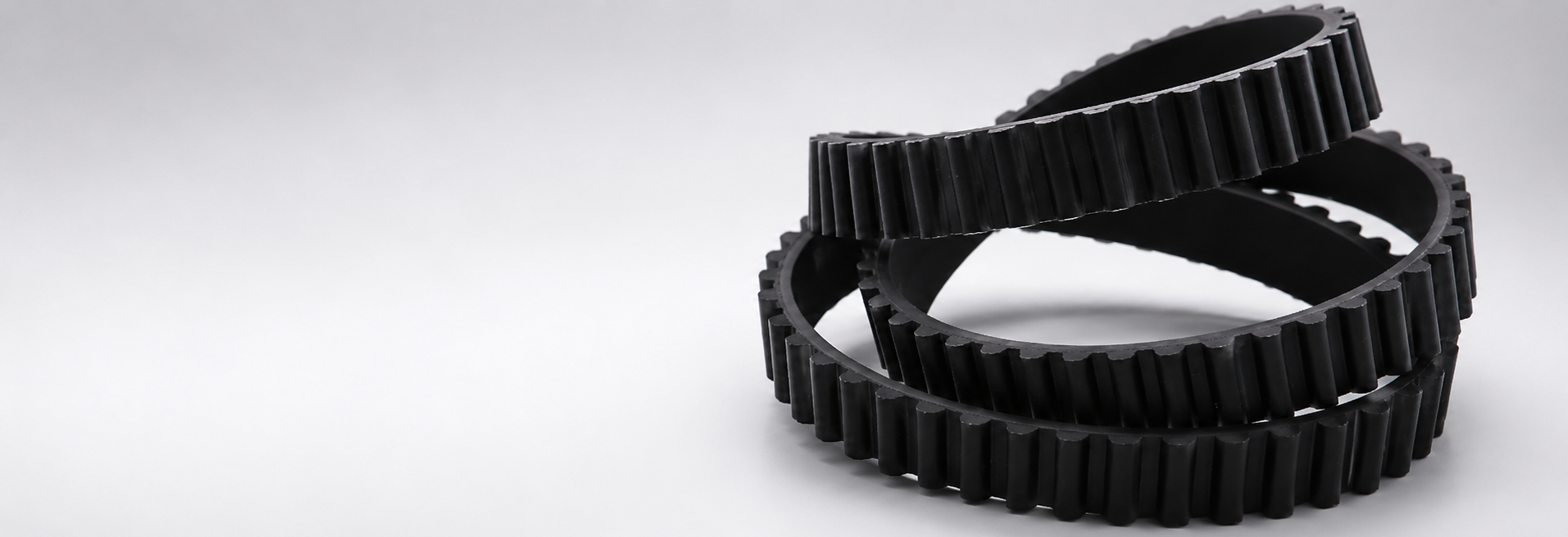
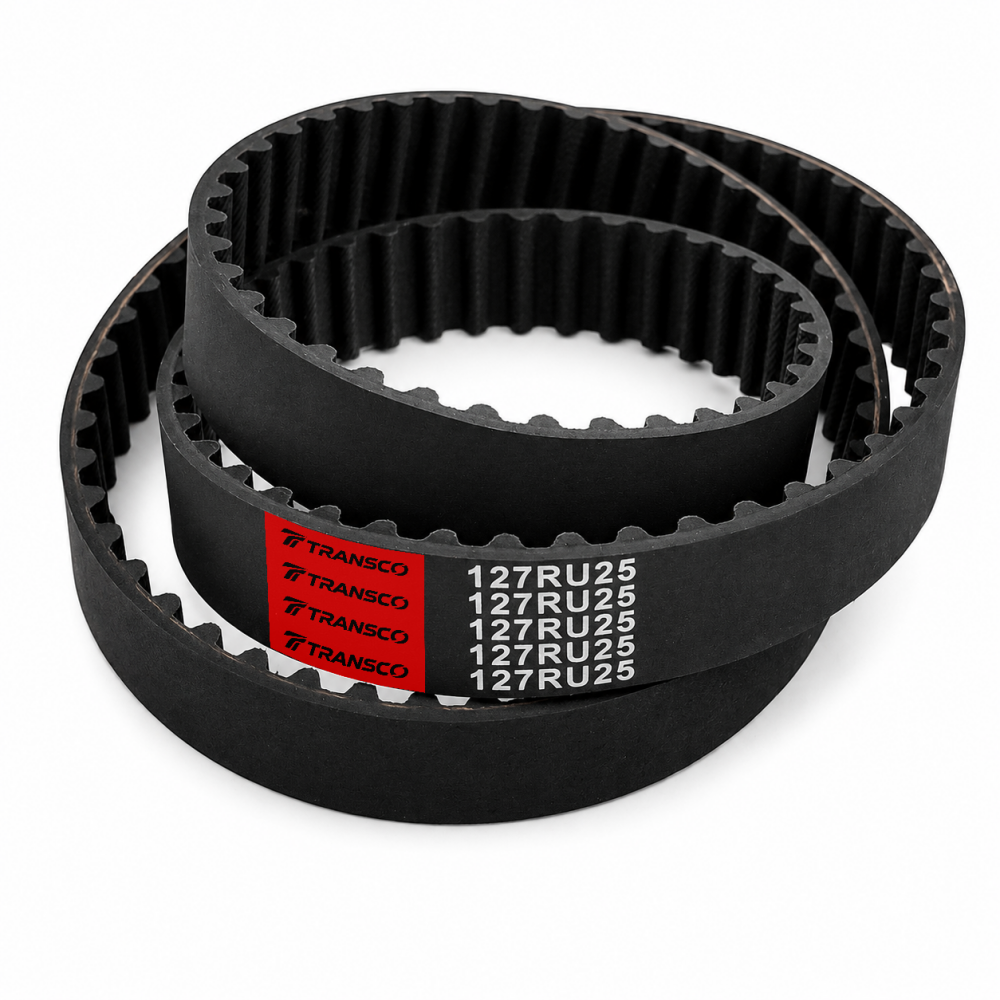
TRANSCO automotive timing belts are manufactured with durable rubber compounds, high-strength tensile cords, and wear-resistant nylon tooth fabric. They are suitable for passenger cars, SUVs, light commercial vehicles, and engine timing replacement applications where heat resistance, dimensional stability, and long service life are required.
Features:
Accurate Engine Timing: maintains precise synchronization
Low Elongation Tensile Cord: reliable power transmission
Heat-Resistant Rubber Compound: performs well
Wear-Resistant Nylon Tooth Fabric: reduces friction
What is an Automotive Timing Belt?
Automotive Timing Belt Definition: An automotive timing belt, also known as an engine timing belt, car timing belt or cambelt, is a toothed rubber timing belt used in internal combustion engines. Its main function is to synchronize the crankshaft and camshaft so that engine valves open and close at the correct time during the combustion cycle.
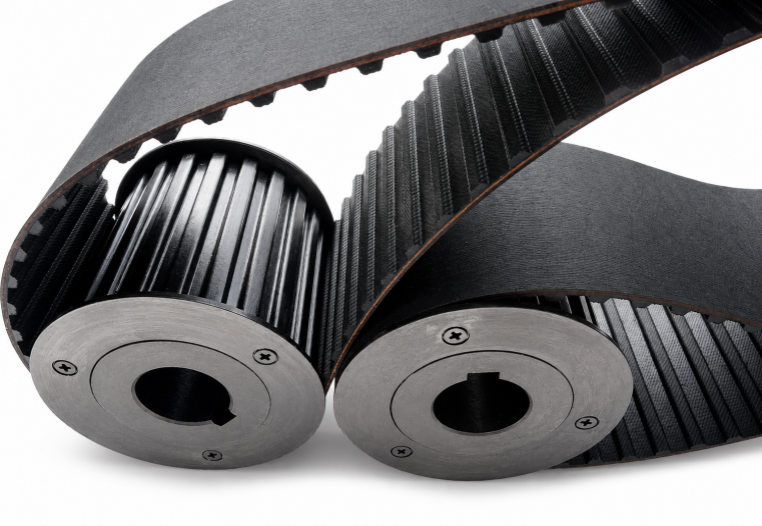
Engine Timing System Function: In an engine timing system, the timing belt transfers motion between the crankshaft and camshaft with precise tooth engagement. This crankshaft camshaft synchronization helps maintain stable valve timing, smooth engine operation and reliable power output.
Difference from Serpentine Belt: An automotive timing belt is different from a serpentine belt or fan belt. A serpentine belt drives external accessories such as the alternator, air conditioning compressor or water pump, while the timing belt controls the internal valve timing system of the engine.
Replacement Timing Belt Purpose: A replacement timing belt is used when the original engine timing belt reaches its service interval, shows wear or needs to be changed during engine maintenance. Choosing the correct OEM timing belt or OE replacement timing belt is important for maintaining accurate engine timing and preventing timing failure.
Why choose TRANSCO Automotive Timing Belt?
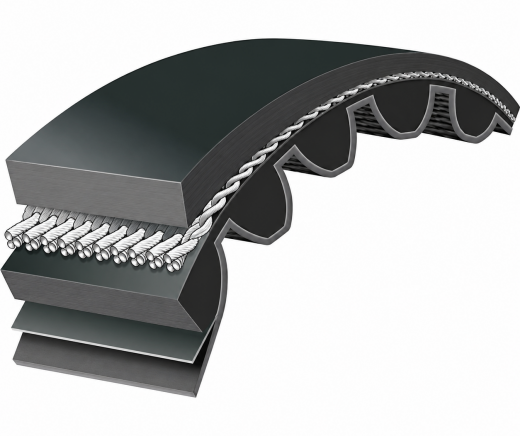
Precision Molded Tooth Profile: TRANSCO automotive timing belts are designed with precision molded teeth for accurate pulley engagement. The toothed timing belt structure helps reduce slip, maintain timing accuracy and support stable transmission in passenger car engines and light commercial vehicles.
High Strength Tensile Cord: The belt uses fiberglass cord or aramid cord reinforcement to provide high tensile strength and low elongation. This structure helps the engine timing belt maintain stable length during operation and reduces the risk of timing deviation.
Durable Rubber Compound: CR rubber and HNBR rubber options are available for different engine conditions. CR rubber timing belts are suitable for standard replacement applications, while HNBR timing belts are recommended for high temperature timing belt requirements and demanding engine environments.
Wear Resistant Tooth Fabric: The nylon fabric tooth surface helps reduce friction between the belt teeth and pulley grooves. It improves wear resistance, supports low noise operation and helps extend the service life of the rubber timing belt.
Stable Performance in Engine Conditions: Automotive engines operate under heat, repeated bending and continuous load. TRANSCO timing belts are built for heat resistance, wear resistance, fatigue resistance and stable performance in engine timing drive systems.
How to choose Automotive Timing Belt?
Choose by Vehicle and Engine Information: The first step is to confirm the vehicle brand, model, production year and engine code. Passenger car timing belts, SUV timing belts and light commercial vehicle timing belts may use different tooth profiles, widths and belt lengths.
Choose by OE Number or Belt Code: For replacement timing belt selection, the OE number or original belt code is the most important reference. Customers can search timing belt by OE number, cross reference number, sample belt or part number to avoid wrong matching.
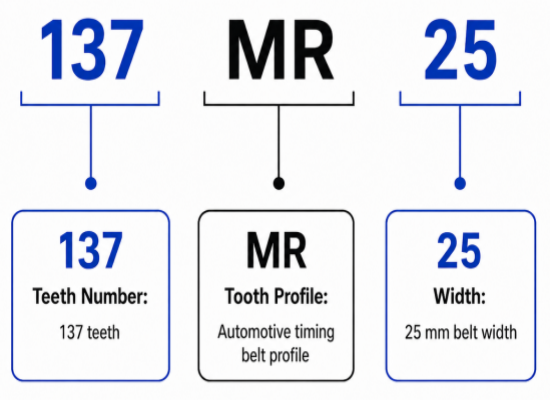
Choose by Tooth Count and Width: The number of teeth and belt width directly affect pulley fit and timing performance. A typical model such as 137 ZBS 25 means 137 teeth, ZBS tooth profile and 25 mm belt width.
Choose by Tooth Profile: The tooth profile must match the pulley groove correctly. Common automotive timing belt profiles include MR, MY, YU, RU, ZA, ZB, ZBS and S8M. Incorrect tooth profile may cause abnormal noise, tooth wear or unstable timing.
Choose by Rubber Material: CR rubber timing belts are commonly used for standard engine replacement applications. HNBR timing belts are recommended for high temperature engines, turbocharged engines, high load engine timing and more demanding operating conditions.
Choose by Timing Belt Kit Requirement: Many buyers search for timing belt kit, timing belt set, timing belt tensioner kit or timing belt kit with water pump. For repair and maintenance markets, the timing belt may need to be matched with tensioners, idler pulleys or water pump components.
Choose by Supplier Capability: When choosing an engine timing belt supplier, buyers should consider OEM matching ability, stable quality control, custom marking, packaging support, delivery capability and experience in aftermarket automotive belt supply.
| Quick Selection Checklist | ||
 |  |  |
| Vehicle model | Brand, model, year and engine code | |
| OE number | OE number, cross reference number or original part number | |
| Belt profile | MR, MY, YU, RU, ZA, ZB, ZBS, S8M or customized | |
| Tooth count | Number of teeth required for engine timing system | |
| Belt width | Standard width or OEM size in mm | |
| Material | CR rubber, HNBR rubber or customized compound | |
| Cord type | Fiberglass cord or kevlar/aramid cord | |
| Application | Passenger car, SUV, van, light commercial vehicle, OHC or DOHC engine | |
| Kit option | Timing belt, timing belt kit, tensioner kit or water pump kit | |
| Custom requirements | Logo printing, private label packaging, sample or drawing development | |
Construction
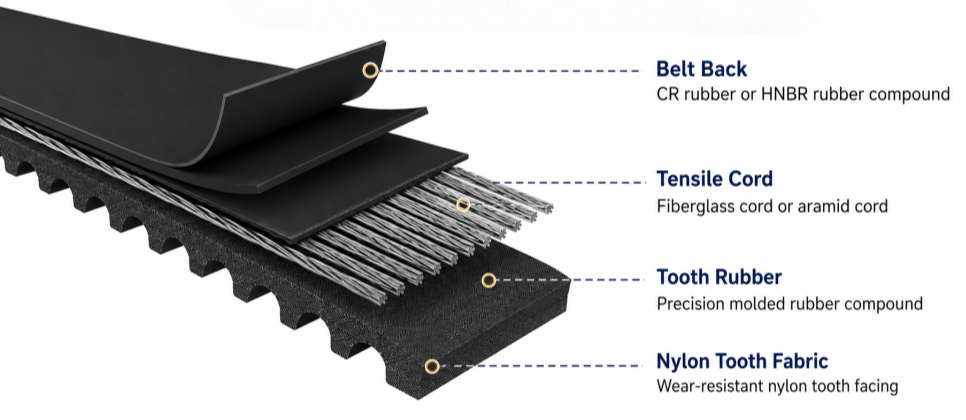 |
| Belt Back: The belt back is made from durable CR rubber or high-temperature HNBR rubber compound. It protects the internal tensile cords and improves resistance to heat, aging, flexing, and demanding engine compartment conditions. Tensile Cord: The tensile cord is the main strength layer of an automotive timing belt. Fiberglass cords provide high tensile strength, stable pitch accuracy, and low elongation, while aramid cords may be used for selected heavy-duty or customized performance requirements. Tooth Rubber: The tooth rubber is precision molded to form the required tooth profile. Accurate tooth geometry allows the belt to engage smoothly with crankshaft and camshaft timing pulleys or sprockets, helping maintain correct engine timing. Nylon Tooth Fabric: The polyamide / nylon tooth fabric covers the working tooth surface. It reduces friction, improves abrasion resistance, lowers running noise, and protects the belt teeth during repeated pulley engagement. Complete Belt Structure: A complete rubber engine timing belt normally includes the belt back, tensile cord, tooth rubber, and nylon tooth fabric tooth surface. This construction helps deliver synchronous transmission, low-noise operation, stable engine timing, and long service life in automotive engine timing systems. |
Model Specifications
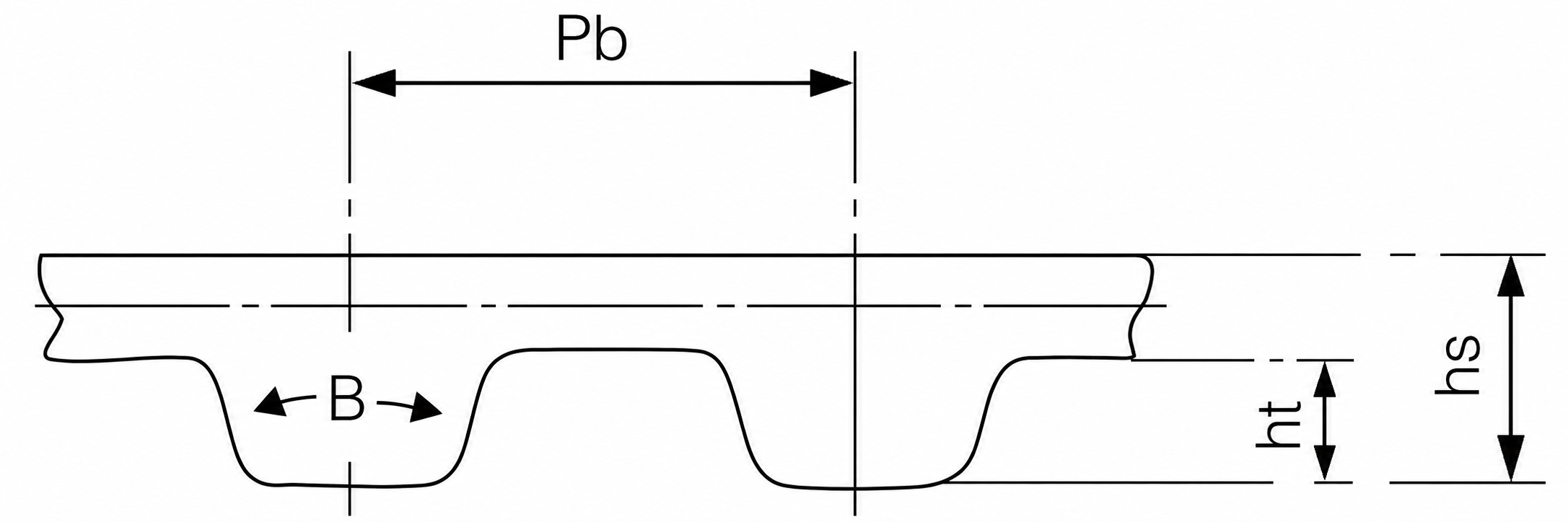 | |||
| Type | Pb | ht | hs |
|---|---|---|---|
| MR | 9.525 | 3.54 | 5.69 |
| MY | 8.00 | 3.06 | 5.21 |
| YU | 8.00 | 3.11 | 5.20 |
| RU | 9.525 | 3.56 | 5.70 |
| ZA | 9.525 | 1.91 | 4.10 |
| ZB | 9.525 | 2.29 | 4.50 |
| ZBS | 9.525 | 2.76 | 5.06 |
| ZAS | 9.525 | 2.32 | 4.50 |
| S8M | 8.00 | 3.05 | 5.30 |
| ZLB | 9.525 | 2.70 | 5.05 |
| RPP | 9.525 | 2.25 | 4.50 |
Packing and Shipping
 |  |
 |  |