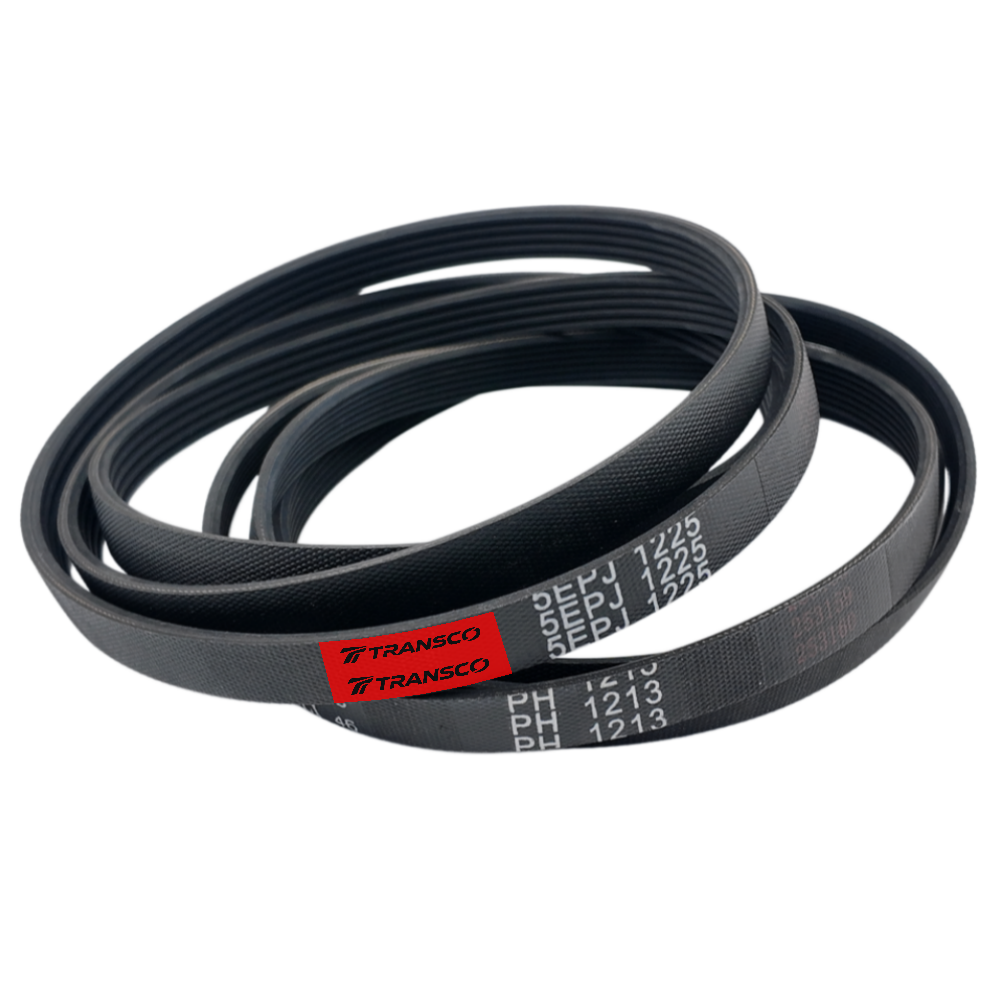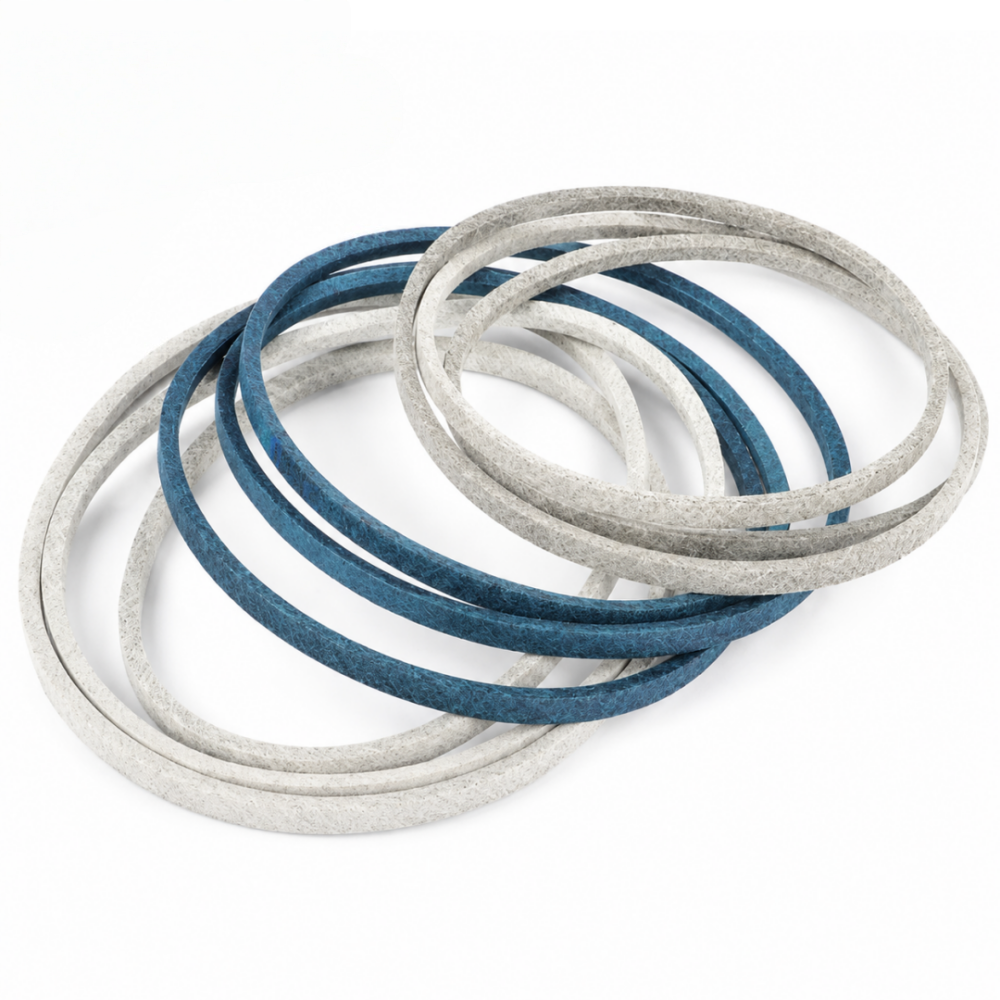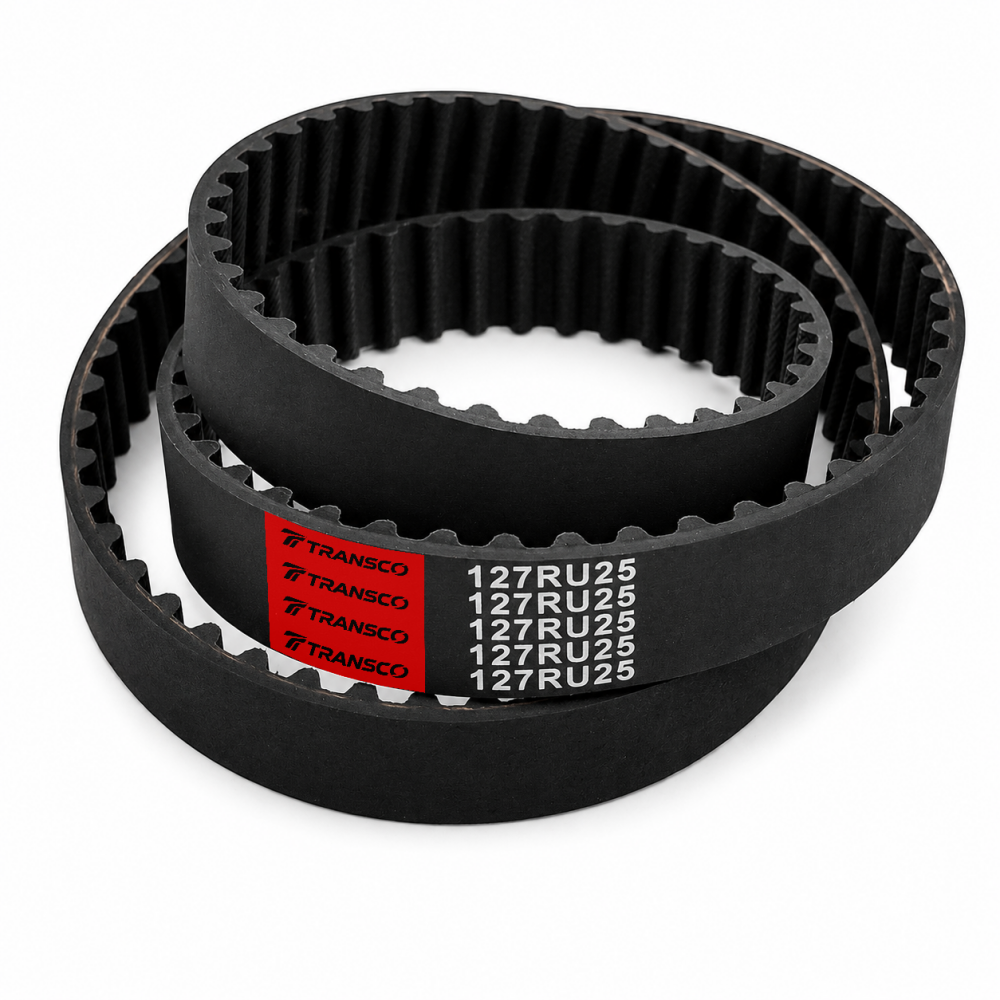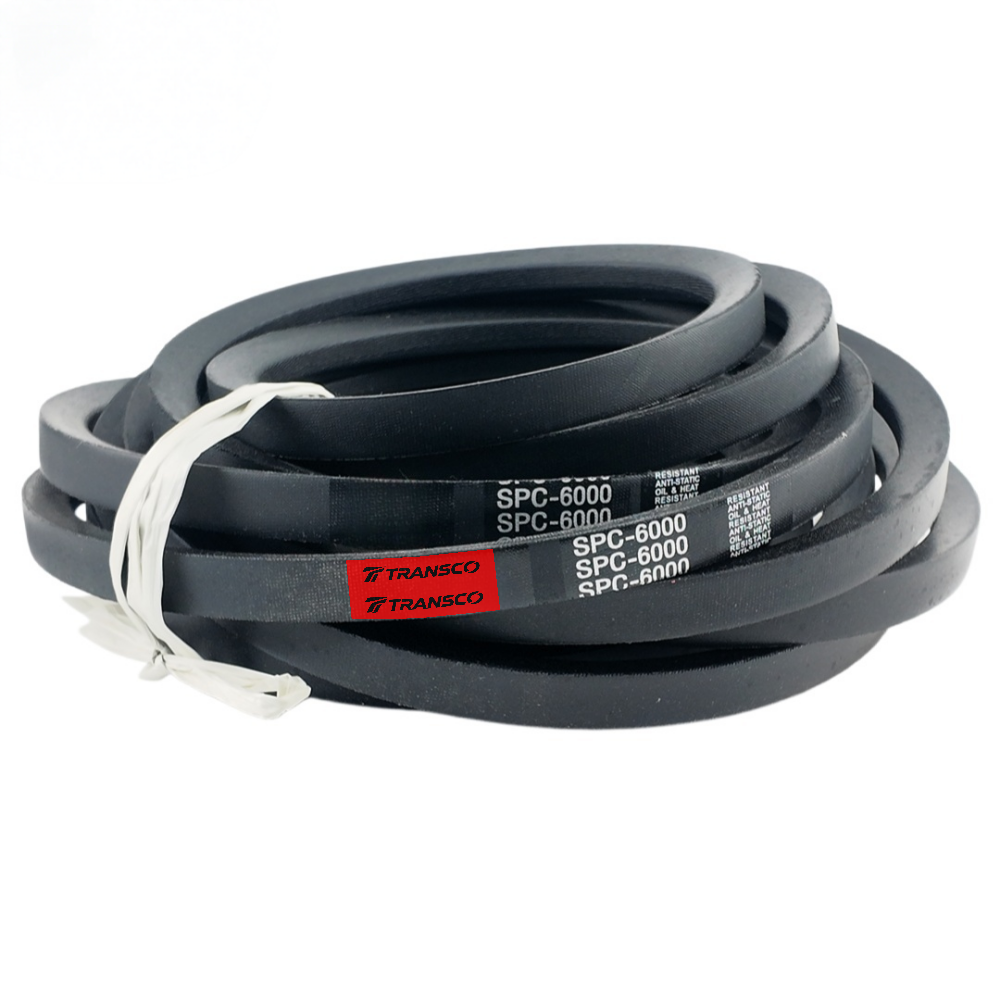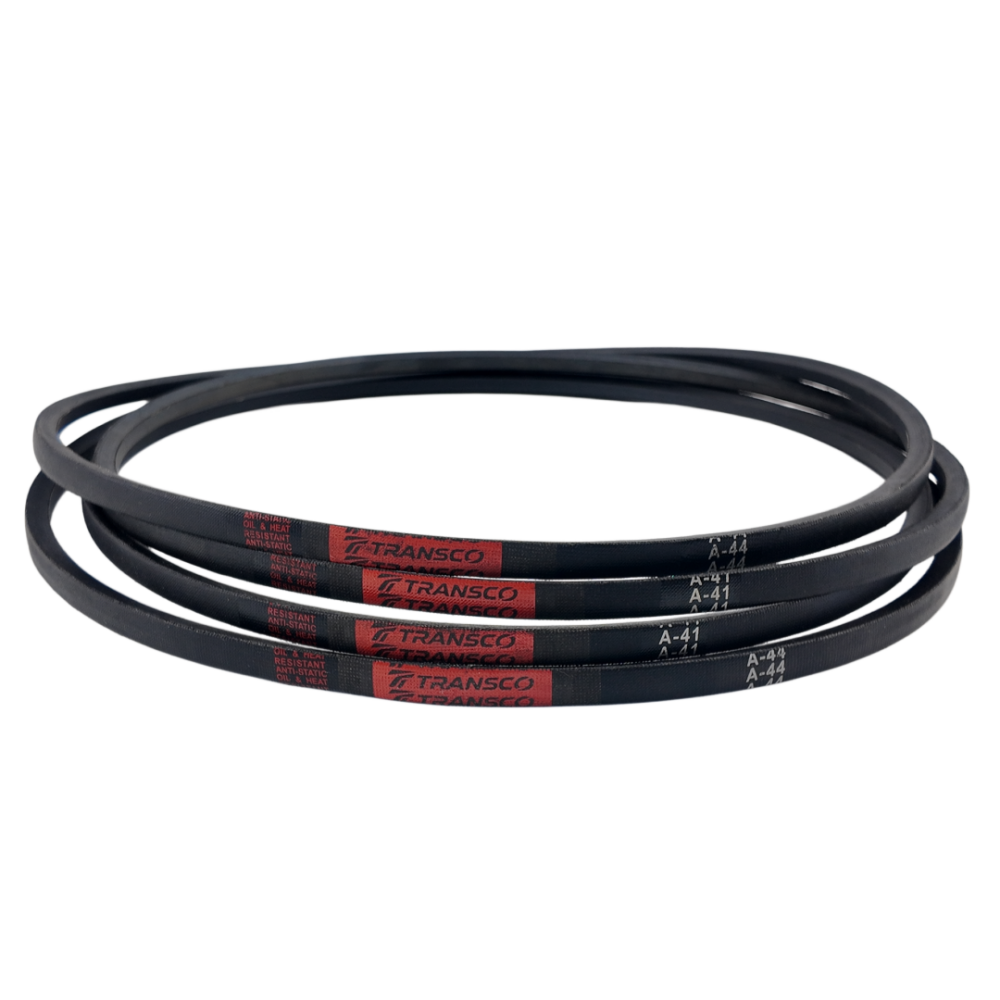
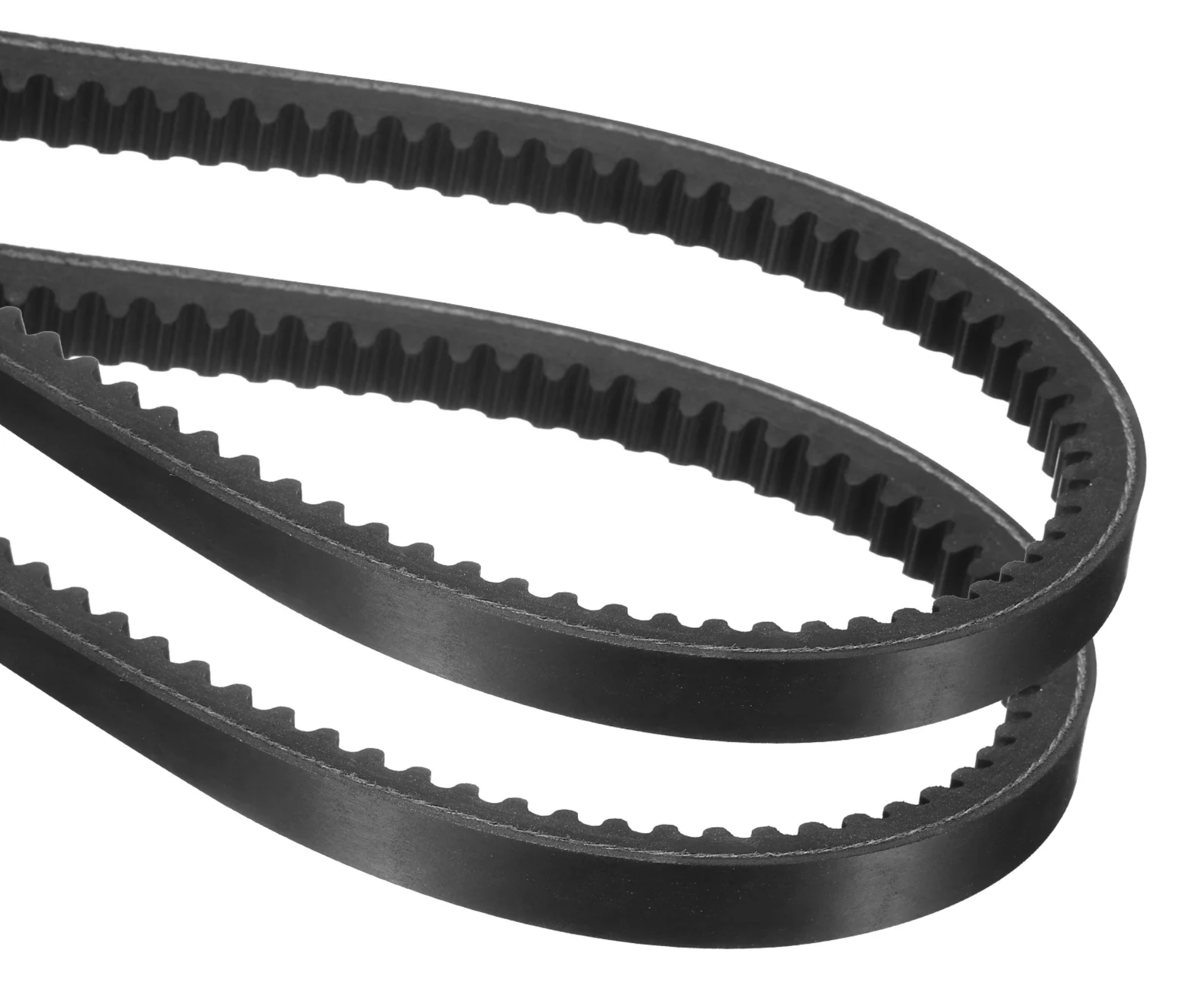
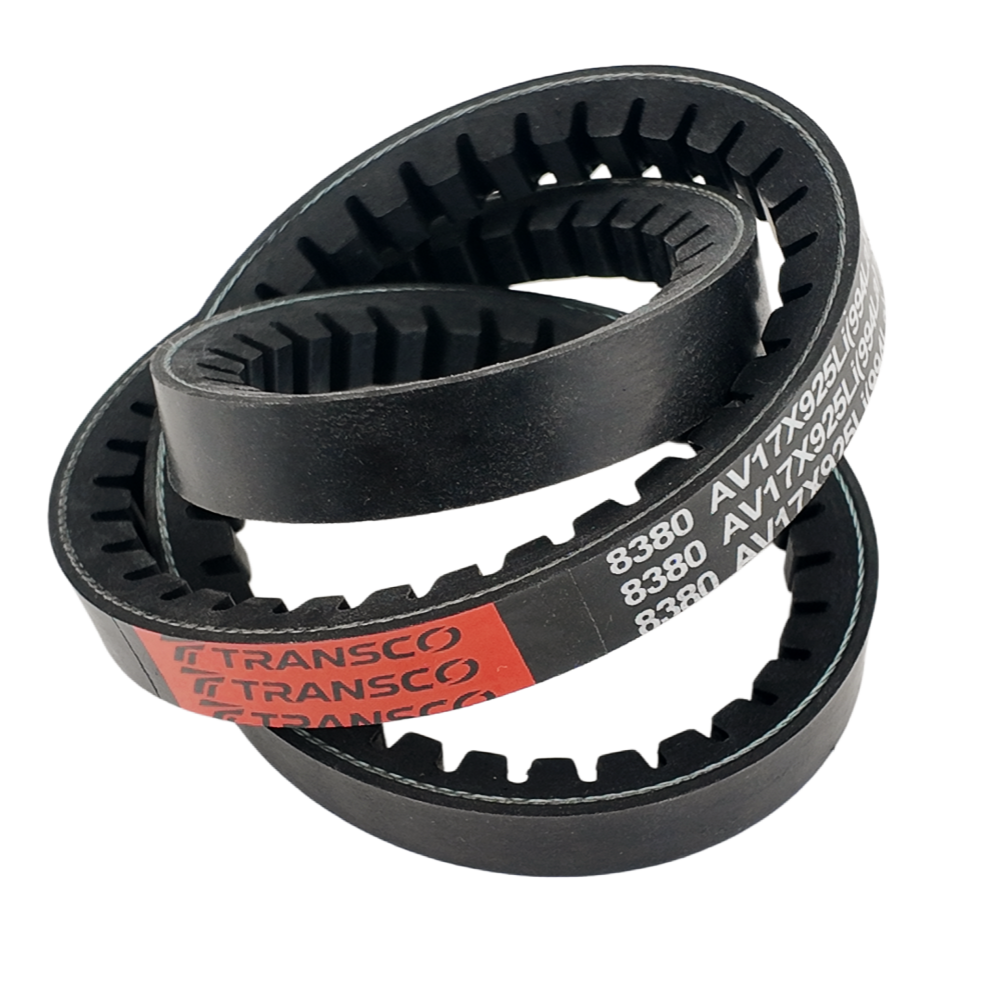
Raw Edge Cogged V-Belt
Our raw edge cogged V-belts deliver reliable torque transmission, excellent flexibility, and stable performance under repeated bending. They are widely used in agricultural machinery, compressors, fans, pumps, textile equipment, automotive systems, and general industrial drives. As a professional V-belt manufacturer, we provide multiple sections and sizes to match different pulley systems and working conditions.
Key Features
• Raw edge sidewalls provide high friction, strong grip, and efficient power transmission.
• Cogged inner design improves flexibility, heat dissipation, and bending fatigue resistance.
• Suitable for high-speed, compact, and small-pulley drive systems.
• Oil-resistant, heat-resistant, anti-static rubber construction for long service life.
What is a Raw Edge Cogged V-Belt?
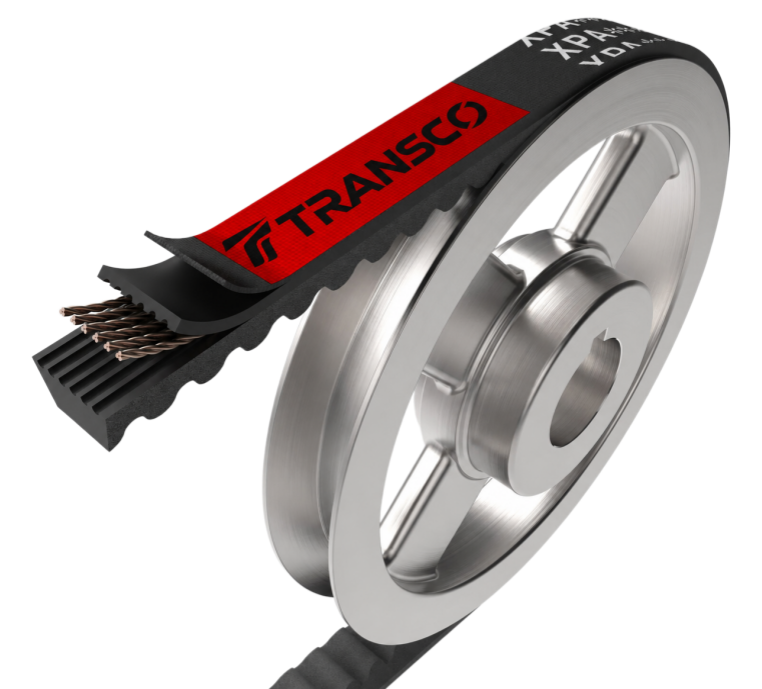
Raw Edge Cogged V-Belt, also known as cut edge cogged V-belt, molded notch V-belt or notched V-belt, is a high-efficiency power transmission belt designed with exposed rubber sidewalls and molded cogs on the inner compression side. Unlike a wrapped V-belt, the sidewalls are not fully covered by fabric, allowing the rubber surface to contact the pulley groove directly for stronger friction, reduced slip and more efficient power transfer.
The cogged underside improves belt flexibility and reduces bending stress, making this belt suitable for small pulley diameters, high-speed drives, compact drive layouts and equipment requiring stable power transmission. Common sections include AX, BX, CX, metric profiles such as XPZ, XPA, XPB, XPC, and narrow wedge profiles such as 3VX and 5VX.
SEO keywords to naturally include: Raw Edge Cogged V-Belt, cut edge cogged V-belt, molded notch V-belt, notched V-belt, AX BX CX V-belt, XPZ XPA XPB XPC belt, high efficiency V-belt, industrial power transmission belt.
Why choose TRANSCO Raw Edge Cogged V-Belt?
Higher transmission efficiency: Raw edge sidewalls provide direct rubber contact with the pulley groove, helping reduce slippage and improve power transfer compared with many wrapped belt designs. This is especially useful for compact drives where stable grip and energy efficiency are important.
Better flexibility for small pulleys: The molded cog design increases flexibility and reduces bending stress when the belt runs around smaller pulley diameters. This helps reduce internal heat build-up and improves service life in high-speed or space-limited drive systems.
Higher power capacity in compact drives: Cogged wedge profiles such as XPZ, XPA, XPB and XPC are designed for compact, high-power transmission. In many applications, they can transmit the same power with fewer belts or allow a smaller drive design compared with conventional classical V-belts.
Reduced heat and longer service life: The cogged compression section improves bending fatigue resistance and heat dissipation. EPDM or chloroprene rubber compounds, polyester tension cords and reinforced compression rubber can provide resistance to heat, ozone, abrasion and flex fatigue depending on the belt grade.
Suitable for demanding industrial environments: Raw edge cogged V-belts are commonly used in general industry, HVAC equipment, pumps, blowers, agricultural machinery, machine tools, packaging, paper, textile and wood processing equipment.
How to choose Raw Edge Cogged V-Belt?
First identify whether the drive uses a classical section such as AX, BX or CX, a metric wedge section such as XPZ, XPA, XPB or XPC, or an imperial narrow wedge section such as 3VX or 5VX. Measure the top width and belt depth if the printed marking is worn. Different belt series use different length references. AX, BX and CX belts are often marked by inside length in inches, while 3VX and 5VX are commonly marked by outside circumference in tenths of an inch. Metric profiles such as XPZ, XPA, XPB and XPC are usually specified by datum or pitch length in millimeters.
The belt must match the pulley groove profile. A belt that is too narrow will sit too deep in the groove, while a belt that is too wide may ride too high and cause slippage, vibration or premature wear. Choose a cogged belt when the drive uses smaller pulleys, high speed or a compact layout. The molded cogs improve flexibility and reduce bending stress, which is one of the main advantages of raw edge cogged construction.
For high-temperature, outdoor or heavy-duty environments, choose suitable rubber compounds such as EPDM or chloroprene. Consider heat resistance, oil resistance, ozone resistance, abrasion resistance and static conductivity requirements. For multiple-belt drives, use belts from the same section, same length standard and preferably the same production batch or matched-set system. This helps maintain even load sharing and reduces uneven belt wear.
For accurate selection, provide: belt section, effective length or inside/outside length, pulley diameter, center distance, motor power, speed, application, working temperature and whether the belt needs oil-resistant, heat-resistant, antistatic or special branding.
| Quick Selection Checklist | ||
 |  | 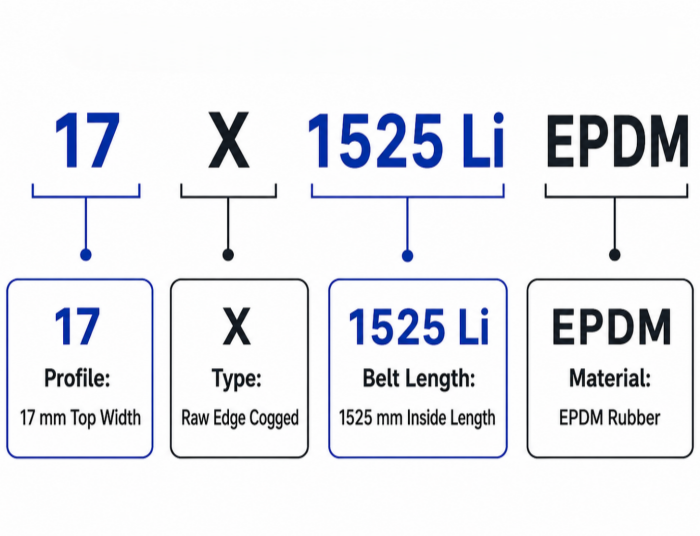 |
| Belt profile | XPZ, XPA, XPB, XPC, AX, BX, CX or OEM profile | |
| Belt length | Li, La, Ld, Le or customized belt length | |
| Material | CR, EPDM or customized high-performance rubber compound | |
| Cord | Polyester cord, aramid cord or customized tensile member | |
| Application | Automotive, agricultural machinery, compressor, pump, fan, HVAC or industrial transmission | |
| Custom requirements | Brand logo, private label, packaging, special size or OEM specification | |
Construction
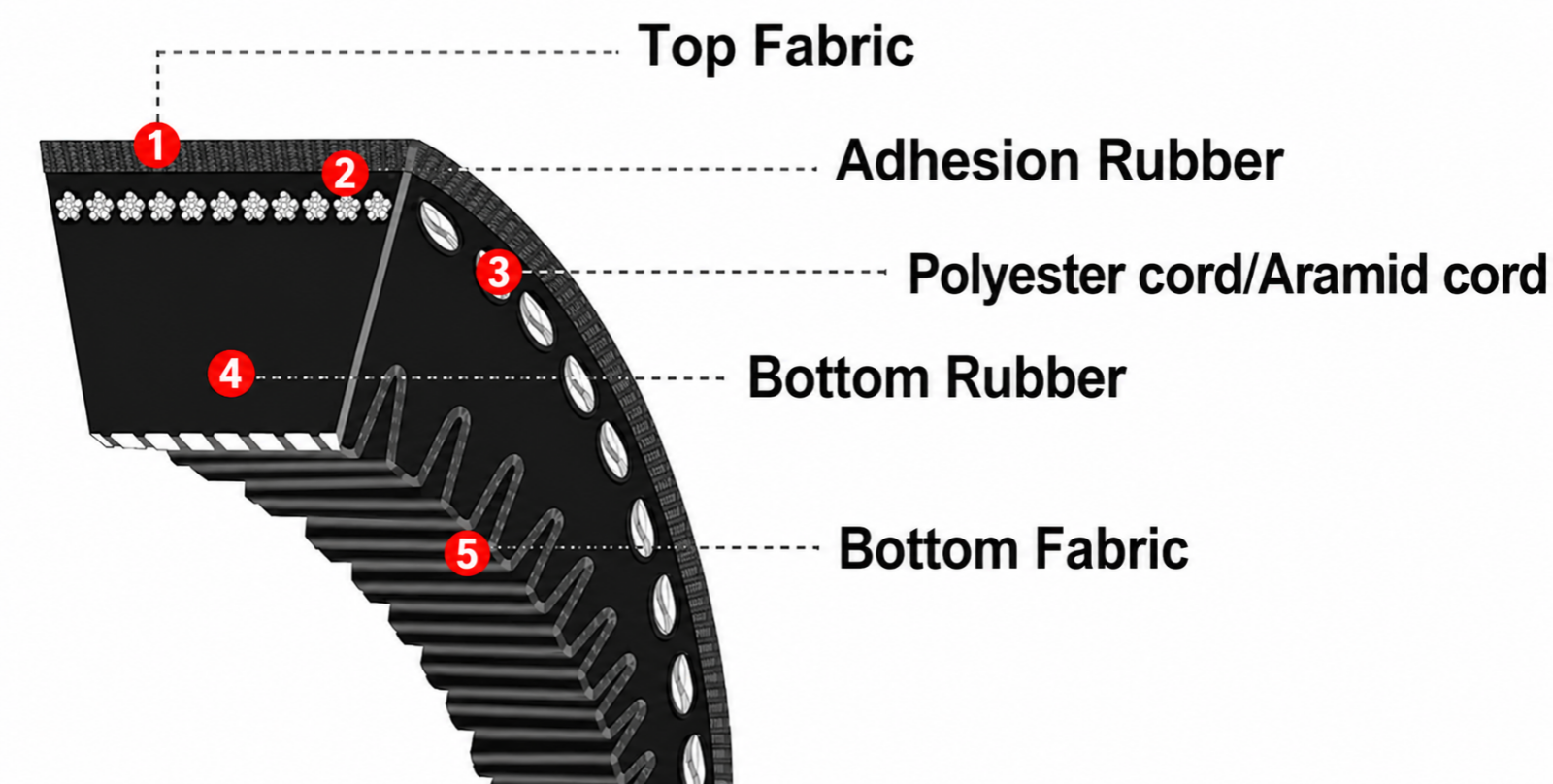 |
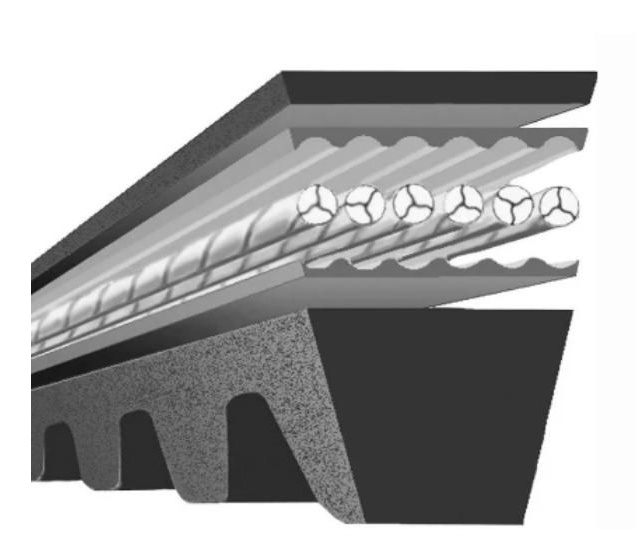
| The raw edge cogged V-belt structure includes top fabric, adhesion rubber, polyester or aramid tensile cord, bottom rubber, and bottom fabric. Its raw edge sidewalls provide strong pulley grip, while the cogged inner surface improves flexibility, heat dissipation, and bending fatigue resistance. This makes the belt suitable for high-speed, compact, and high-efficiency power transmission systems. Top Fabric: The top fabric layer protects the belt back from wear, cracking, and external impact. It also improves belt stability during operation and helps maintain the overall shape of the raw edge cogged V-belt. Adhesion Rubber: The adhesion rubber layer bonds the tensile cord and rubber body together. It provides strong internal adhesion, prevents layer separation, and ensures stable power transmission under continuous load. Polyester Cord / Aramid Cord: The tensile cord is the main strength layer of the belt. Polyester cord offers stable length, good tensile strength, and reliable performance for general industrial drives. Aramid cord can be used for higher strength, lower elongation, and heavy-duty or high-load applications. Bottom Rubber: The bottom rubber layer forms the main compression zone of the belt. It supports the cogged profile, absorbs bending stress, and provides oil resistance, heat resistance, and fatigue resistance depending on the rubber compound. Bottom Fabric: The bottom fabric reinforces the cogged surface and improves wear resistance. It helps the belt run smoothly around pulleys while protecting the notched structure from abrasion and deformation. |
Model Specifications
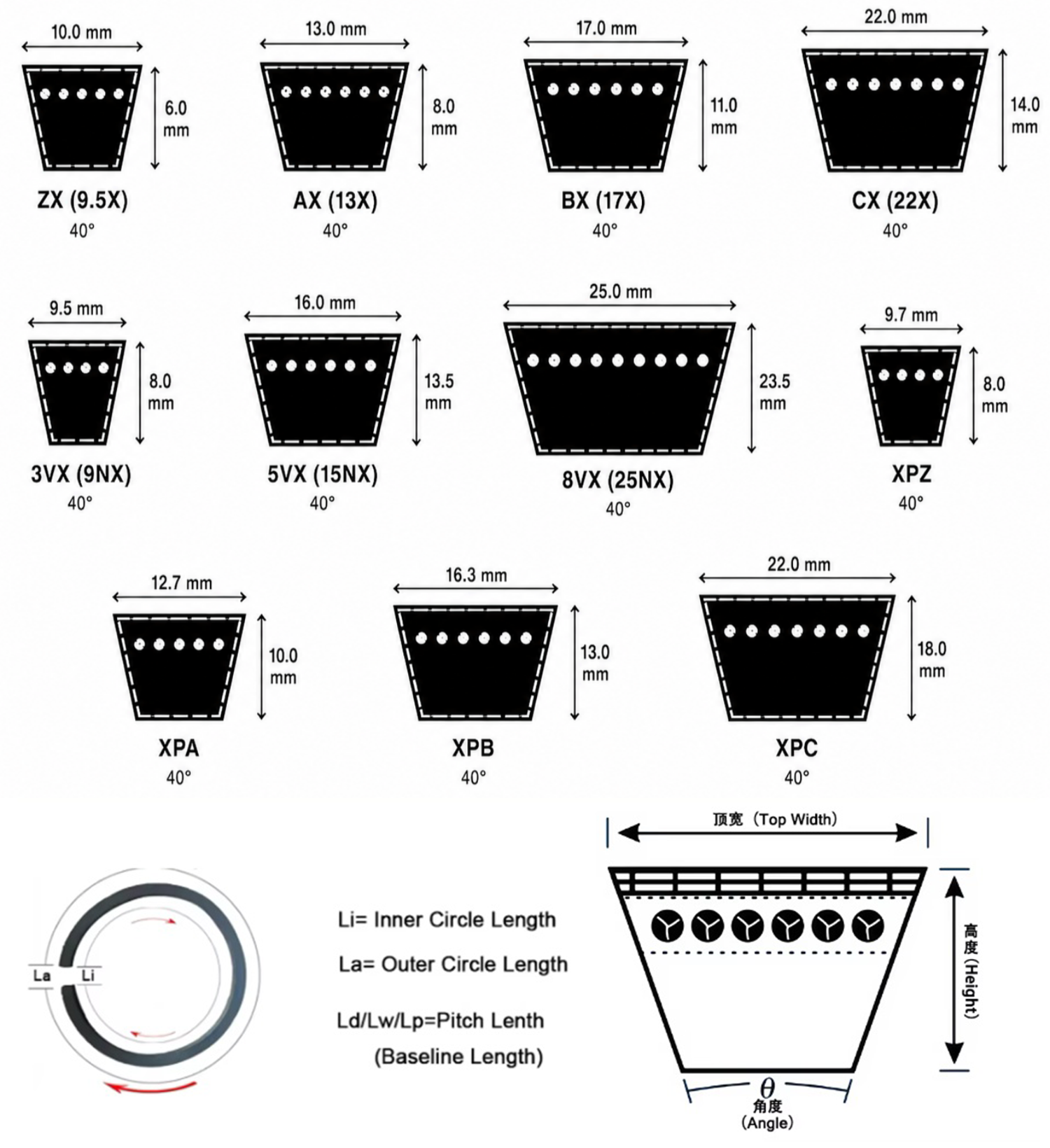 | |||||||
| Model | Top Width (mm) | Thickness (mm) | Angle (°) | Length Range (inch) | Length Range (mm) | Length Conversion | Standard |
|---|---|---|---|---|---|---|---|
| ZX (9.5X) | 10.0 | 6.0 | 40 | 20"–100" | 508–2540 | Li = Ld - 22 | Li |
| AX (13X) | 13.0 | 8.0 | 40 | 20"–200" | 508–5080 | Li = Ld - 30 | Li |
| BX (17X) | 17.0 | 11.0 | 40 | 20"–200" | 508–5080 | Li = Ld - 40 | Li |
| CX (22X) | 22.0 | 14.0 | 40 | 30"–200" | 762–5080 | Li = Ld - 58 | Li |
| 3VX (9NX) | 9.5 | 8.0 | 40 | 20"–200" | 508–5080 | La = Li + 50 | La |
| 5VX (15NX) | 16.0 | 13.5 | 40 | 30"–200" | 762–5080 | La = Li + 85 | La |
| 8VX (25NX) | 25.0 | 23.5 | 40 | 100"–200" | 2540–5080 | La = Li + 140 | La |
| XPZ | 9.7 | 8.0 | 40 | 20"–200" | 508–5080 | La = Li + 50 | La |
| XPA | 12.7 | 10.0 | 40 | 20"–200" | 508–5080 | La = Li + 63 | La |
| XPB | 16.3 | 13.0 | 40 | 30"–200" | 762–5080 | La = Li + 82 | La |
| XPC | 22.0 | 18.0 | 40 | 30"–200" | 762–5080 | La = Li + 113 | La |
Applications
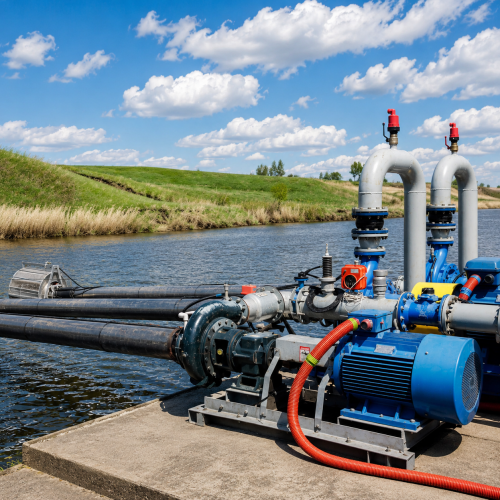 | 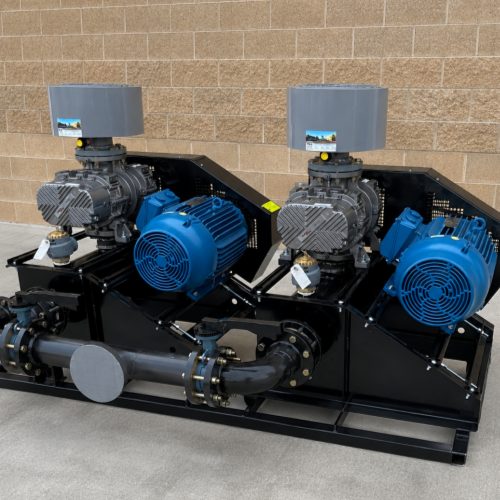 | 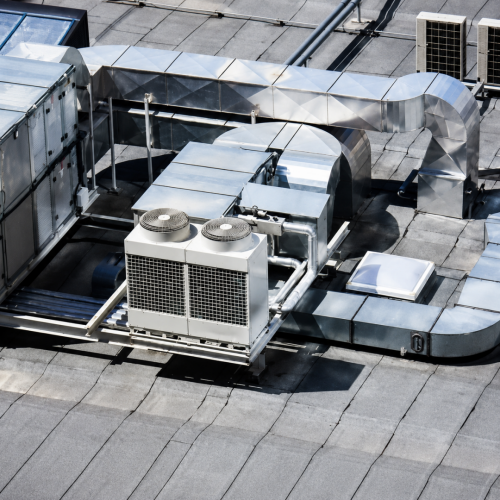 |
| Pump And Water Treatment Equipment | Air Compressors And Blowers | HVAC And Cooling Systems |
| Raw edge cogged V-belts are widely used in water pumps, centrifugal pumps, irrigation pumps and water treatment systems. Their flexible cogged structure helps the belt run smoothly on compact pulley drives, making them suitable for continuous pump operation and maintenance replacement. | This belt type is suitable for air compressors, industrial blowers and ventilation drive systems where stable power transmission and reliable grip are required. The raw edge construction helps improve contact with the pulley, while the cogged design supports better flexibility under repeated bending. | Raw edge cogged V-belts are commonly used in HVAC fans, cooling tower fans, exhaust fans and air handling equipment. They are a practical choice for high speed fan drives, especially when the machine requires smooth running, lower vibration and compact drive design. |
 |  |  |
| Automotive And Commercial Vehicle Drives | Agricultural And Construction Machinery | Compact Industrial Machinery |
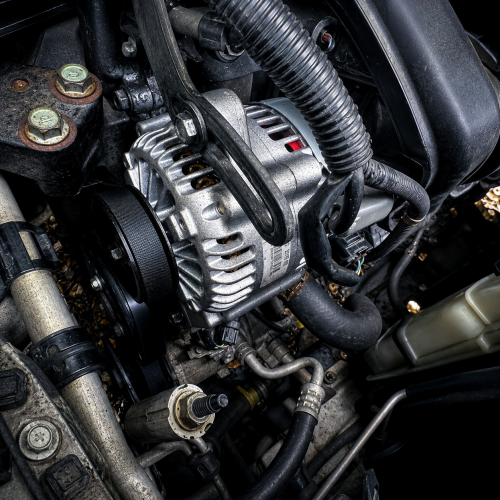
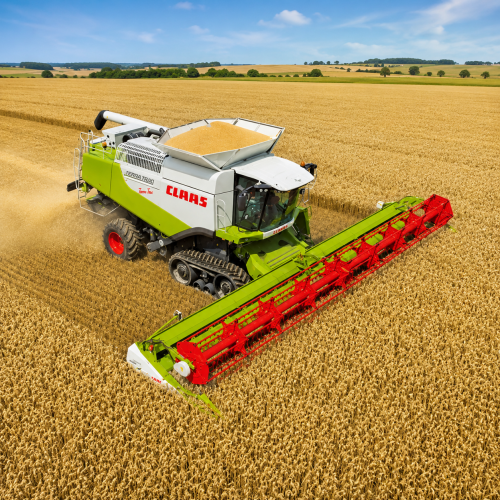
| These belts are used in automotive and commercial vehicle auxiliary drive systems, including alternators, cooling fans, water pumps and air conditioning compressors. They are suitable for engine compartment applications where heat resistance, flexibility and stable transmission are important. | Raw edge cogged V-belts can be used in tractors, harvesters, loaders, excavators and other off highway equipment. They support power transmission for auxiliary drives, pump systems and engine driven components, helping equipment maintain stable operation in demanding working conditions. | This belt is suitable for machine tools, packaging machines, textile machines, small industrial equipment and general power transmission systems. It is especially useful for drives with small pulley diameters, limited installation space or frequent start stop operation. |
Packing and Shipping
 |  |
 |  |