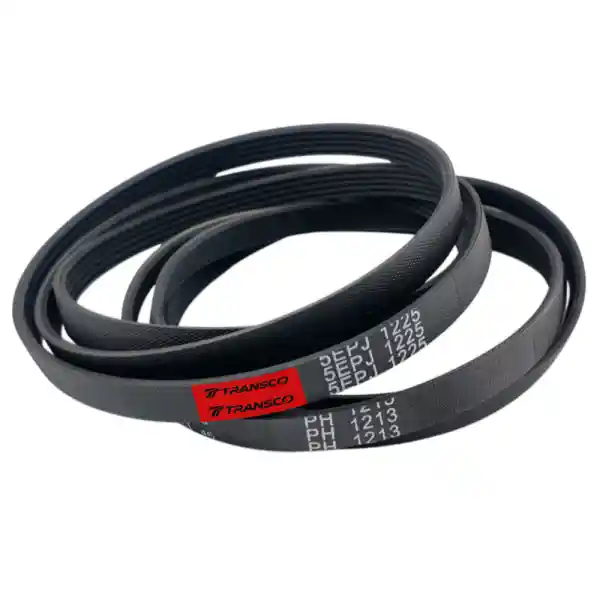
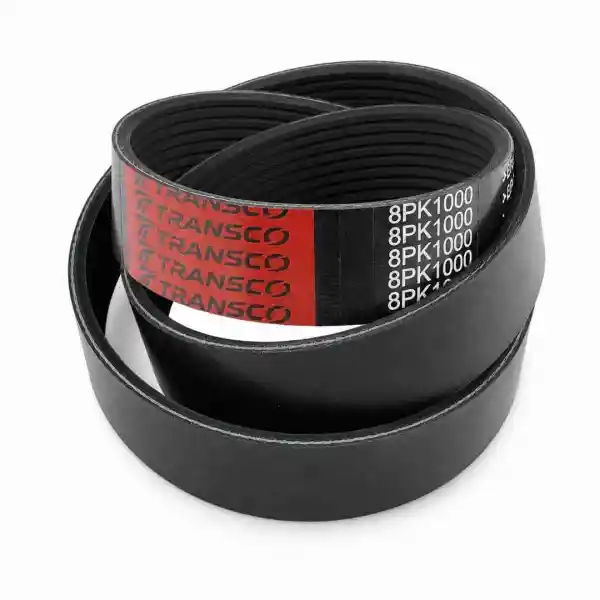
Ribbed Belt / Poly V Belt
TRANSCO supplies PH, PJ, PK, PL and PM ribbed belts for automotive accessory drives, washing machines, dryers, compressors, fans, pumps, HVAC equipment and general industrial machinery. EPDM, CR and application-specific compounds are available, with customized rib numbers, belt lengths, markings and packaging.
Quick Specifications:
Profiles: PH, PJ, PK, PL and PM
Material: EPDM, CR or customized compound
Rib Number: Standard or customized
Belt Length: Standard and customized sizes
Product Options: Standard, double-sided and application-specific belts
OEM Support: Identification by belt code, OEM number, equipment model, sample
What is a Ribbed Belt?
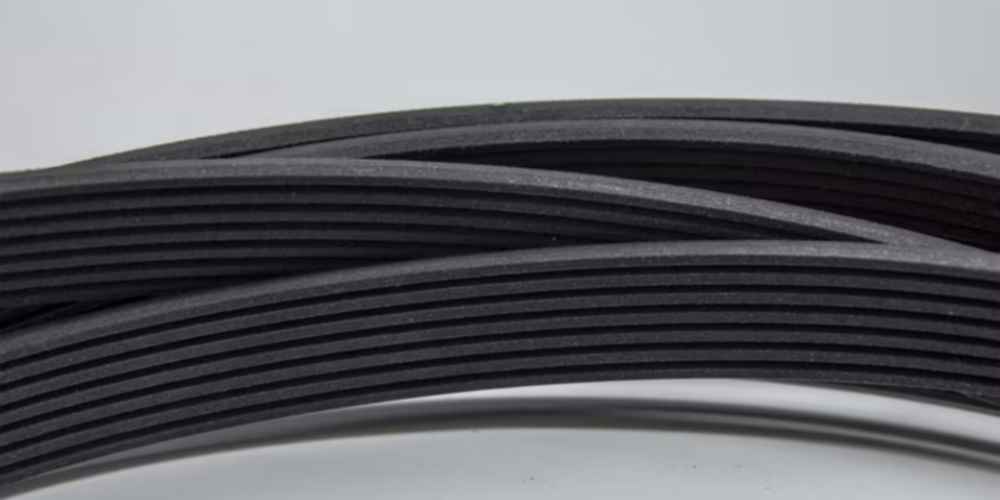
A ribbed belt, also known as a poly V belt, multi-rib belt or V-ribbed belt, is a flexible power transmission belt with multiple longitudinal ribs on its driving surface. The ribs engage with matching pulley grooves, allowing torque to be transmitted through the contact between the rib flanks and the pulley.
Compared with a classical V-belt, a ribbed belt has a thinner cross-section and a larger effective contact area. This design allows it to bend around relatively small pulleys, operate smoothly at higher speeds and fit compact drive layouts. When the correct profile, length and tension are selected, the belt can provide stable power transmission with low vibration and reduced slippage.
Common ribbed belt profiles include PH, PJ, PK, PL and PM. They are used in automotive accessory drives, washing machines, dryers, compressors, fans, pumps, conveyor rollers and general industrial machinery. In automotive systems, a ribbed belt may also be configured as a serpentine belt to drive several accessories through one continuous belt path.
The required profile, rib number, length and material should always be matched to the pulley system and operating conditions.
Why choose TRANSCO Ribbed Belts?
TRANSCO supplies PH, PJ, PK, PL and PM ribbed belts for automotive, appliance and industrial drive systems. Their main performance advantages come from precisely formed longitudinal ribs, multiple-rib load distribution, a thin flexible cross-section and low-stretch tensile construction.
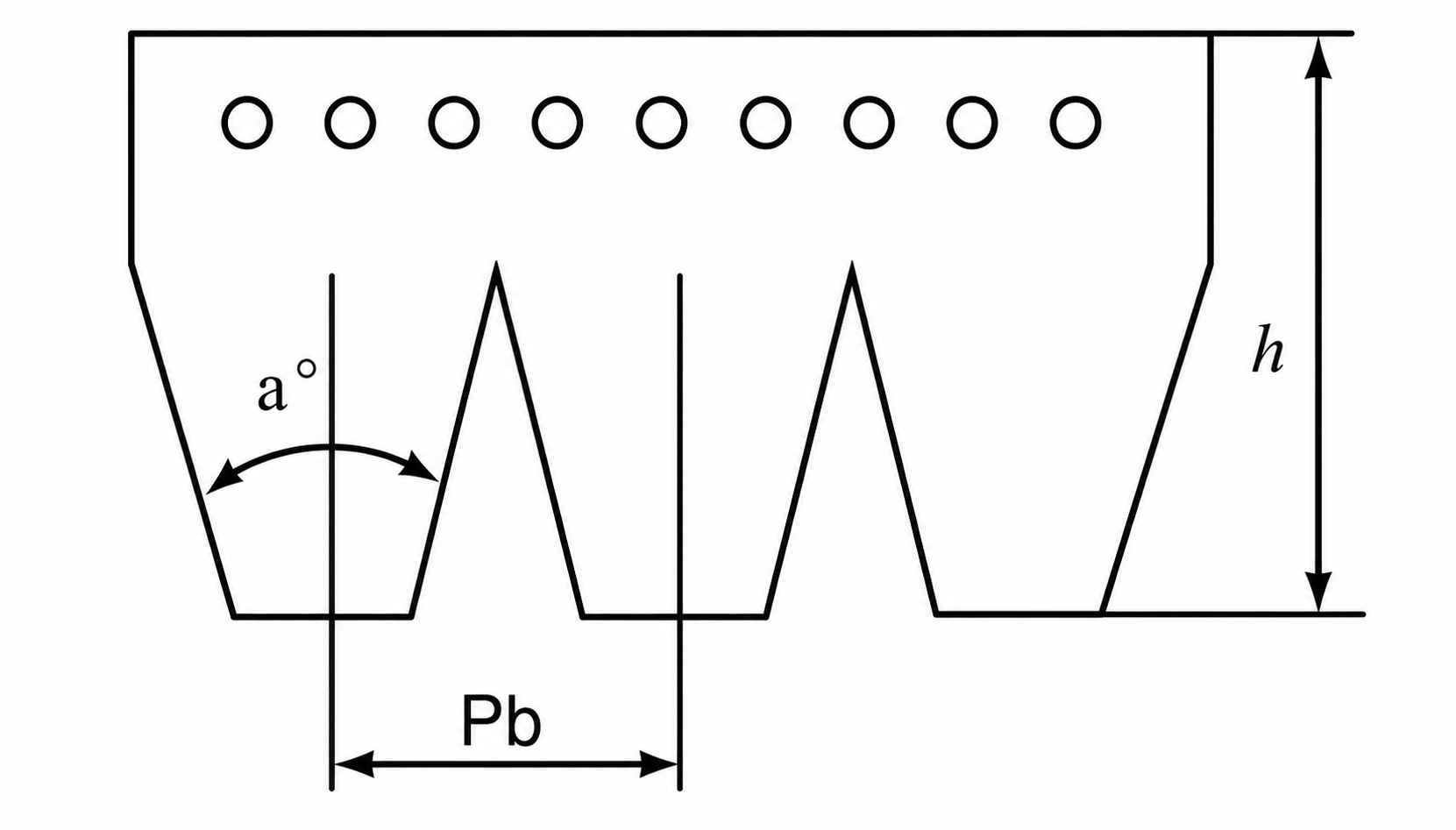
Controlled Rib-to-Pulley Engagement: The longitudinal ribs are formed to match the corresponding pulley grooves and distribute contact evenly across the belt width. For example, the PK profile uses a nominal rib pitch of 3.56 mm and a 40° rib angle. Accurate rib geometry supports stable tracking and helps reduce localized pressure and uneven rib wear.
Multiple-Rib Load Distribution: Unlike a classical V-belt with one large V-section, a ribbed belt transmits the working load through several parallel ribs. A 6PK belt has six load-sharing ribs compared with four on a 4PK belt, providing a wider contact area while retaining the same PK pulley profile. Actual transmission capacity depends on belt speed, pulley diameter, wrap angle and operating load.
Thin and Flexible Belt Body: The shallow cross-section allows the belt to bend efficiently around relatively small pulleys. This makes PH, PJ and PK profiles suitable for compact automotive, appliance and industrial drive layouts where installation space is limited and frequent bending is required.
Multi-Pulley and Serpentine Capability: Ribbed belts can operate through compact multi-pulley arrangements and may run over backside tensioners or idlers when the belt construction is designed for reverse bending. One automotive PK belt can therefore drive several accessories, such as the alternator, water pump and air-conditioning compressor, through one continuous belt path.
Low-Stretch Tensile Construction: High-strength synthetic cords help control belt elongation and maintain consistent tension during repeated bending. Stable cord positioning supports accurate tracking across the pulley grooves and helps reduce tension loss, slippage and uneven rib loading during operation.
Application-Specific Customization Support: TRANSCO can customize the belt profile, rib number, effective length, rubber compound, tensile cord, backside construction, product marking and packaging according to the actual drive system. Buyers may provide an OEM number, existing belt code, equipment model, old belt sample, pulley dimensions or technical drawing for specification matching. Sample confirmation and customized production are available for replacement, distribution and equipment manufacturing requirements.
Technical Standards
①Industrial Ribbed Belt Standard:
TRANSCO PH, PJ, PK, PL and PM industrial ribbed belts conform to the dimensional requirements of ISO 9982:2021, including the principal dimensional characteristics of the belt profiles and matching pulley grooves.
②Automotive PK Belt Standard:
TRANSCO automotive PK ribbed belts conform to the dimensional requirements of ISO 9981:2020 for automotive accessory drive systems.
③Dynamic Fatigue Testing:
The dynamic fatigue performance of automotive PK ribbed belts is tested in accordance with ISO 11749:2023 as part of product qualification and quality control.
④Antistatic Performance:
Antistatic ribbed belt grades comply with the electrical resistance and test requirements of ISO 1813:2025 for applications requiring controlled dissipation of static electricity.
⑤Dimensional Quality Control:
Each production batch is inspected for belt profile, rib pitch, rib number, effective length, dimensional tolerance, surface appearance and product marking before shipment.
⑥Customized Technical Requirements:
Elastic ribbed belts, double-sided profiles and other customized products are manufactured and verified according to approved customer drawings, equipment specifications or mutually agreed technical requirements unless otherwise specified.
Ribbed Belt Construction
|
|
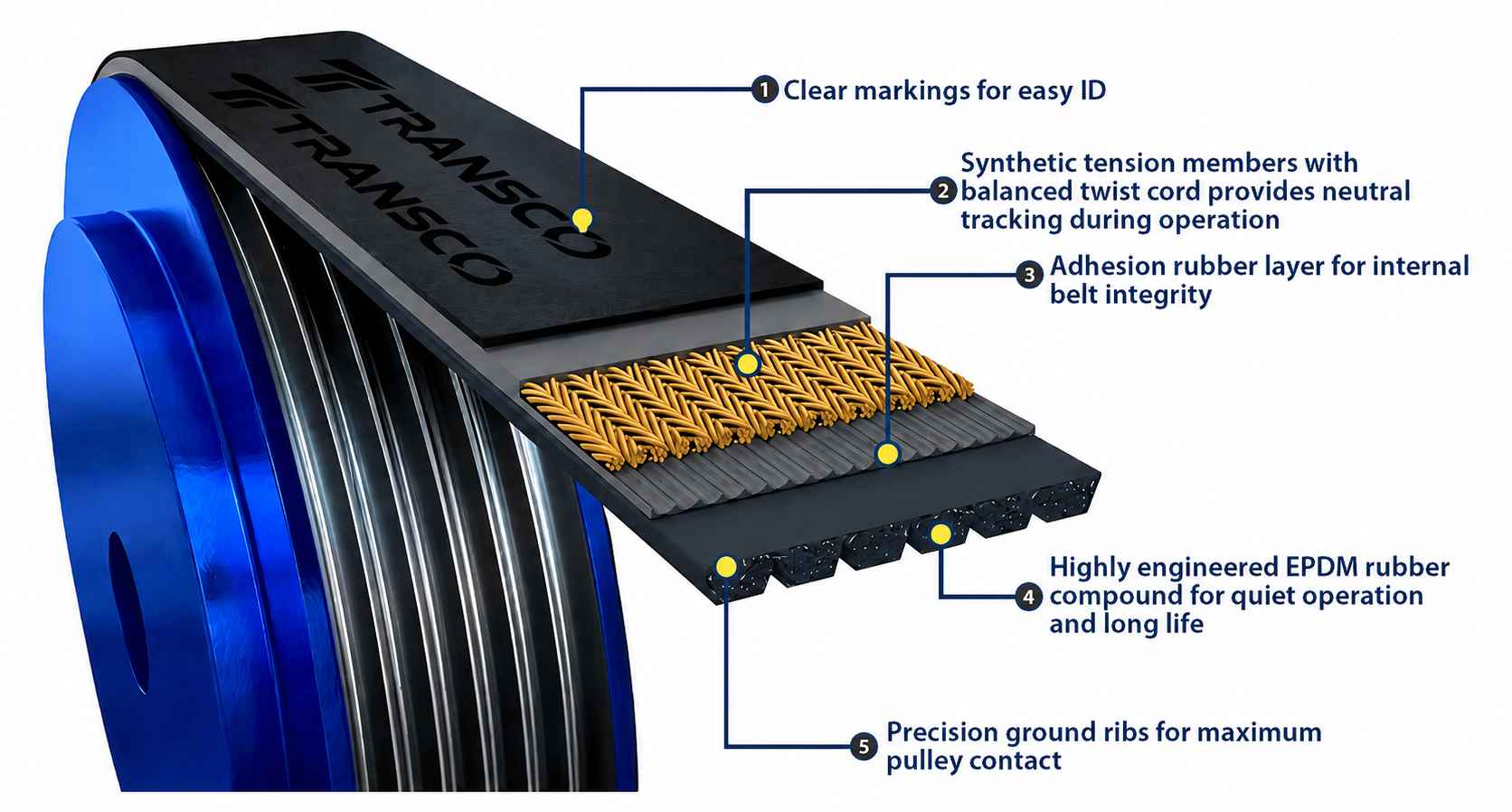
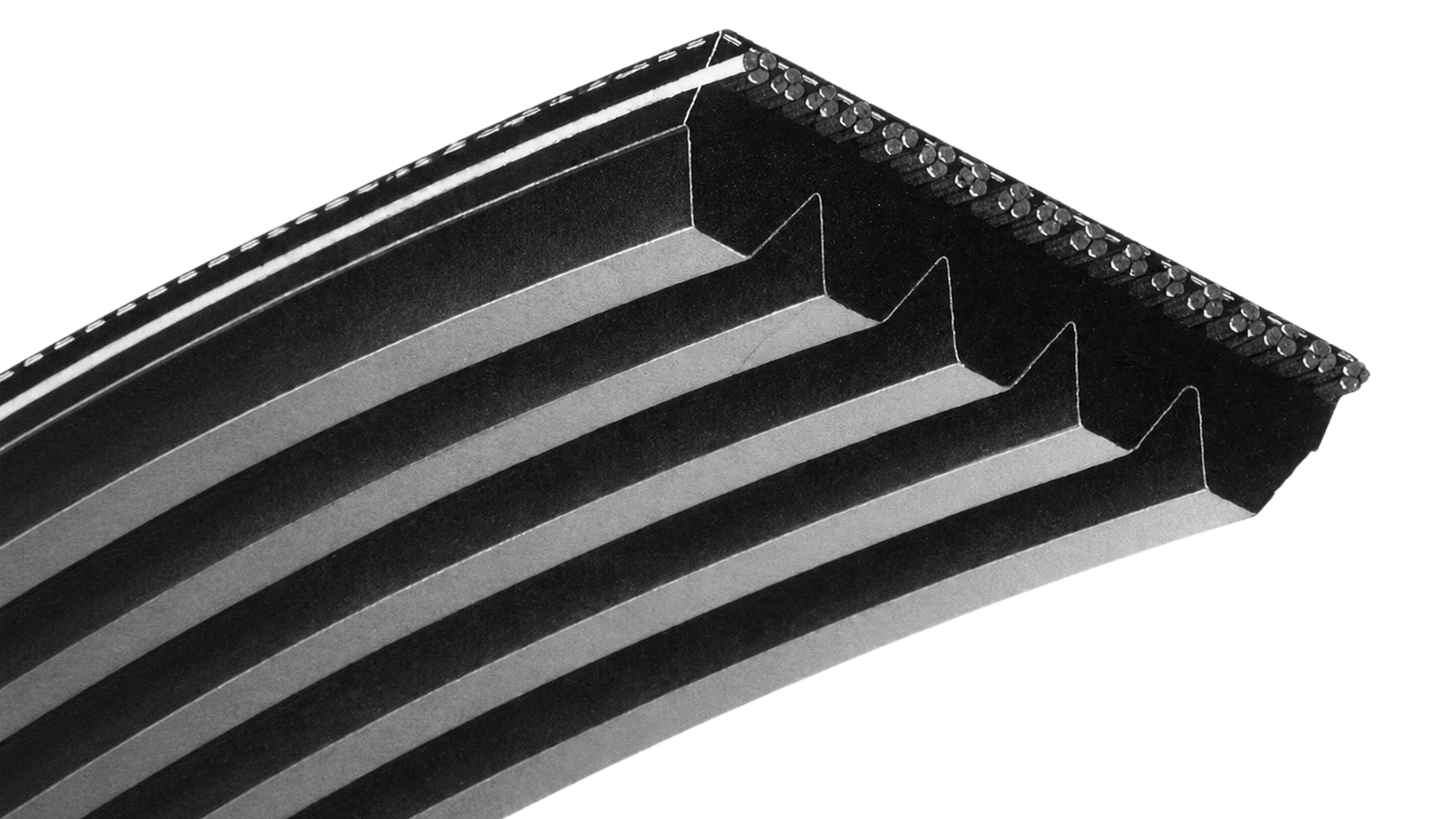
A high-quality ribbed belt is typically composed of a back cover, high-strength tensile cords, an adhesion compound, a rubber body and precision-formed longitudinal ribs. These components work together to provide stable torque transmission, dimensional stability, flexibility and reliable performance under continuous operating conditions.
|
How to Select the Correct Ribbed Belt?
|
Step |
What to Confirm |
Selection Guidance |
|---|---|---|
|
1. Identify the Belt Code and Profile |
Printed belt code, PH, PJ, PK, PL or PM profile |
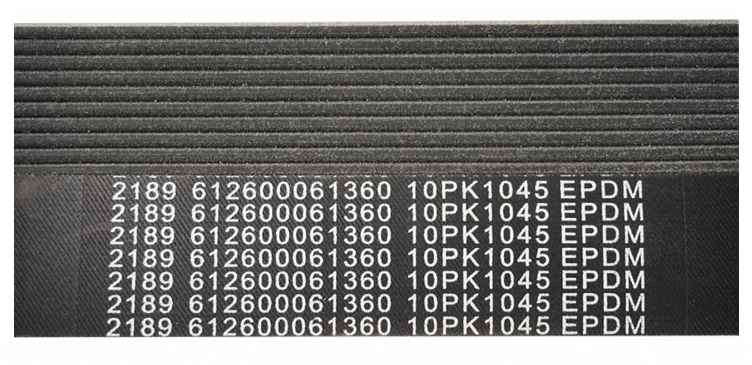
Check the marking on the original belt first. The profile must match the pulley groove dimensions. PK is commonly used in automotive accessory drives, PH and PJ in appliances and compact drives, and PL or PM in larger industrial systems. |
|
2. Confirm Rib Number and Belt Length |
Rib quantity, effective length and belt width |
The rib number must match the pulley width. An incorrect length may cause installation difficulty, insufficient tension, slippage, noise or excessive bearing load. |
|
3. Check the Pulley and Drive Layout |
Pulley diameter, groove profile, center distance and routing |
Confirm that the belt profile fits the pulley grooves. For multi-pulley or serpentine layouts, provide the complete belt routing and information about tensioners or backside idlers. |
|
4. Match the Material to the Working Conditions |
Temperature, speed, load, environment and expected service conditions |
EPDM is commonly selected for heat, ozone and aging resistance. CR is suitable for many general industrial and appliance applications. Final material selection should be based on the actual operating conditions. |
|
5. Provide Complete Order Information |
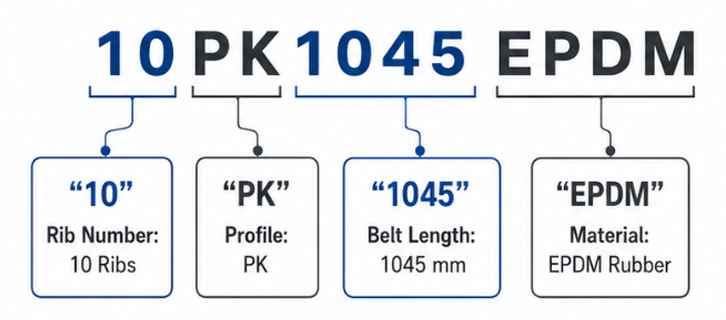
Belt code, profile, ribs, length, quantity, application and customization |
For faster confirmation, provide the equipment model, OEM number, old belt photo, sample or technical drawing. Also specify marking, branding, packaging and estimated order quantity when required. |
| Quick Inquiry Checklist | ||
|
|
|
|
Belt Code |
6PK1200, 5PJ1270 or existing marking |
|
|
Profile |
PH, PJ, PK, PL or PM |
|
|
Rib Number |
3, 4, 6, 8, 10 ribs or customized |
|
|
Belt Length |
Effective or specified nominal length |
|
|
Application |
Automotive, appliance or industrial drive |
|
|
Reference Information |
OEM number, equipment model, photo, sample or drawing |
|
|
Order Requirement |
Quantity, marking, branding and packaging |
|
Model Specifications
|
|
|||
|
Standard Ribbed Belt Profiles |
||||
|
Profile |
Nominal Height (mm) |
Rib Pitch Pb (mm) |
Groove Angle |
Length Designation |
|
PH |
2.5 |
1.6 |
40° |
Effective Length Le |
|
PJ |
3.3 |
2.34 |
40° |
Effective Length Le |
|
PK |
4.6 |
3.56 |
40° |
Effective Length Le |
|
PL |
7.0 |
4.7 |
40° |
Effective Length Le |
|
PM |
13.0 |
9.4 |
40° |
Effective Length Le |
|
Double-Sided Ribbed Belt Profiles |
||||
|
Profile |
Total Height (mm) |
Rib Pitch Pb (mm) |
Groove Angle |
Available Length |
|
DPJ |
5.6 |
2.34 |
40° |
Customized |
|
DPK |
7 |
3.56 |
40° |
Customized |
|
DPL |
10 |
4.7 |
40° |
Customized |
Applications
|
|
|
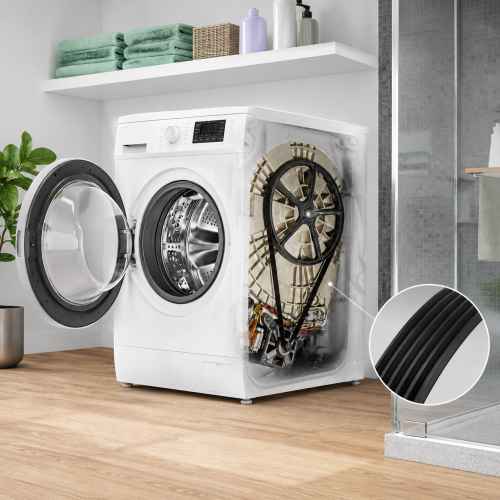
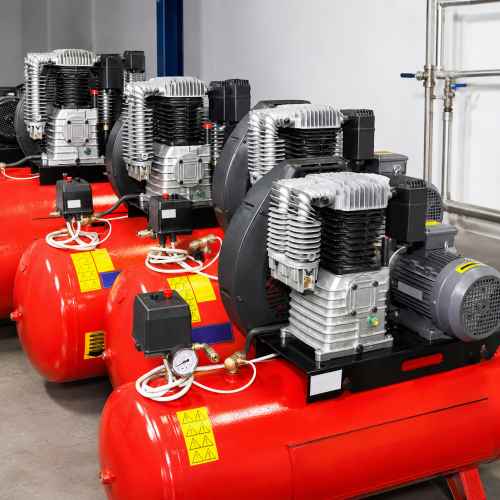
| Automotive Engine Systems | Washing Machines and Dryers | Compressors, Fans and Pumps |
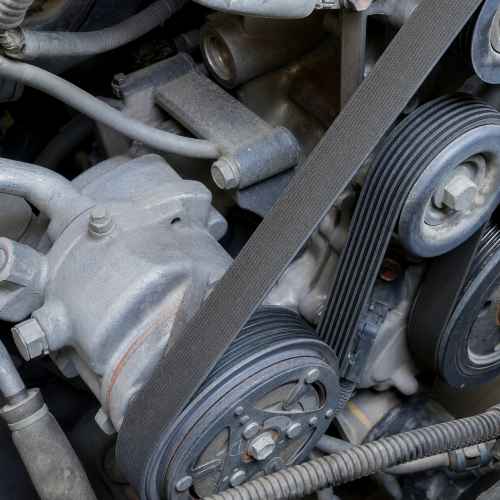
| PK ribbed belts, micro V belts and serpentine belts are widely used in automotive accessory drive systems. They can drive alternators, fans, water pumps, power steering pumps and AC compressors, helping deliver stable engine accessory transmission with low noise and reliable grip. | PH and PJ ribbed belts are commonly used as washing machine belts, washer drive belts, dryer belts and tumble dryer belts. Their flexible structure and stable rib design help transfer power from the motor to the drum, making them suitable for front load washing machines, washer dryers and laundry appliance spare parts. | Poly V belts are suitable for compressor drives, fan drives, blower systems and pump drive systems. Their high contact area and smooth running performance help reduce vibration and improve transmission stability in compact motor drive layouts. |
|

|
|
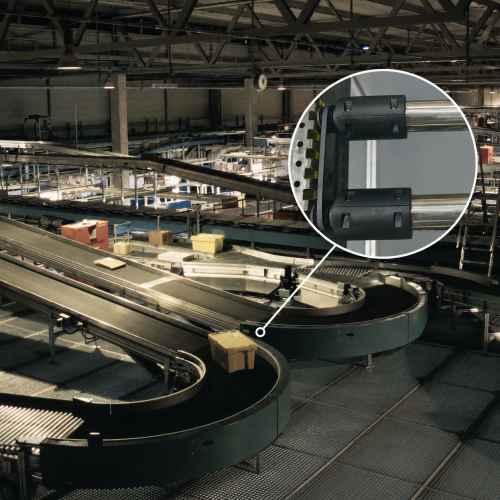
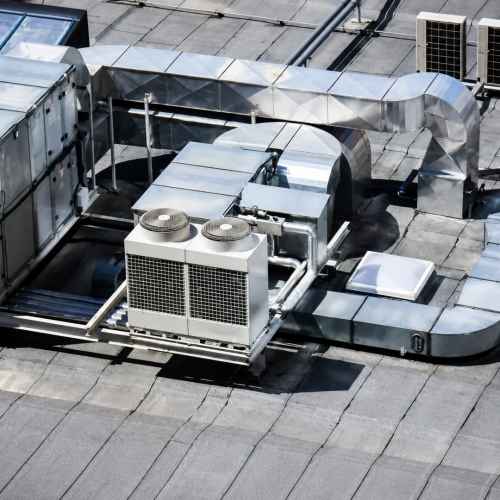
| Roller Conveyors and Logistics Equipment | Industrial Machinery | HVAC and Blower Systems |
| Poly V belts are also used in roller conveyors, logistics equipment and material handling systems. Customized ribbed belts can help drive multiple rollers and support smooth conveying performance. | Industrial poly V belts are used in packaging machines, printing machines, textile machinery, woodworking machines, machine tools and general power transmission equipment. They are suitable for high-speed drive systems, compact installation spaces and continuous operation environments. | Ribbed belts can be used in HVAC equipment, air handling units, blowers and ventilation systems. Their low vibration and stable power transmission help support quiet and efficient operation in building equipment and industrial air systems. |
Packing and Shipping
|
|
|

|