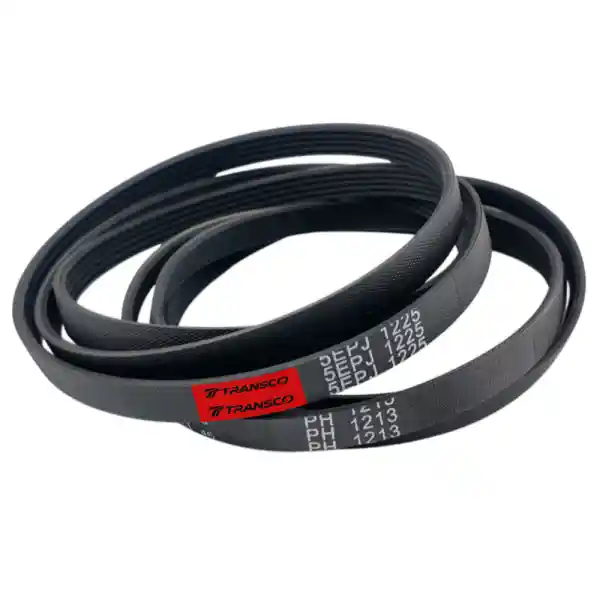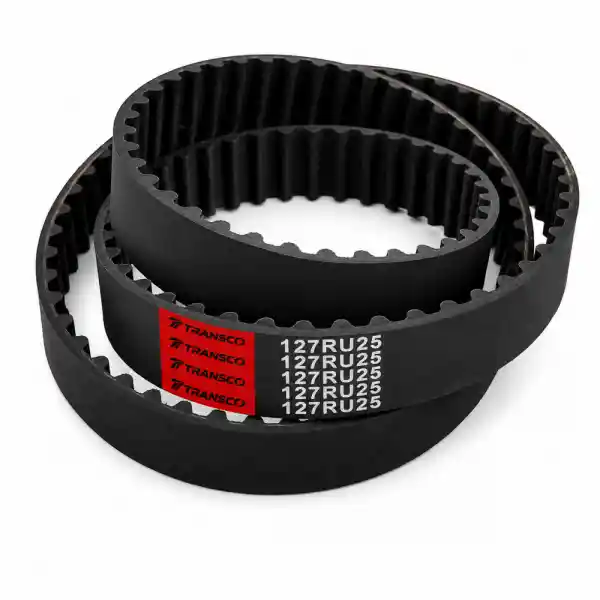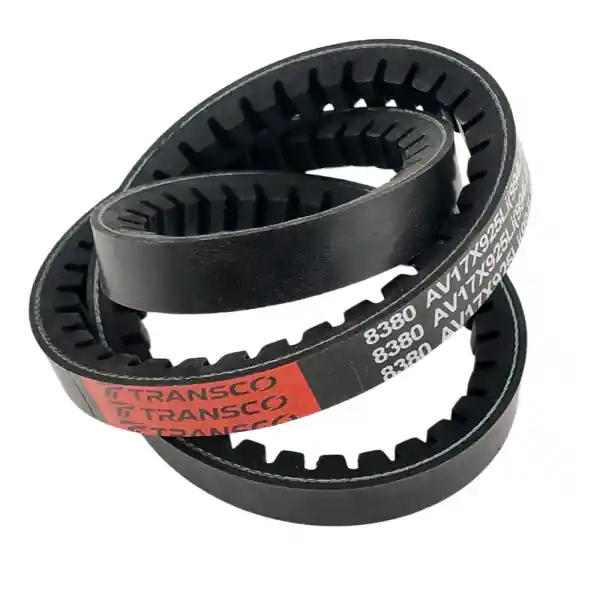
Industrial Timing Belt
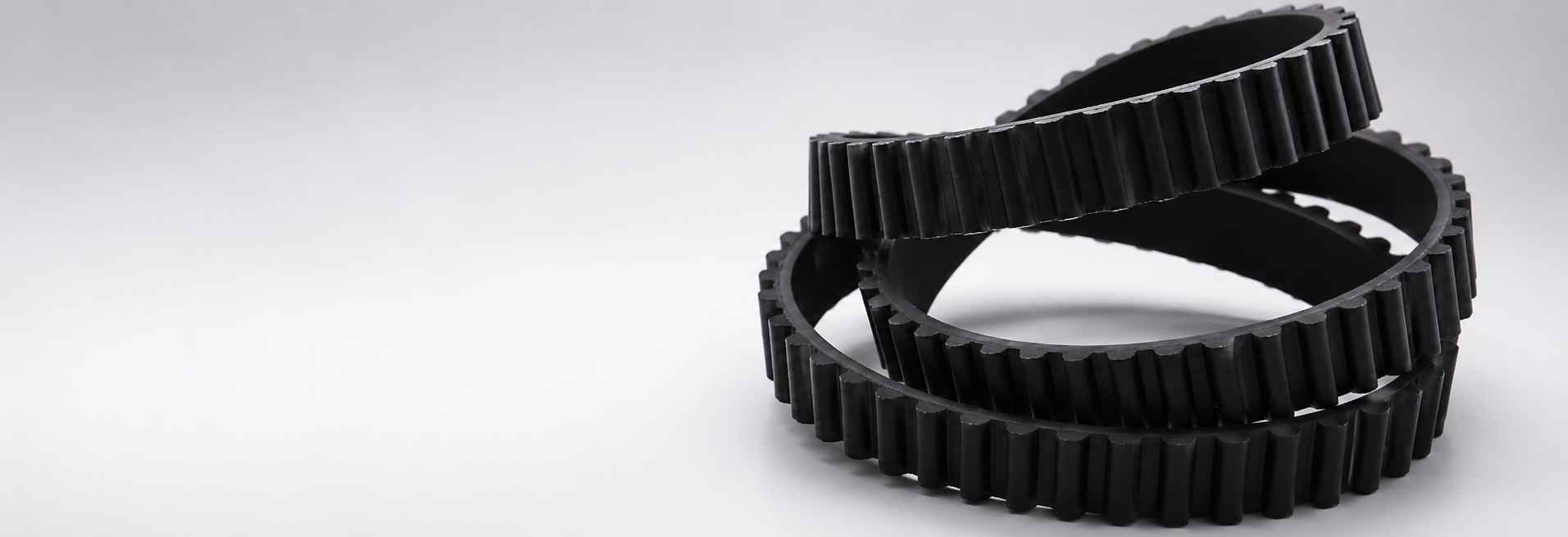
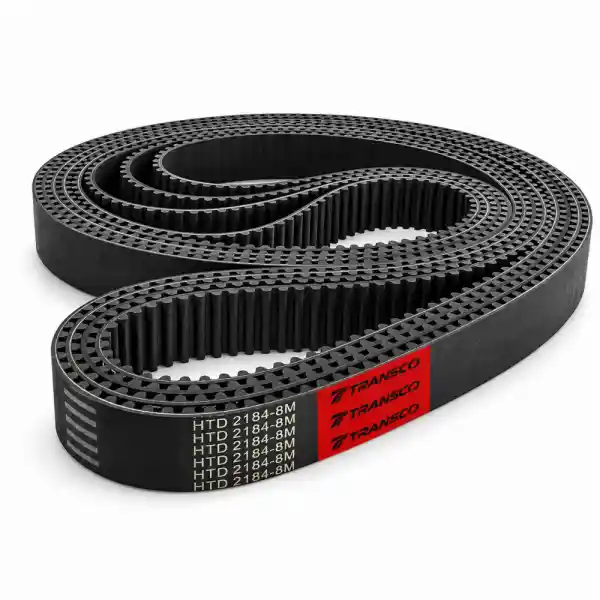
Available tooth profiles include MXL, XL, L, H, XH, HTD, STD, RPP, T, and AT series. Fiberglass, steel, and aramid tensile members can be selected according to the required load, flexibility, elongation control, operating speed, and positioning accuracy.
Available Options
Materials: Rubber and polyurethane
Tooth Profiles: Imperial, metric, trapezoidal, and curvilinear profiles
Belt Types: Endless and open-ended timing belts
Customization: Width, length, coating, cleats, guide profiles, perforations, marking, and packaging
Matching Support: Belt code, dimensions, pulley data, drawing, sample, or product photographs
What is an Industrial Timing Belt?
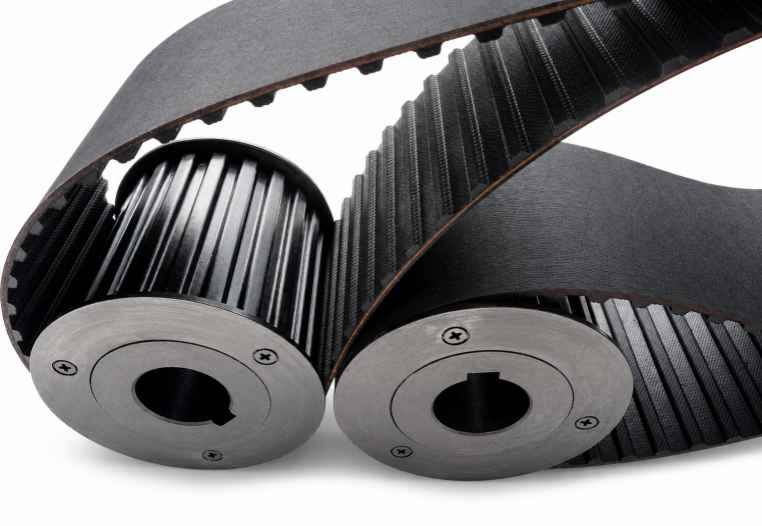
An industrial timing belt, also known as an industrial synchronous belt or toothed drive belt, transmits power through positive engagement between molded belt teeth and matching timing pulley grooves. Unlike friction-driven belts, its transmission principle does not depend primarily on friction between the belt and pulley. The direct engagement of the teeth maintains a consistent speed ratio and synchronized movement between the driving and driven shafts.
This slip-free transmission principle makes industrial timing belts suitable for machinery that requires accurate positioning, repeatable linear motion, stable speed control, precise indexing or synchronized shaft movement. Their lubrication-free operation also makes them suitable for systems where cleanliness and reduced routine maintenance are important.
Industrial timing belts are widely used in automation equipment, packaging machinery, textile machines, printing systems, linear motion units, product handling conveyors, food processing equipment and general industrial drive systems. Depending on the application, the belt body can be manufactured from rubber or polyurethane and reinforced with fiberglass, steel cord, aramid cord, polyester or other tensile materials.
Why choose TRANSCO Industrial Timing Belt?
Accurate Synchronous Transmission
: The molded belt teeth engage directly with matching timing pulley grooves, maintaining a consistent speed ratio without normal frictional slip. When the tooth profile, pulley geometry and installation tension are correctly matched, the belt supports repeatable positioning, precise indexing and synchronized shaft movement in automation equipment, packaging machinery and frequent start-stop drive systems.
Rubber and Polyurethane Material Options
: Rubber timing belts provide flexibility, vibration absorption and stable torque transmission, making them suitable for pumps, fans, compressors, textile machines and general industrial drives. Polyurethane timing belts provide higher wear resistance and dimensional stability, making them better suited to linear motion, servo positioning, lifting, indexing and customized conveying applications.
Wide Tooth Profile and Pitch Coverage
: TRANSCO supplies MXL, XL, L, H, XH, HTD, STD, RPP, T and AT timing belt profiles for different pulley systems and load requirements. Trapezoidal profiles are commonly used in conventional industrial drives, while curvilinear profiles provide smoother tooth engagement and improved load distribution for higher-speed or higher-load transmission. The selected profile and pitch must match the existing pulley exactly.
High-Strength, Low-Elongation Construction
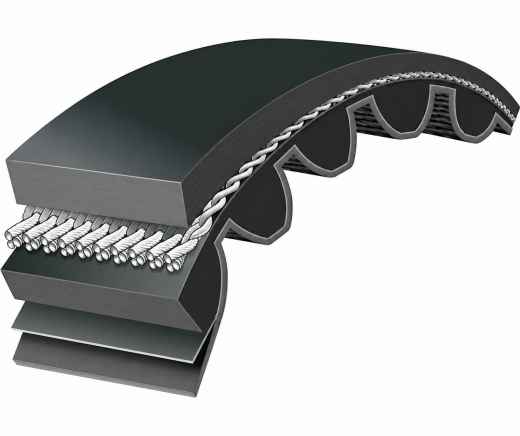
: Fiberglass, steel and aramid tensile cords carry the transmission load and help maintain consistent belt pitch during repeated bending. Fiberglass is widely used for general rubber timing belts, steel cord provides low elongation for precise linear positioning, and aramid cord combines high strength with lower weight. Wear-resistant tooth-facing fabric can further reduce pulley friction and protect the molded teeth from premature wear.
Custom Timing Belt Options
: Belt profile, length, width, tensile cord and backing structure can be selected according to the machine and operating conditions. Available processing includes endless or open-ended construction, rubber or polyurethane coatings, foam backings, cleats, guide profiles, perforations, vacuum holes, surface grinding and customized marking for positioning, lifting, conveying and product-handling systems.
Technical Standards
TRANSCO industrial timing belts are manufactured and inspected according to the applicable belt material, construction, tooth profile, dimensional system and confirmed order specification. Verified test reports and inspection records can be provided according to customer and order requirements.
①
General-Drive Synchronous Belts
: Applicable general-purpose industrial synchronous belts are manufactured and inspected in accordance with GB/T 13487-2025.
②
Imperial-Pitch Trapezoidal Profiles
: The tooth geometry, belt dimensions, dimensional tolerances and length measurement of applicable imperial-pitch trapezoidal timing belts conform to ISO 19347:2015.
③
Metric Curvilinear Profiles
: G, H, R and S metric-pitch curvilinear timing belts conform to the applicable requirements of ISO 13050:2022 and/or GB/T 24619-2021, as specified in the order.
④
T and AT Profiles
: Endless and open-ended T and AT timing belts conform to the applicable dimensional requirements of ISO 17396:2024. Applicable Chinese standards include GB/T 28774-2021 for T-profile timing belts and GB/T 37203-2018 for AT-profile timing belts.
⑤
Heat Ageing and Heat Resistance
: Heat-ageing performance of applicable rubber compounds is tested according to ISO 188:2023 or GB/T 3512-2014. Changes in specified physical properties are evaluated after controlled hot-air exposure.
⑥
Oil and Liquid Resistance
: The resistance of applicable rubber compounds to oils, petroleum-based liquids and specified chemical media is evaluated according to ISO 1817:2024 or GB/T 1690-2010 under confirmed test conditions.
⑦
Ozone Ageing Resistance
: Ozone-cracking resistance of applicable rubber compounds is tested according to ISO 1431-1:2024 or GB/T 7762-2014, based on the specified ozone concentration, strain, temperature and exposure time.
⑧
Operating Temperature Verification
: The operating-temperature range is verified according to the belt body material, tensile member, tooth-facing fabric, compound formulation, pulley diameter, transmitted load and working environment. The approved temperature range is stated in the confirmed technical specification or test report.
⑨
Final Product Inspection
: Belt profile, pitch, number of teeth, pitch length, width, thickness, tooth geometry, appearance, marking and customized processing are inspected before shipment. Inspection records or test reports can be supplied according to the confirmed order requirements.
Construction
|
|
Belt Body:
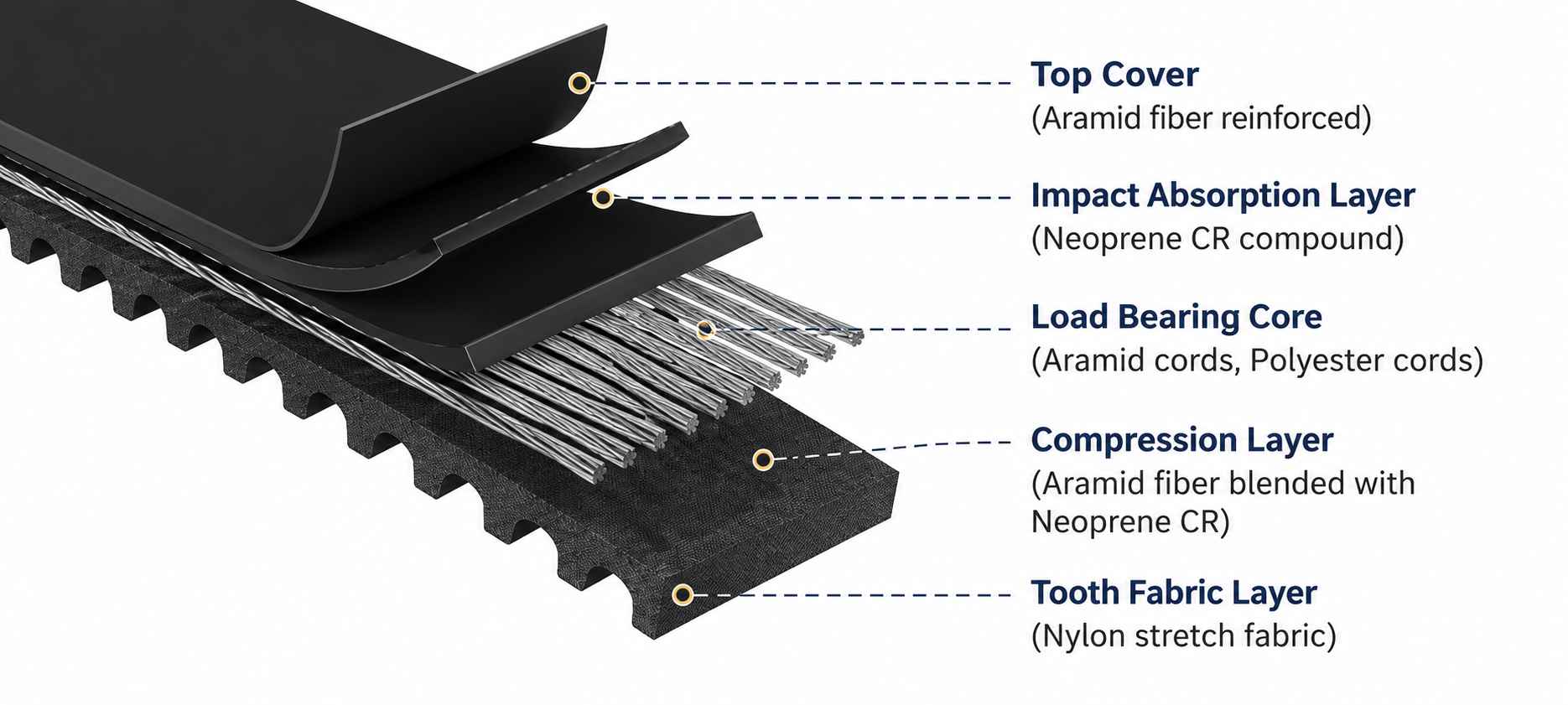
The belt body forms the main flexible structure of an industrial timing belt. A rubber timing belt body provides flexibility, vibration absorption and stable performance in general industrial power transmission. A polyurethane timing belt body provides wear resistance, dimensional stability and processing flexibility for automation, positioning, lifting and customized conveying applications. The rubber compound or polyurethane grade should be selected according to temperature, abrasion, oil exposure, cleanliness and mechanical requirements. Belt body materials with different formulations can provide different performance characteristics even when the belts share the same tooth profile and dimensions.
|
How to choose Industrial Timing Belt?
Match the Tooth Profile and Pitch:
The first step is to confirm that the timing belt tooth profile and pitch match the existing pulley grooves exactly. Common industrial profiles include MXL, XL, L, H, XH, HTD, STD, RPP, T and AT. Timing belts with similar appearances can have different tooth geometry, pressure distribution or pitch dimensions. Installing an incompatible belt can cause poor engagement, abnormal running noise, uneven tooth contact, tooth jumping, accelerated wear and reduced transmission capacity. The original belt code, pulley profile, pitch measurement, tooth dimensions or machine specification should therefore be checked before ordering. When the existing profile cannot be identified, a drawing or physical sample should be provided.
Confirm Belt Length, Number of Teeth and Width:
Timing belt length can normally be identified from the original belt code, pitch length, number of teeth, belt pitch or machine specification. For many synchronous belt systems, pitch length is calculated by multiplying the number of teeth by the belt pitch. The outside circumference measured with a flexible tape may not equal the specified pitch length, so circumference measurement alone should not be used for final identification. Belt width must match the pulley width and transmission requirements. Although a wider timing belt generally provides greater load-carrying capacity, the final width should be determined according to torque, speed, pulley diameter, tooth engagement, machine design and the required safety factor.
Select the Belt Body Material:
A rubber industrial timing belt is generally suitable for power transmission systems that require flexibility, vibration absorption and stable continuous running. Typical applications include pumps, fans, compressors, textile machinery, machine tools and general industrial equipment. A polyurethane timing belt is generally suitable for precision positioning, linear motion, automation, lifting, packaging and customized product conveying. Polyurethane construction also supports a wide range of coatings, cleats, guides, perforations and other processing options. The final material selection should consider operating temperature, wear conditions, oil or liquid exposure, cleanliness requirements, pulley diameter, positioning accuracy and required surface processing.
Select the Tensile Cord:
The tensile cord affects the belt’s strength, elongation, bending characteristics and positioning accuracy. Fiberglass cord is widely used in rubber timing belts for stable general transmission and repeated flexing. Steel cord provides high tensile strength and low elongation for precise positioning, linear motion and lifting. Aramid cord combines high strength with relatively low weight and can be selected where reduced moving mass or specific flexibility is required. The final reinforcement material must be compatible with the belt body and should be selected according to load, speed, start-stop frequency, pulley diameter, bending requirements and required positioning accuracy.
Evaluate the Operating Conditions:
Timing belt selection should take account of transmitted power or torque, operating speed, start-stop frequency, reversing frequency, shock load, pulley diameter, number of pulley teeth, belt wrap angle, shaft alignment, center distance and installation tension. Environmental conditions must also be evaluated. Temperature, oil, moisture, dust, chemicals, cleaning procedures and outdoor exposure can affect the belt body, tensile member, fabric and customized surface. These factors determine the appropriate tooth profile, material, tensile cord, belt width and surface treatment. Supplying complete operating data allows a more accurate industrial timing belt recommendation than selecting only by length and width.
Confirm Custom Processing Requirements:
Timing belts used for product positioning, lifting, indexing or conveying may require a special backing, coating, cleats, guide profiles, perforations, vacuum holes, grinding or non-standard dimensions. These requirements should be confirmed with a technical drawing, physical sample or complete dimensional information. The drawing should identify the belt profile, pitch, length, width, coating material, coating thickness, cleat spacing, guide position, perforation pattern and applicable tolerances. For replacement orders, the complete belt marking and clear photographs should be provided. For new drive designs, the pulley data, transmitted load, speed, center distance, operating environment and required positioning accuracy should also be supplied.
| Quick Selection Checklist | ||
|
|
|
| Selection Item | What to Check | Recommended Choice |
|---|---|---|
| Application Type | Power transmission, positioning, conveying, packaging, textile, printing, automation, or food handling | Choose belt structure according to working function |
| Belt Material | Rubber or polyurethane | Rubber for general drive systems; PU for clean, precise, and wear-resistant conveying |
| Tooth Profile | Match the timing pulley groove | Common profiles include MXL, XL, L, H, T5, T10, AT5, AT10, HTD, STD, and other metric or imperial profiles |
| Belt Pitch | Distance between two adjacent teeth | Must match the timing pulley pitch exactly |
| Belt Length | Inner length, pitch length, or standard belt code | Confirm according to machine design or original belt marking |
| Belt Width | Load capacity and pulley width | Wider belts are suitable for higher load transmission |
| Tensile Cord | Fiberglass, steel cord, aramid, or other reinforcement | Fiberglass for stable general use; steel cord for high strength and positioning; aramid for flexibility and lightweight design |
| Load and Speed | Torque, RPM, start-stop frequency, and shock load | Select stronger reinforcement and suitable tooth profile for heavy-load or high-speed operation |
| Working Environment | Temperature, oil, dust, moisture, chemicals, or clean room requirements | Select rubber, PU, special coating, or oil-resistant materials according to the environment |
| Pulley Compatibility | Tooth shape, pulley diameter, and alignment | Belt profile and pulley profile must be matched to avoid tooth jumping or abnormal wear |
| Surface Processing | Coating, backing, cleats, guide profiles, perforations, or grinding | Use customized processing for conveying, positioning, lifting, or product handling |
| Replacement Requirement | Original belt code, size, profile, and application | Provide belt marking, pulley data, sample, or drawing for accurate replacement |
| Custom Requirement | Non-standard length, width, color, hardness, logo, or special structure | Choose OEM or ODM custom timing belt service |
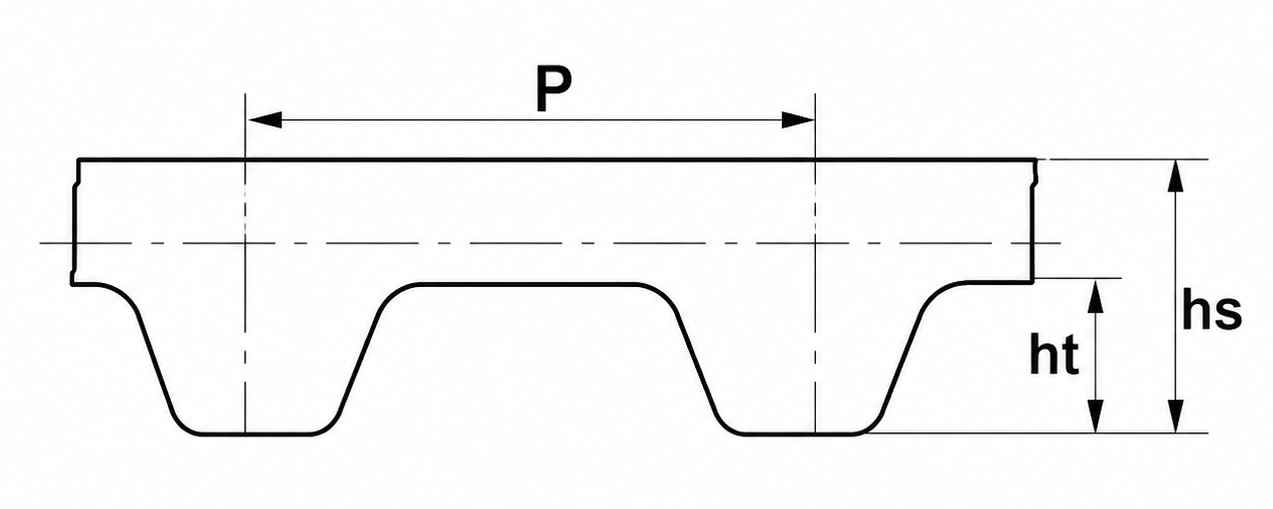
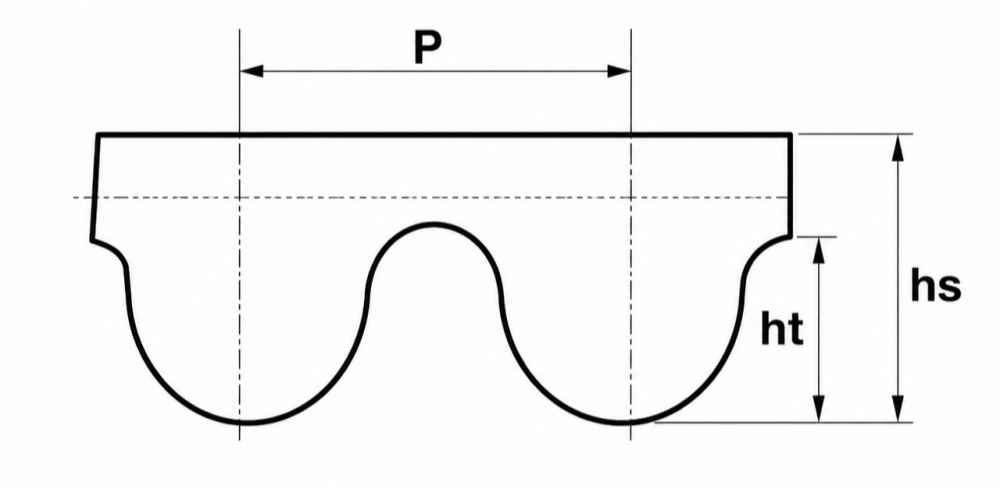
Model Specifications
|
|
|||||||
| Profile | Tooth Pitch P (mm) | Tooth Height hₜ (mm) | Overall Belt Height hₛ (mm) | Profile | Tooth Pitch P (mm) | Tooth Height hₜ (mm) | Overall Belt Height hₛ (mm) | |
|---|---|---|---|---|---|---|---|---|
| MXL | 2.032 | 0.51 | 1.14 | 3M | 3 | 1.17 | 2.40 | |
| XXL | 3.175 | 0.76 | 1.52 | 5M | 5 | 2.06 | 3.80 | |
| XL | 5.080 | 1.27 | 2.30 | 8M | 8 | 3.36 | 6.00 | |
| L | 9.525 | 1.91 | 3.60 | 14M | 14 | 6.02 | 10.0 | |
| H | 12.70 | 2.29 | 4.30 | 20M | 20 | 8.40 | 13.20 | |
| XH | 22.225 | 6.35 | 11.20 | S2M | 2 | 0.76 | 1.36 | |
| XXH | 31.750 | 9.53 | 15.70 | S3M | 3 | 1.14 | 1.90 | |
| T2.5 | 2.5 | 0.7 | 1.30 | S4.5M | 4.5 | 1.71 | 2.81 | |
| T5 | 5 | 1.2 | 2.20 | S5M | 5 | 1.91 | 3.40 | |
| T10 | 10 | 2.50 | 4.50 | S8M | 8 | 3.05 | 5.30 | |
| T20 | 20 | 5.00 | 8.00 | S14M | 14 | 5.30 | 10.20 | |
| AT5 | 5 | 1.20 | 2.70 | RP2M | 2 | 0.76 | 1.36 | |
| AT10 | 10 | 2.50 | 5.00 | RP3M | 3 | 1.15 | 1.90 | |
| AT20 | 20 | 5.00 | 8.00 | RP5M | 5 | 1.95 | 3.50 | |
| RP8M | 8 | 3.20 | 5.5 | |||||
| RP14M | 14 | 6.00 | 10.00 | |||||
Applications
|

|
|
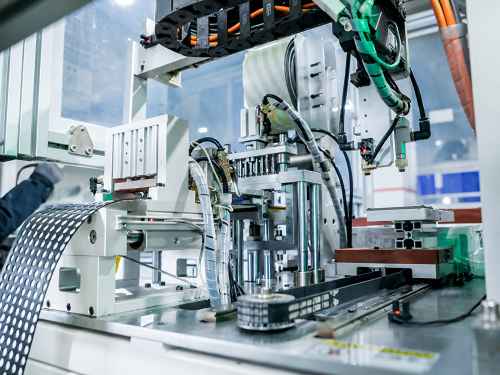
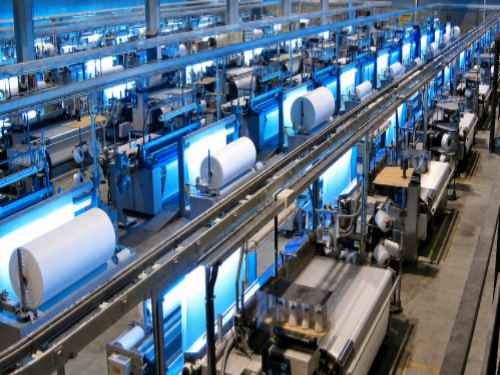
| Automation Equipment | Packaging Machinery | Textile Machinery |
|
Industrial timing belts are used in automation equipment for linear motion, indexing, positioning and synchronized movement. Typical systems include robotic arms, pick-and-place units, linear modules, servo-driven axes, automated assembly lines, inspection equipment and positioning tables.
Low-elongation polyurethane timing belts with steel or aramid tensile cords can be selected when repeatability and positioning stability are important. Belt width, cord type, pulley diameter and installation tension must be matched to the moving load and required accuracy. |
Timing belts for packaging machinery control product feeding, filling, sealing, labeling, sorting, wrapping and carton handling. They can be used in flow-wrapping machines, filling machines, labeling equipment, carton sealers, case-packing systems and product transfer conveyors.
Positive tooth engagement supports synchronized product movement during continuous running and repeated start-stop cycles. Coatings, cleats, guides and vacuum holes can be added when the belt must hold, separate, position or transport individual products. |
Industrial timing belts are used in textile machinery to maintain stable speed ratios and synchronized movement. Typical applications include weaving machines, spinning machines, knitting equipment, embroidery machines, yarn-processing systems, fabric-cutting machines and textile finishing equipment.
Rubber timing belts are commonly selected when flexibility, vibration absorption, stable running and controlled operating noise are required. The belt construction should be selected according to machine speed, pulley diameter, transmitted load and exposure to dust or textile fibers. |
|
|
|
| Printing and Paper Processing Equipment | Food Processing and Clean Conveying Lines | General Industrial Power Transmission |
|
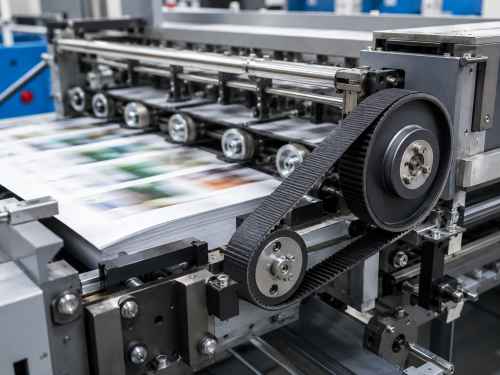
Printing and paper-processing machinery requires accurate feeding, registration and positioning. Industrial timing belts can be used in printing machines, digital printers, paper cutters, folding machines, binding equipment, carton printing systems and paper-feeding units.
Consistent tooth engagement helps maintain synchronized movement between feeding, cutting, folding and printing mechanisms. The belt profile, tensile cord and surface friction should be selected according to the paper type, processing speed and required registration accuracy. |
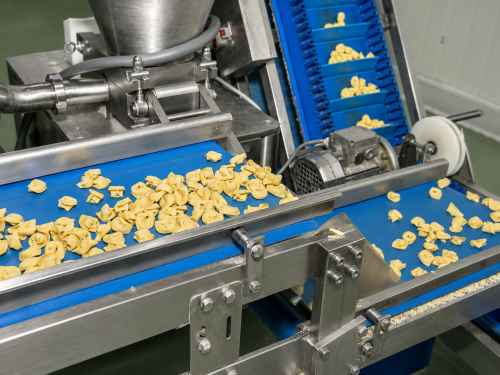
Polyurethane timing belts are commonly used in food-processing and clean product-handling systems because of their wear resistance, dimensional stability and customization capability. They can be used in bakery equipment, sorting systems, packaging conveyors, weighing machines, product-spacing systems and clean transfer equipment.
The selected polyurethane, coating and processing method must be suitable for the actual hygiene conditions, conveyed product and cleaning procedure. Use in direct food-contact applications should be confirmed against the required food-contact declaration, material specification and applicable market requirements rather than assumed from the polyurethane material alone. |
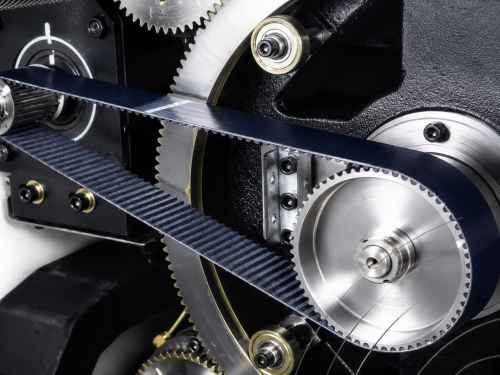
Industrial synchronous belts are used in general drive systems that require stable speed control and reliable power transmission. Typical equipment includes machine tools, pumps, fans, compressors, woodworking machinery, ceramic equipment, glass-processing machines, agricultural equipment and general conveying systems.
The belt profile, pitch, width, material and tensile reinforcement should be selected according to power, torque, operating speed, pulley diameter, center distance and environmental conditions. |
Packing and Shipping
|
|
|

|
Frequently Asked Questions
Check the original belt code, pulley profile, pitch measurement or machine specification before ordering. A different profile with a similar appearance may still be incompatible with the pulley. When the profile cannot be identified, provide photographs or dimensional drawings of both the belt teeth and pulley grooves.
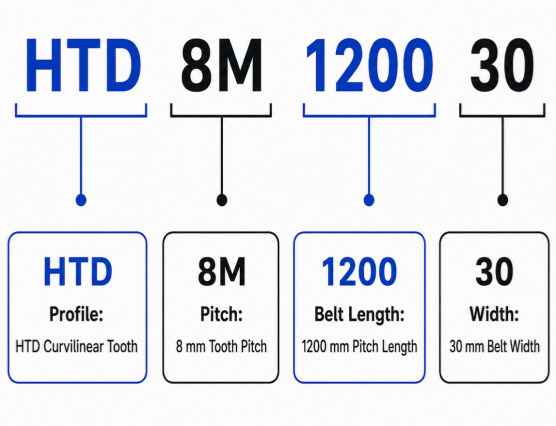
For example, 5M or 8M commonly indicates a nominal tooth pitch of 5 mm or 8 mm in applicable metric timing belt systems. Other numbers may represent the pitch length, number of teeth or belt width. The complete belt marking should therefore be provided rather than only one section of the code.
Measuring only the outside circumference with a flexible tape can produce an incorrect result because the outside circumference is not necessarily the specified pitch length. The tooth profile, pitch, number of teeth, belt width, belt thickness and pulley information should also be confirmed.
The final choice should also consider the transmitted load, operating speed, pulley diameter, temperature, oil exposure, cleanliness, positioning accuracy and required surface processing.
When the belt marking is damaged, provide photographs of the complete belt, tooth surface, belt side and timing pulley. A physical sample, pulley drawing or machine specification can further improve replacement-matching accuracy.
The available processing method depends on the belt material, profile, dimensions, bonding method and intended application. A technical drawing or physical sample should be supplied for non-standard processing.
For a new transmission design, also provide the pulley dimensions, number of pulley teeth, center distance, operating speed, transmitted power or torque, start-stop frequency, working environment and required positioning accuracy. Complete application information allows the timing belt manufacturer to recommend a more suitable profile, material, width and tensile reinforcement.
Excessive tension can overload the tensile cord and pulley bearings, while insufficient tension can allow the belt teeth to climb or jump over the pulley grooves. Misalignment and worn pulley teeth can create uneven contact across the belt width, and contamination can accelerate wear on both the belt and pulley.
The belt profile, pulley profile, tension setting, shaft alignment, pulley condition, operating load and working environment should therefore be checked together. Replacing the timing belt without correcting the original mechanical problem may result in repeated belt failure.
For a quotation, send the complete belt code, tooth profile, pitch, number of teeth or pitch length, width, material, quantity and application. For custom timing belts, also provide the technical drawing, pulley information, required backing or coating, cleat dimensions, guide position, perforation layout or physical sample.