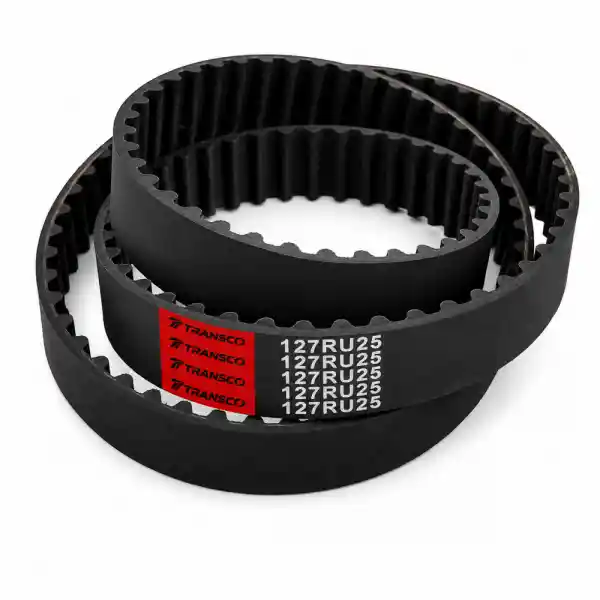
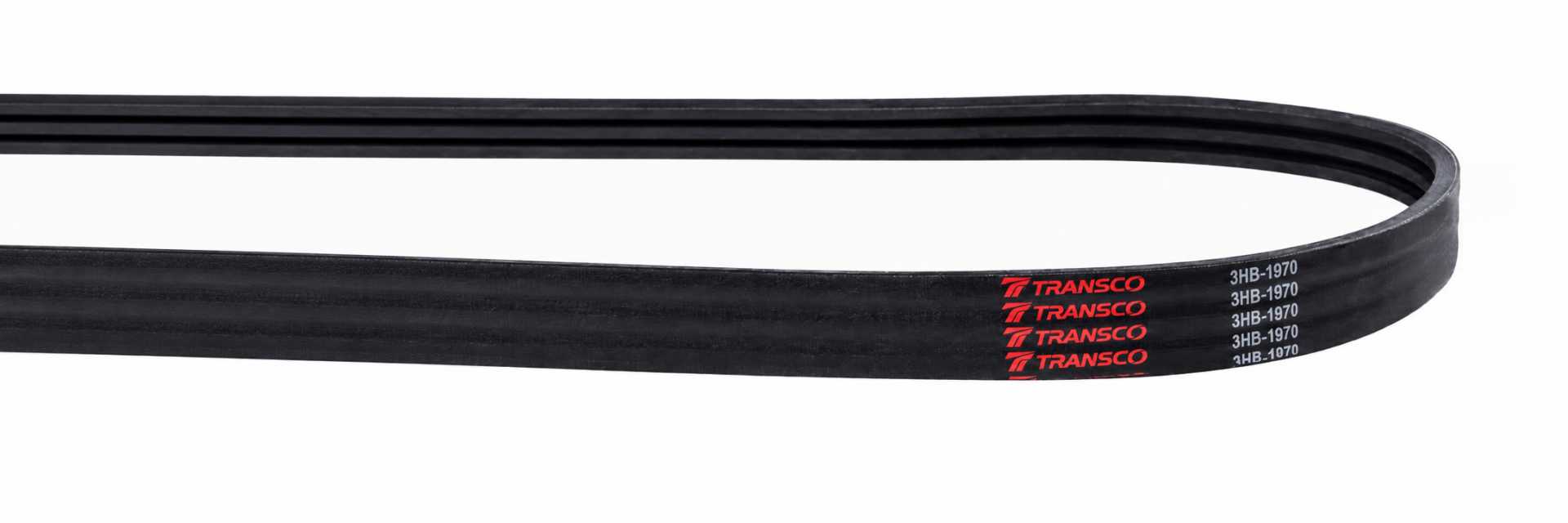
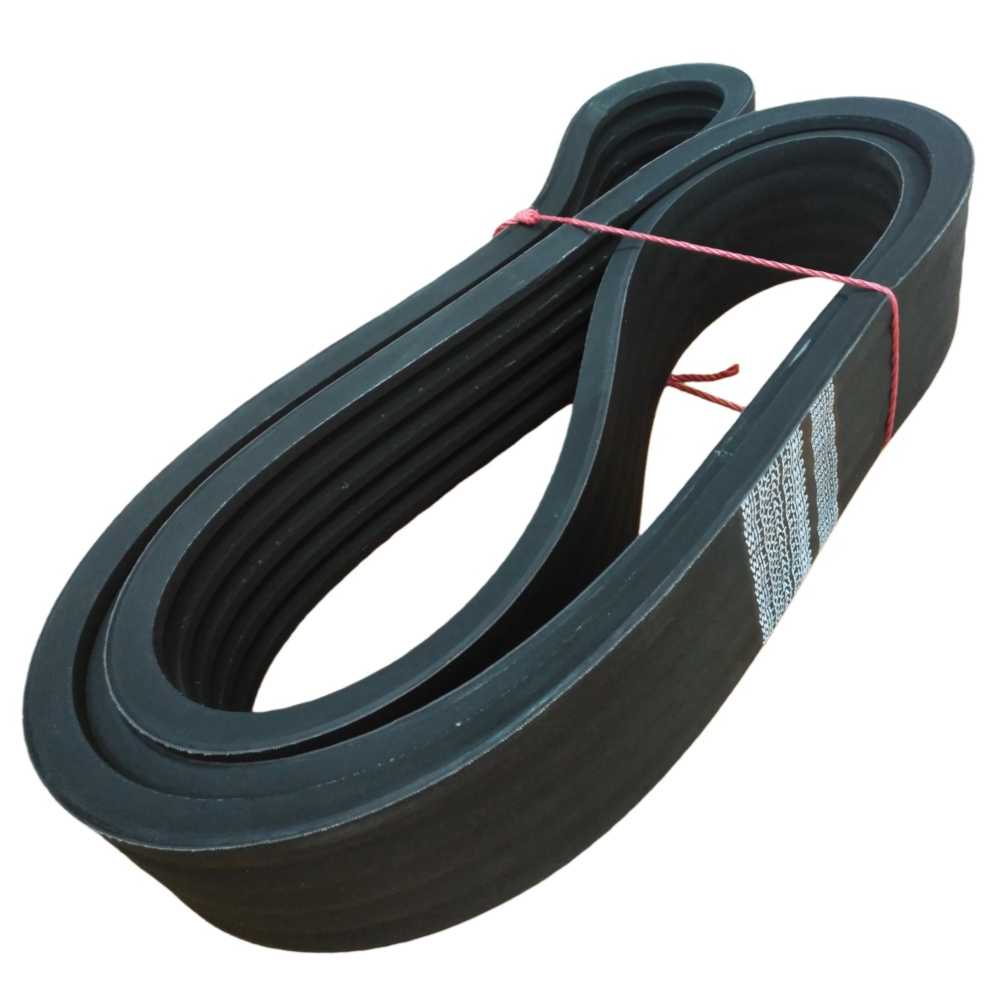
Banded Classical V-Belt
These belts can be considered for industrial drives affected by vibration, pulsating loads or shock loading. Send the complete belt marking, strand count and quantity for specification review. Profile, length, material requirements, product marking and packaging are confirmed for the requested order.
Key Features
• Joined classical V-belt strands with a reinforced top tie band
• Wrapped fabric cover for mechanical surface protection
• Improved lateral stability compared with independent strands
• Specification review for replacement and industrial supply requirements
What is a Banded Classical V-Belt?
A banded classical V-belt, also called a joined classical V-belt, combines two or more classical V-belt strands into one belt. Each strand transmits power through friction and wedging action against the sidewalls of a matching pulley groove. The connecting band keeps adjacent strands joined at a controlled spacing.
Compared with separate V-belts, the top tie band restricts independent lateral movement. This can help address belt whip, turnover or groove jumping in suitable drives. Correct pulley geometry, alignment and tension remain necessary; the connecting band cannot compensate for worn grooves or an unsuitable drive design.
Classical and narrow sections use different cross-sectional geometries. A banded classical belt should be selected for the corresponding joined-belt pulley requirements, rather than substituted for a narrow-section belt on appearance alone.
Why choose TRANSCO Banded Classical V-Belt?
Reinforced Joined-Strand Stability: Multiple classical V-belt strands are permanently connected by a reinforced top tie band, allowing them to operate as one integrated transmission unit. The connecting band controls the relative spacing between adjacent strands and improves lateral stability. With compatible pulleys, correct alignment and appropriate tension, the joined construction helps the strands work together and share the transmitted load.
Reduced Belt Whip, Turnover and Groove Jumping: The reinforced tie band limits independent sideways movement of the individual strands, helping reduce belt whip, turnover and the risk of groove jumping. This is useful in drives where vibration or fluctuating loads can make separate V-belts unstable. Correct pulley condition, alignment and installation tension remain essential.
Wrapped Fabric Protection: A fabric cover surrounds the V-belt body, helping protect the underlying rubber against abrasion and mechanical surface wear during pulley engagement. The flexible covering accommodates repeated bending around the pulleys while providing a protective contact surface for industrial transmission service.
Suitable for Shock and Pulsating Loads: When correctly selected, banded classical V-belts are suitable for compatible drives exposed to shock loads, pulsating loads or longer center distances where additional strand stability is needed. Potential applications include compressors, crushers and processing machinery. Final selection should consider transmitted power, operating speed, pulley dimensions, center distance and load characteristics.
Technical Standards
TRANSCO BELT manufactures Banded Classical V-Belts with reference to recognized international standards for joined V-belt pulley geometry, classical V-belt dimensional identification and antistatic performance. Applicable dimensions, pulley compatibility and performance requirements are verified according to the specified belt construction and customer application.
①ISO 5291:2011 — Joined Classical V-Belt Pulley Geometry
: ISO 5291:2011 specifies the principal characteristics of grooved pulleys for joined classical V-belts in AJ, BJ, CJ and DJ groove sections using the effective system. Correct groove profile, groove pitch and pulley geometry are essential for stable belt seating, proper load distribution and reliable transmission performance.
②ISO 4184:2025 — Classical V-Belt Sections & Datum Length System
: ISO 4184:2025 specifies classical V-belt sections including Y, Z, A, B, C, D and E and defines belt lengths using the datum system. For Banded Classical V-Belts, it provides an important reference for the underlying classical belt profile and length identification, while the complete dimensions of HA, HB, HC and HD banded constructions are confirmed according to the applicable product specification.
③ISO 1813:2025 — Antistatic Performance
: ISO 1813:2025 specifies maximum electrical resistance requirements and test methods for antistatic power transmission belts, including joined V-belts. TRANSCO BELT can provide Banded Classical V-Belts with antistatic performance tested according to the applicable ISO 1813 requirements when required by the operating environment or customer specification.
Banded Classical V-Belt Construction
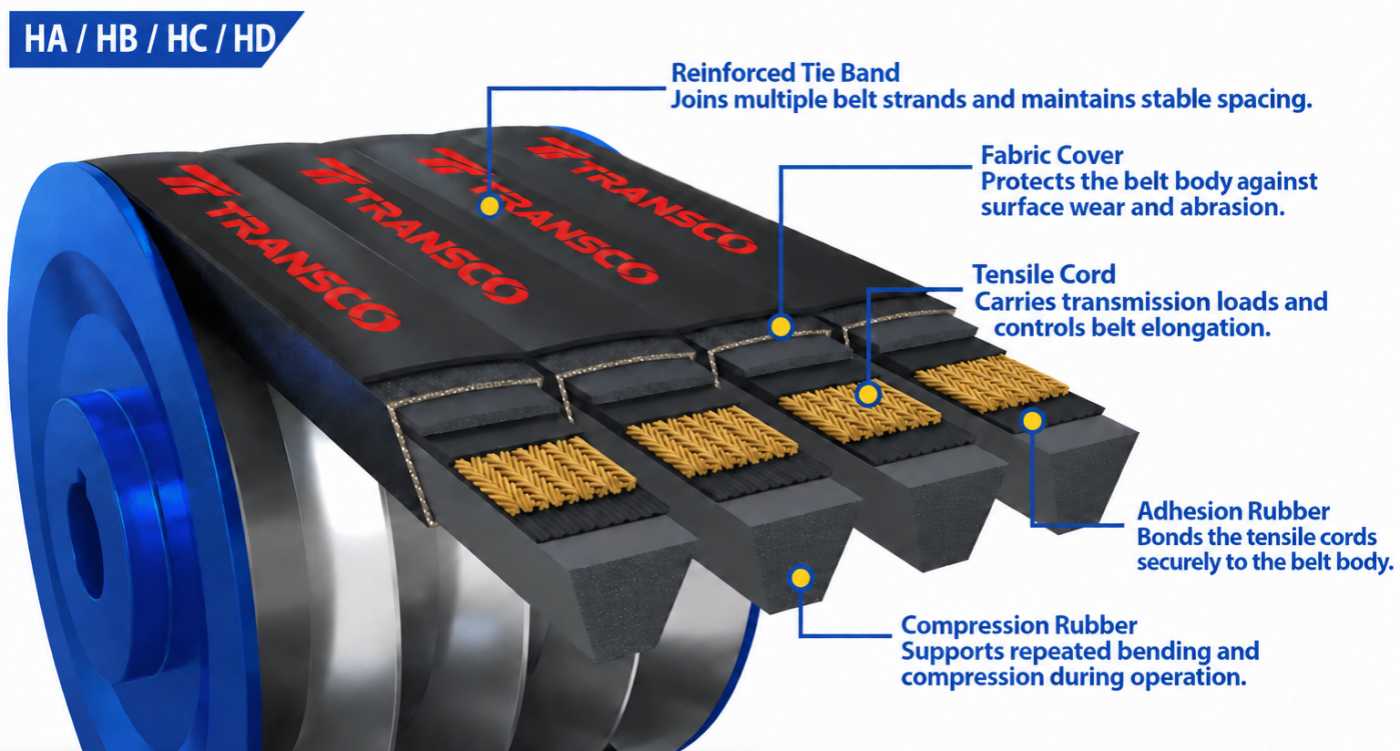
A A wrapped Banded Narrow V-Belt consists of multiple narrow V-belt strands permanently joined by a reinforced top tie band. Each strand includes a fabric cover, tensile cord, adhesion and cushion rubber, and compression rubber body. Together, these components provide the tensile strength, flexibility, lateral stability and controlled strand spacing required for reliable power transmission in compatible multi-groove pulley systems.
A.Reinforced Top Tie Band:
The reinforced top tie band permanently connects the individual V-belt strands and maintains controlled spacing between them. It increases lateral stability and helps restrict excessive sideways movement, belt whip and turnover when the belt operates in compatible multi-groove pulleys.
B.Fabric Cover:
The wrapped fabric cover protects the underlying rubber body against mechanical wear and abrasion during repeated pulley engagement. It also provides a durable external surface for stable contact with the pulley grooves while allowing the belt to flex continuously during operation.
C.Tensile Cord:
The tensile cord is the primary load-carrying member of each belt strand. It transmits longitudinal tensile force between the driving and driven pulleys while helping control belt elongation and maintain dimensional stability under operating tension. Cord material is selected according to the required belt specification and duty conditions.
D.Adhesion Rubber:
The adhesion rubber surrounds and supports the tensile cords, helping bond them securely to the surrounding belt structure. It transfers forces between the tensile member and rubber body and contributes to structural integrity during repeated bending and load cycles.
E.Compression Rubber:
The compression rubber forms the lower load-bearing body of each V-belt strand. It undergoes repeated bending and compressive deformation as the belt travels around the pulleys and helps maintain the V-shaped profile required for effective engagement with the pulley grooves.
Banded Classical V-Belt Specifications
Classical section designations include A, B, C and D. The section alone does not establish the finished banded-belt dimensions or availability. Send the full designation so the required profile, length and strand combination can be checked.
| Section | Top Width | Thickness | Angle |
| (mm) | (mm) | (Deg) | |
| HA | 13 | 10 | 40 |
| HB | 17 | 13 | 40 |
| HC | 22 | 16 | 40 |
| HD | 32 | 21 | 40 |
How to Choose a Banded Classical V-Belt
Selecting the correct Banded Classical V-Belt requires matching the belt profile, strand count, length and pulley geometry with the actual drive. For replacement orders, the original belt marking is the best starting point. For new drives, operating parameters and service conditions should also be confirmed.
1.Check the Original Belt Marking:
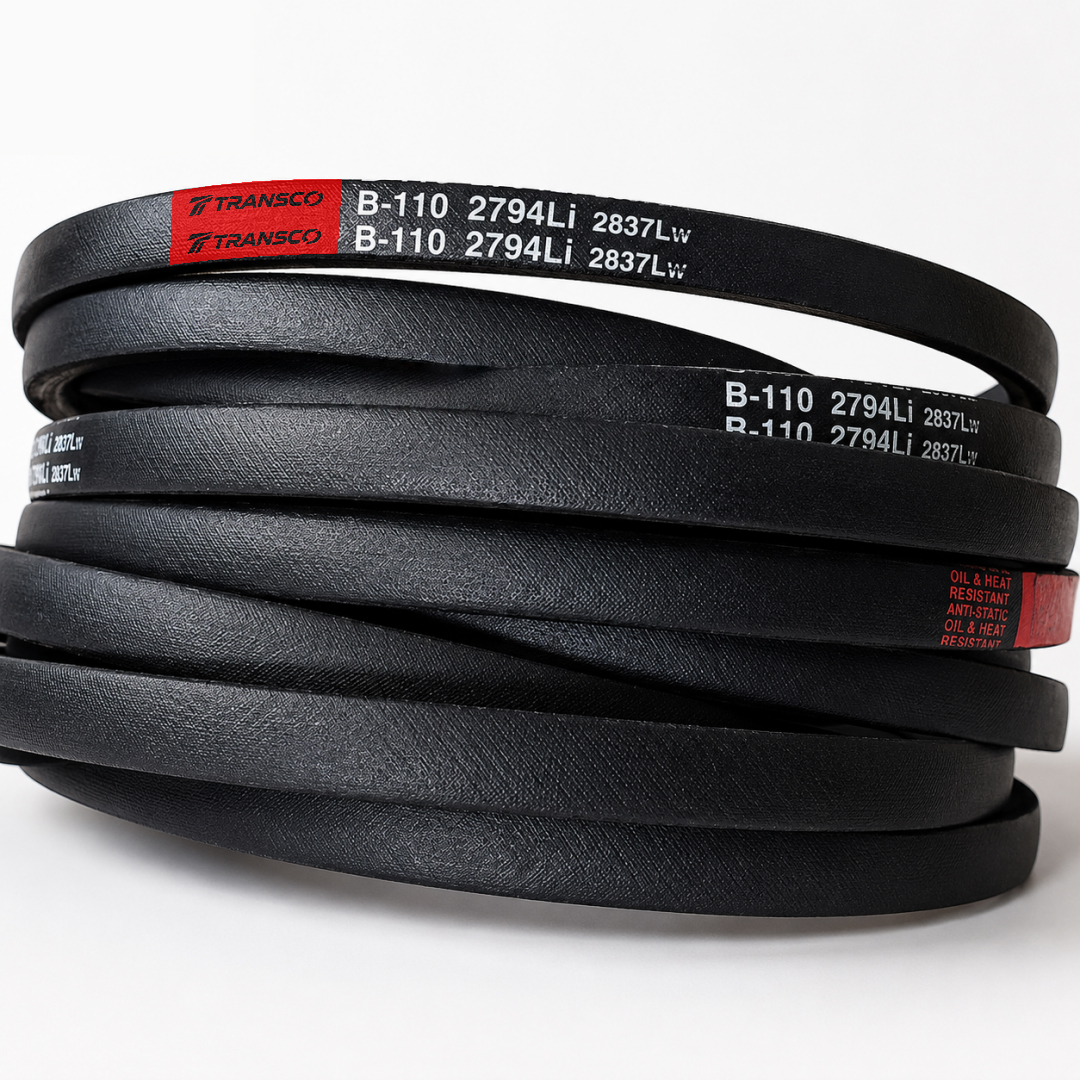
Start with the complete model number printed on the existing belt and provide clear photographs whenever possible. Manufacturer designation systems vary, so the number in a belt code should not automatically be treated as the actual belt circumference.
2.Confirm the Profile and Strand Count:
Identify the classical belt section and number of joined strands. Common Banded Classical V-Belt sections include HA, HB, HC and HD, corresponding to A, B, C and D classical profiles. Strand pitch should also be confirmed because overall belt width alone is not sufficient for replacement selection.
3.Confirm the Belt Length:
Specify the belt length together with its measurement reference, such as inside length, outside length, datum length or effective length. These values are not interchangeable. When the original marking is available, use it as the primary reference instead of relying only on manual measurement.
4.Check Pulley Compatibility:
Confirm the groove profile, groove pitch, pulley diameter, alignment and tie-band clearance. Worn or incorrectly spaced pulley grooves can cause uneven belt seating and premature wear. If replacing several individual V-belts with one banded belt, pulley compatibility should be checked before installation.
5.Confirm the Drive and Operating Conditions:
For a new drive or an uncertain replacement, provide motor power, driving and driven speeds, pulley diameters, center distance, load condition and operating environment. Also state any special requirements such as heat resistance, oil resistance, antistatic performance or reinforced cord construction.
Banded Classical V-Belt Quick Selection Checklist
| Item | Information to Provide |
|---|---|
| Belt Identification | Complete belt marking, classical profile and clear product photos |
| Belt Profile & Strand Count | HA / HB / HC / HD section, number of joined strands and strand pitch |
| Belt Length | Length value, unit and inside, datum, effective or outside length reference |
| Pulley & Drive Information | Pulley groove profile, groove pitch, pulley diameters, power, speeds and center distance |
| Operating Conditions | Load characteristics, temperature, oil, dust, contamination and operating duty |
| Order Requirements | Quantity per size, custom marking, packaging and delivery requirements |
Banded Classical V-Belt Applicantion
|
|
|
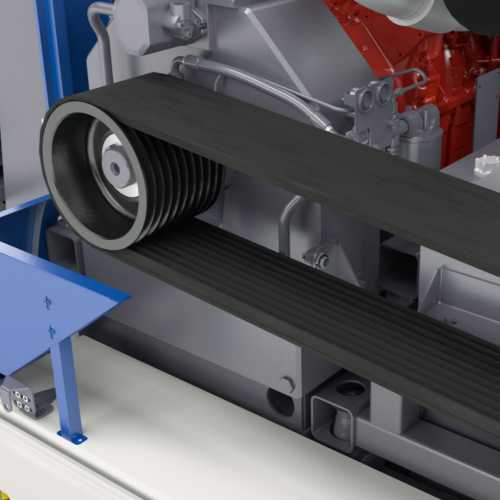
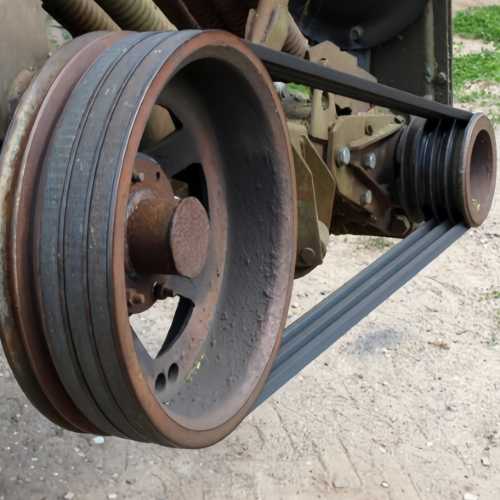
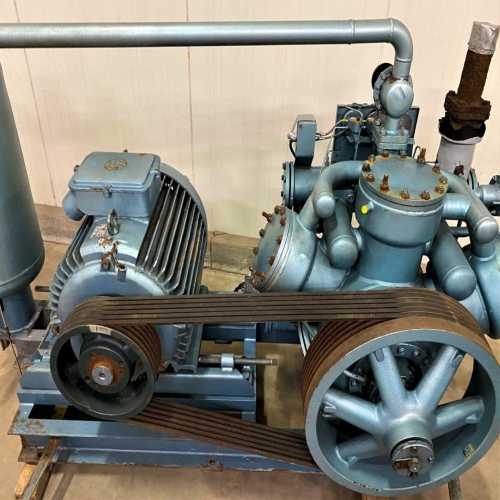
| Mining, Quarry & Aggregate Equipment | Agricultural Machinery | Reciprocating Compressors |
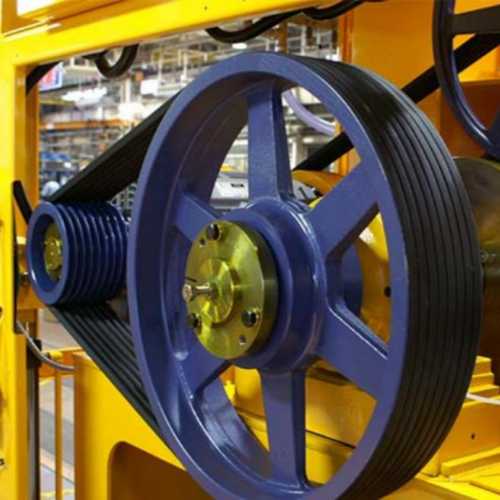
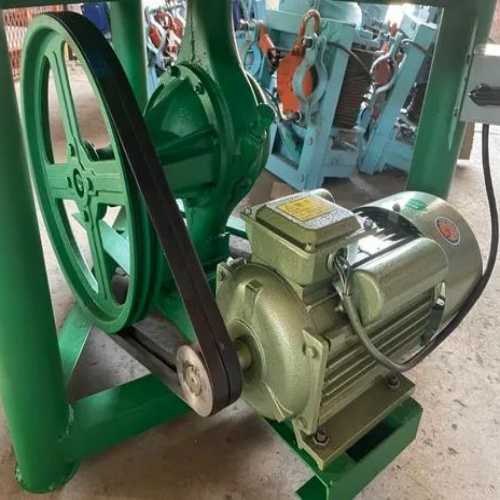
| Crushers, vibrating screens and aggregate-processing equipment can expose belt drives to heavy shock, vibration and fluctuating loads. Banded Classical V-Belts help maintain strand stability in compatible multi-groove drives. Confirm pulley geometry, starting load, operating speed and contamination conditions when selecting a replacement. | Combine harvesters, mowers, crop choppers and other agricultural machines can expose belt drives to high loads, vibration, dust and repeated load changes. Banded Classical V-Belts help keep multiple strands together as one stable drive unit where the machine is designed for a joined-belt construction. For replacement selection, confirm the original belt marking, strand count, pulley arrangement and machine model before ordering. | Reciprocating and piston compressor drives generate cyclic and pulsating loads that can cause excessive movement in individual V-belts. A joined belt construction helps keep multiple strands operating as a stable unit. Selection should consider motor power, operating speed, pulley diameters, center distance and required strand count. |
|
|
|
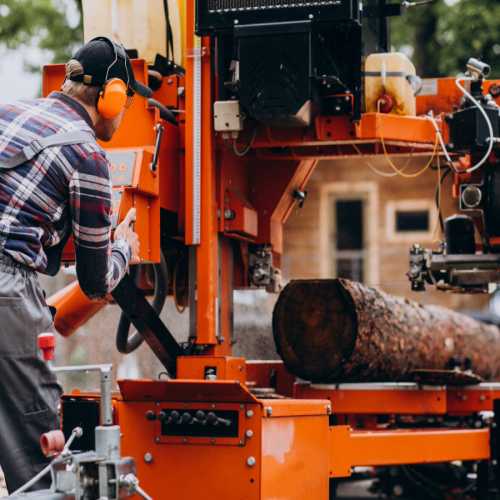
| Sawmill & Wood Processing Machinery | Heavy-Duty Conveyors & Material Handling | Industrial Processing & Pumping Equipment |
| Sawmills, wood chippers, debarkers and other wood-processing equipment can experience repeated shock loads and rapid load variation. Banded V-belts are commonly considered for these demanding multi-groove drives because the joined construction provides additional lateral stability under changing operating loads. | Heavy conveyors, bucket elevators and other material-handling drives can operate under changing loads and relatively long center distances. Where the drive is designed for joined belts, a banded construction can help control belt whip and maintain consistent strand spacing. Confirm the conveyed load, pulley arrangement and drive duty before selection. | Mixers, mills, processing machines and belt-driven pumps can operate under variable loads, repeated startups or changing torque conditions. Where the drive uses compatible multi-groove pulleys, a Banded Classical V-Belt can help maintain strand stability and reduce excessive belt movement. Selection should be based on motor power, operating speed, pulley dimensions, center distance, load characteristics and the actual driven component. |
Packing, Shipping and and OEM Supply
|
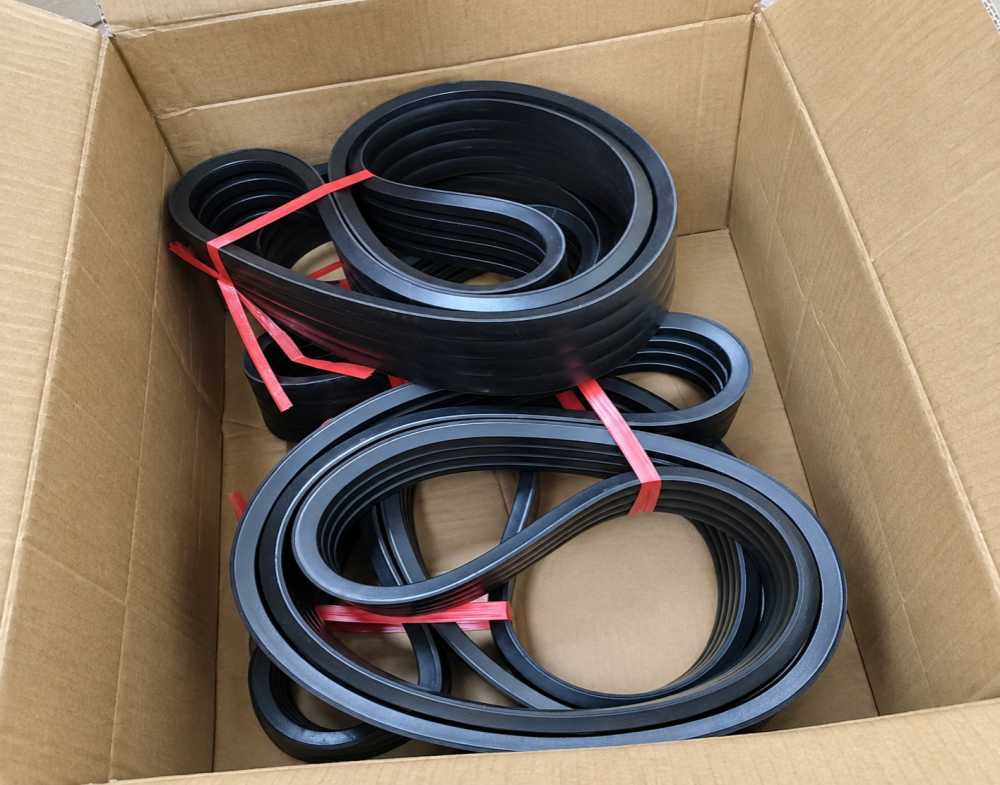
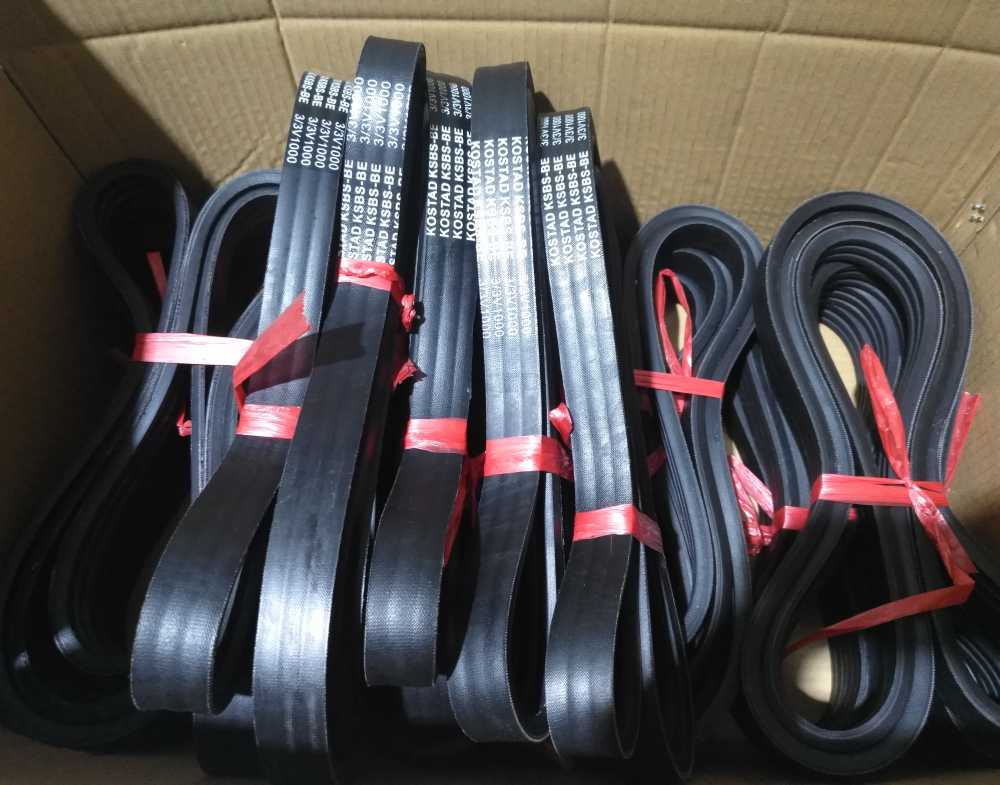
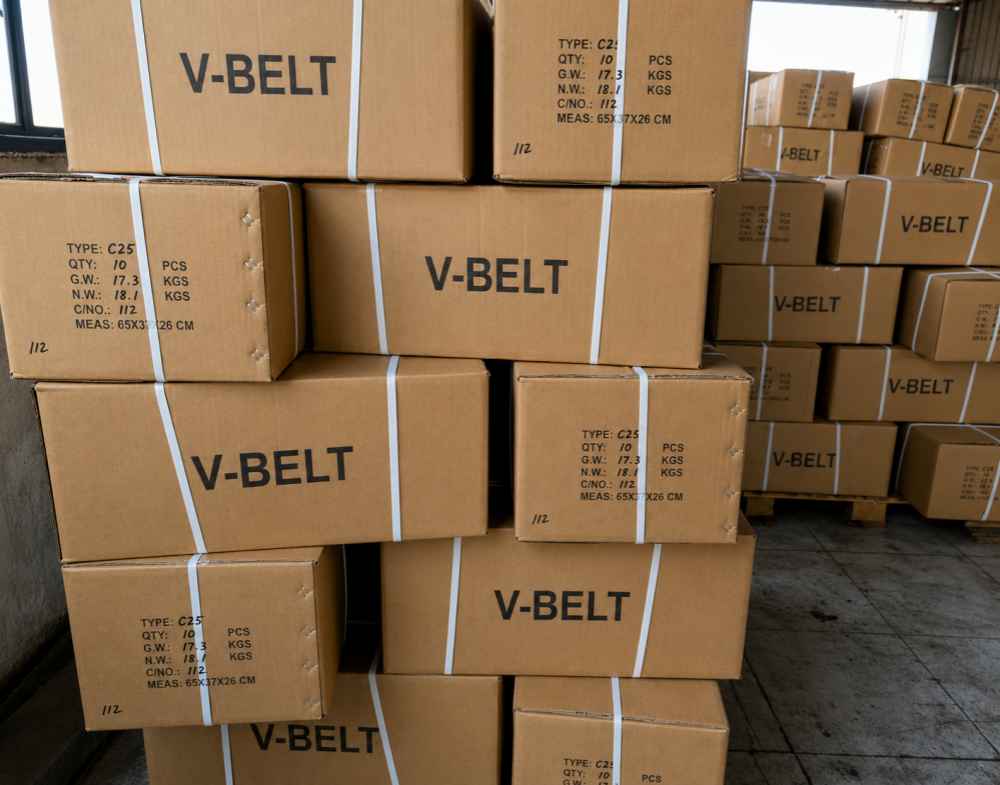
TRANSCO Classical Wrapped V-Belts can be supplied with packaging and marking options for industrial distributors, equipment manufacturers and replacement belt buyers.
Packaging method, belt marking and carton information are confirmed according to the purchase order before mass production. |
|
|
|
|

|