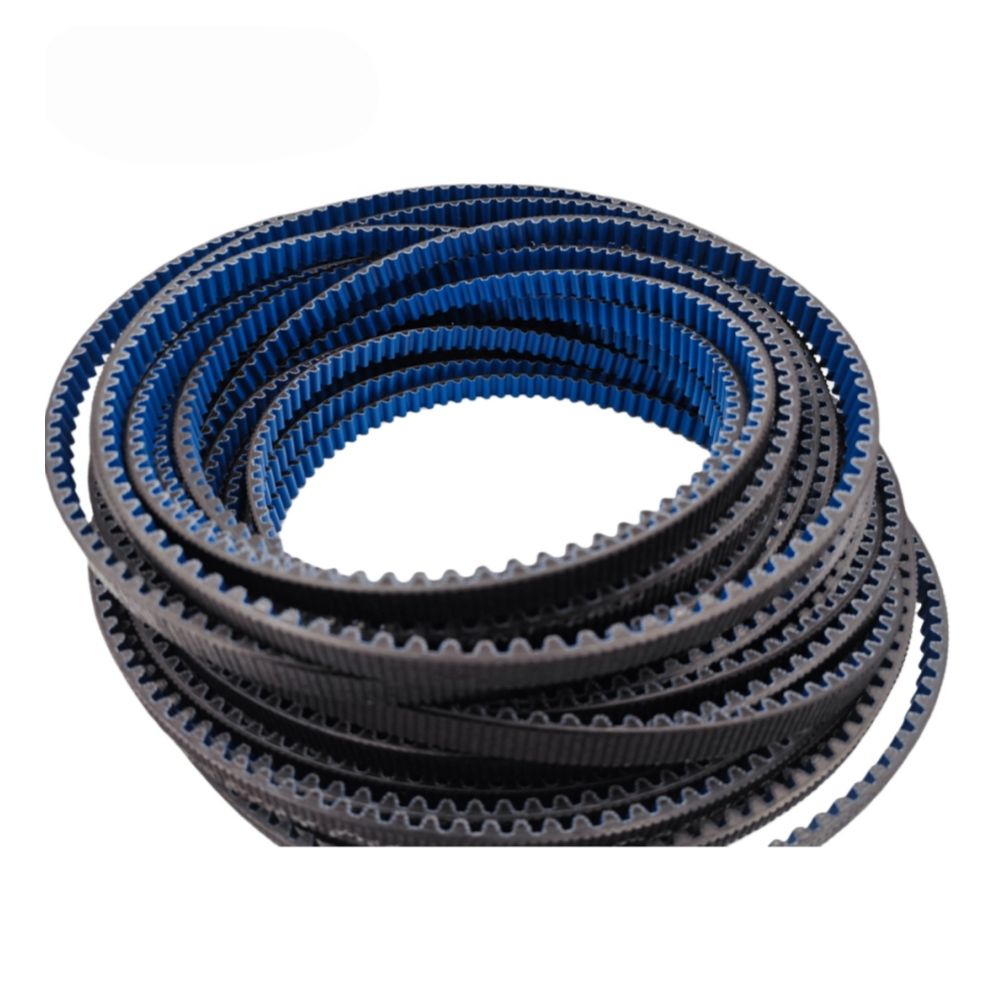
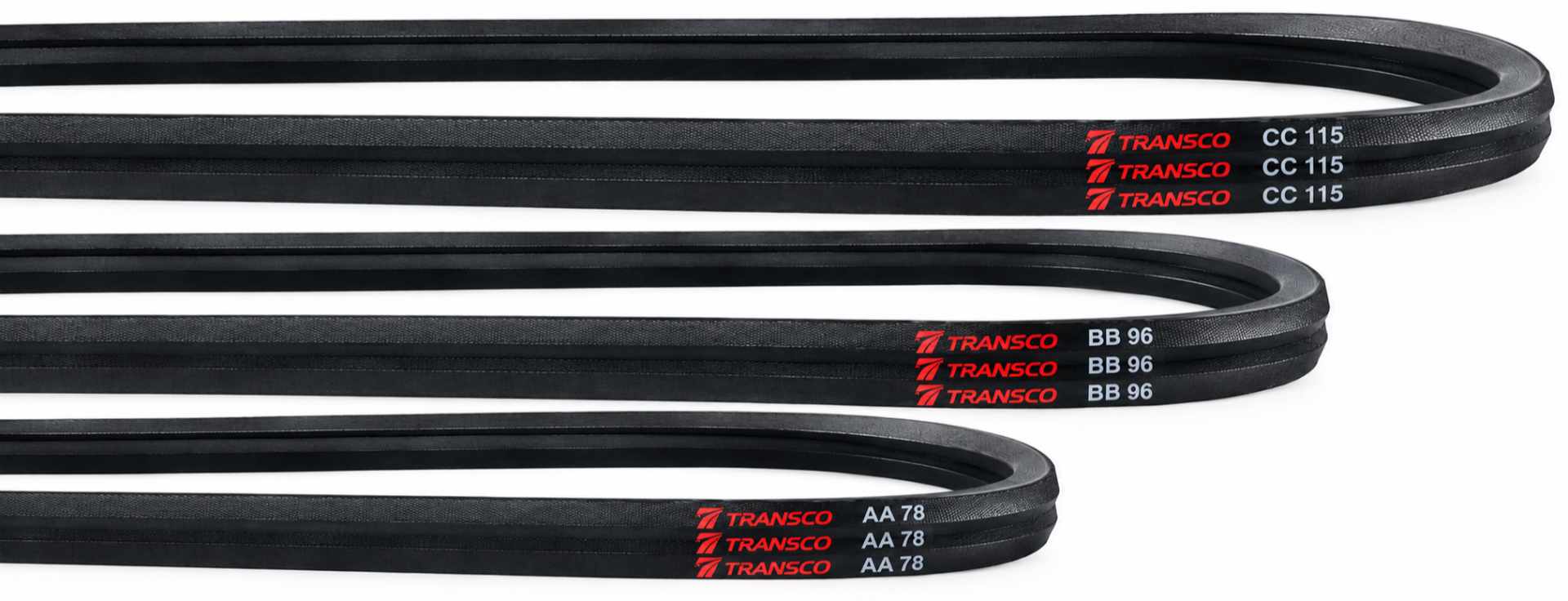
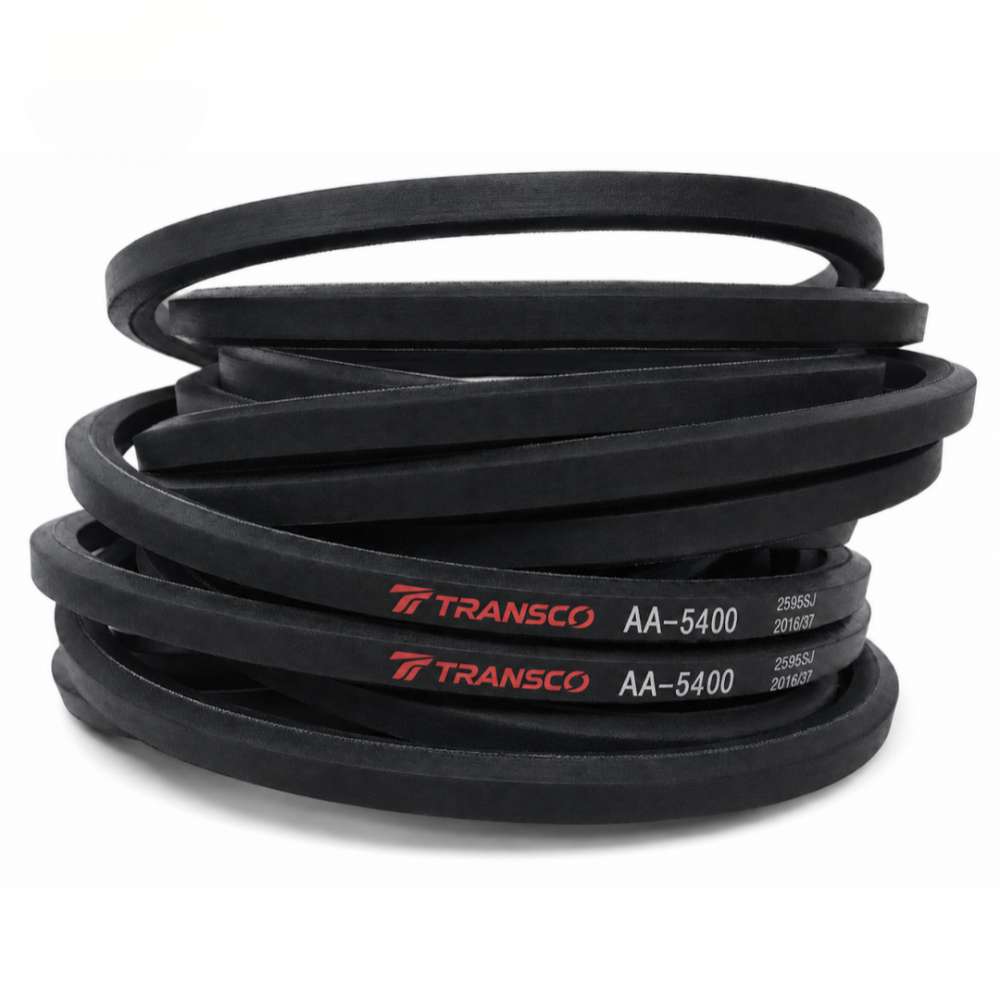
Double V-Belt
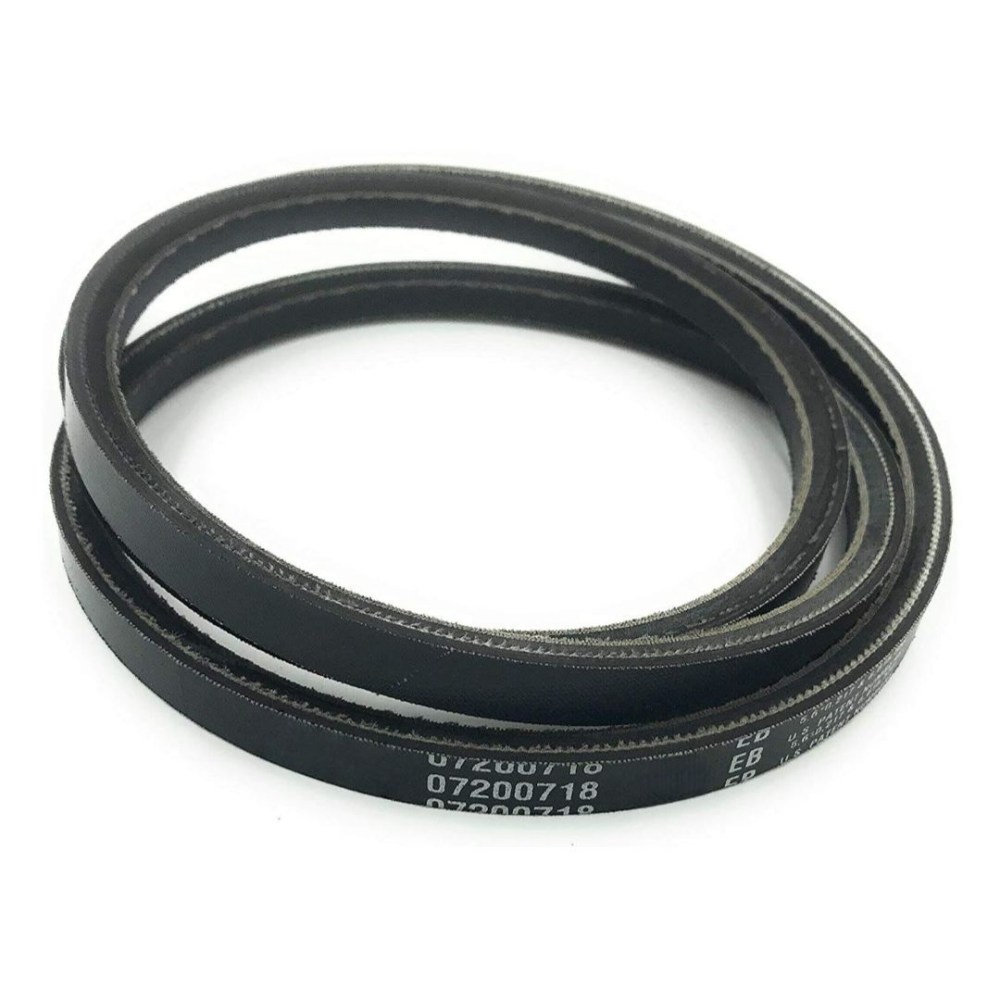
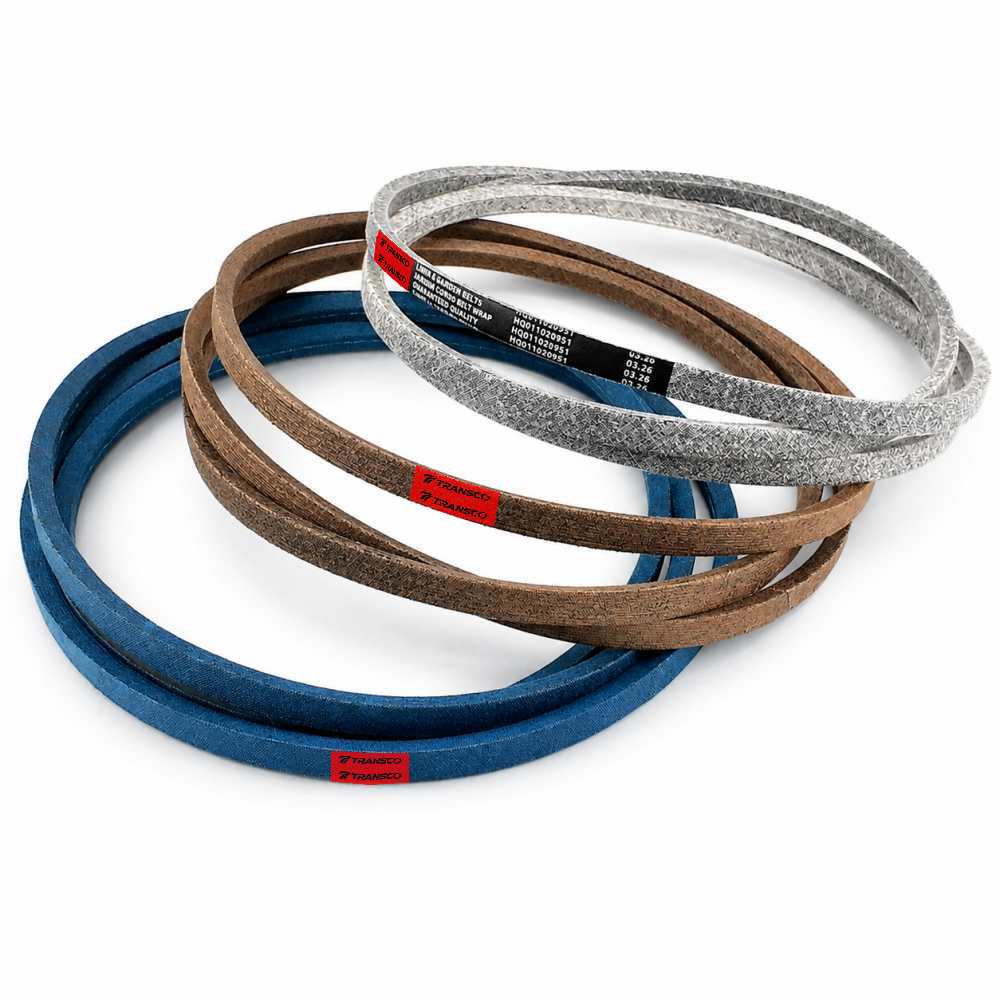
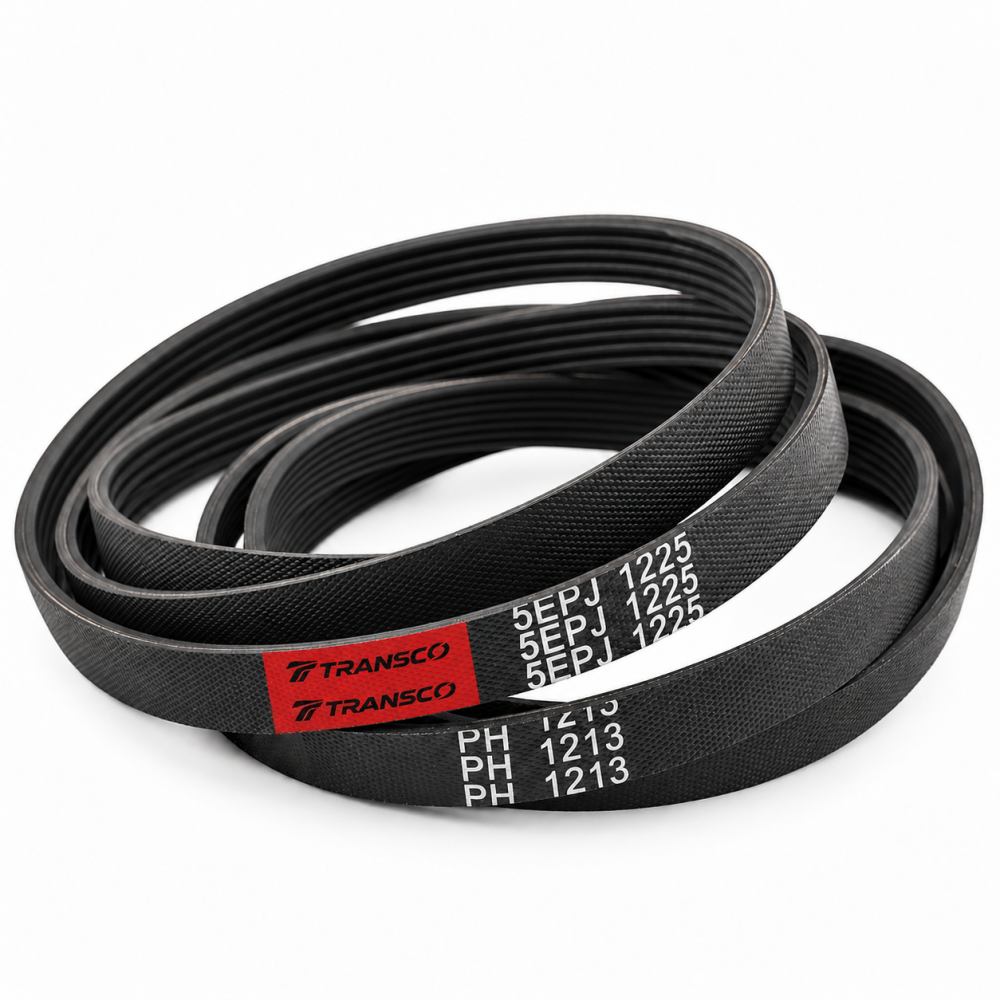
Commonly specified in AA, BB and CC profile families, double V-belts are widely used in agricultural machinery, textile equipment and industrial multi-shaft drives. As a manufacturer of industrial power transmission belts, TRANSCO BELT provides product selection support and OEM solutions based on belt dimensions, pulley configurations and application requirements.
Dual-Sided Drive: Power transmission through both V-shaped working sections.
Reverse-Bend Flexibility: Designed for alternating pulley engagement.
Reinforced Construction: Central tensile cords support stable transmission.
Multi-Pulley Compatibility: Suitable for serpentine and multi-shaft drives.
What is a Double V-Belt?
A Double V-Belt is an endless rubber power transmission belt with a symmetrical, approximately hexagonal cross-section. Unlike a conventional single-sided V-belt, it incorporates two opposing V-shaped sections, allowing either side to engage compatible V-grooved pulleys and transmit mechanical power.
This design makes double V-belts particularly suitable for machinery with multiple driven shafts and complex pulley arrangements. When routed around different pulleys, the belt can transmit power through alternating working sections, allowing selected shafts to rotate in opposite directions without requiring a crossed-belt configuration.
The tensile reinforcement is positioned near the center of the belt cross-section to accommodate bending in both directions. Combined with a flexible rubber body and protective fabric covering, this construction supports repeated reverse bending in agricultural and industrial drive systems.
Why choose a Double V-Belt?
•Dual-Sided Power Transmission:
The symmetrical hexagonal profile provides two opposing V-shaped working surfaces, allowing a single belt to drive multiple pulleys, including shafts rotating in opposite directions.
•Reverse-Bend Flexibility:
Centrally positioned tensile cords and a flexible rubber construction accommodate repeated bending in alternating directions, making the belt suitable for serpentine and multi-pulley drive systems.
•Reinforced Construction & Dimensional Stability:
Reinforced tensile cords carry transmission loads and help minimize elongation, maintaining stable belt dimensions and consistent pulley engagement during operation.
•Wear-Resistant Fabric Cover:
The rubber-impregnated fabric covering protects both working surfaces against friction and wear from repeated pulley contact, supporting durability during continuous operation.
•Operating Temperature & Belt Speed:
Operating temperature range: −30°C to +70°C. Maximum recommended belt speed: 30 m/s. These specifications define the intended operating limits for the applicable belt construction.
•Antistatic, Oil & Heat Resistance:
Rubber compounds and protective fabric constructions can be specified for antistatic, oil-resistant and heat-resistant applications. Antistatic performance is evaluated according to ISO 1813:2025 where required.
Double V-Belt Technical Standards
① General Product and Drive Requirements:
We manufacture and inspect TRANSCO Double V-Belts in accordance with the applicable requirements of ARPM IP-21:2023, which specifies double-V (hexagonal) belt drive requirements for AA, BB, CC and metric cross-sectional profiles. We control belt dimensions and verify drive compatibility against the approved product specifications.
② Cross-Section Dimensions and Pulley Grooves:
We manufacture our agricultural hexagonal V-belt profiles in accordance with DIN 7722:1982-06, which specifies dimensional requirements for endless hexagonal belts and corresponding pulley grooves. We inspect belt section dimensions, profile geometry and length specifications to ensure accurate matching with the intended drive system.
③ Antistatic Performance:
We manufacture antistatic Double V-Belt constructions that comply with ISO 1813:2025 and GB/T 10715-2021. We verify electrical resistance using the specified test methods to ensure that our antistatic belts meet the applicable conductivity requirements.
④ Heat-Ageing Resistance:
We evaluate the heat-ageing performance of our rubber compounds in accordance with ISO 188:2023 and GB/T 3512-2014. We measure changes in rubber properties after accelerated hot-air ageing to verify material performance under the specified thermal conditions.
⑤ Oil and Liquid Resistance:
We evaluate the oil and liquid resistance of our rubber compounds in accordance with ISO 1817:2026 and GB/T 1690-2010. We measure changes in material properties after immersion in specified test liquids and verify the results against the required performance criteria.
Double V-Belt Construction
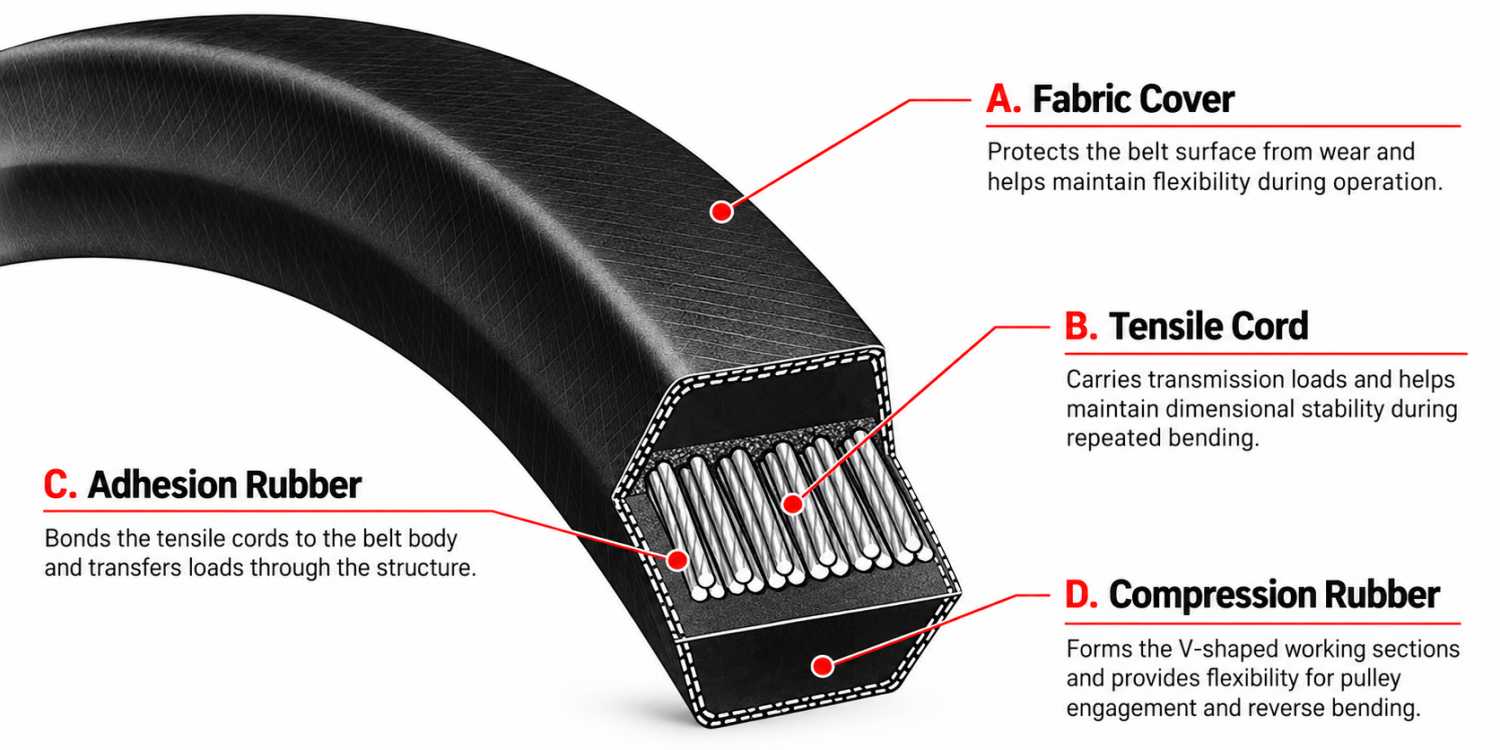
Double V-belts, also known as hexagonal V-belts, feature a reinforced, fabric-wrapped rubber construction designed for dual-sided power transmission. A typical wrapped double V-belt consists of four main components: fabric cover, tensile cord, adhesion rubber and compression rubber. Together, these components provide the strength, flexibility and structural stability required for repeated reverse bending in serpentine drives.
A. Fabric Cover
: The rubber-impregnated fabric covering protects the belt surface against wear caused by repeated contact with pulley grooves. Its flexible construction helps maintain surface integrity while allowing the belt to bend smoothly around pulleys on either side.
B. Tensile Cord
: The tensile cords are positioned near the neutral bending axis at the center of the hexagonal cross-section. They carry transmission loads, help control belt elongation and maintain dimensional stability during repeated reverse bending. Polyester cords are commonly used in conventional constructions, while alternative reinforcement materials may be specified for specialized applications.
C. Adhesion Rubber
: Adhesion rubber surrounds the tensile cords and bonds them to the surrounding rubber body. It helps transfer operating loads between the reinforcement and rubber structure while maintaining internal integrity during repeated flexing. Proper adhesion also helps reduce the risk of internal separation and fatigue-related damage.
D. Compression Rubber
: The compression rubber forms part of the shaped rubber body that supports the belt's V-shaped profile and accommodates deformation as the belt bends around pulleys. Its compound properties influence flexibility, heat generation and fatigue resistance under repeated operating loads.
Double V-Belt Specifications
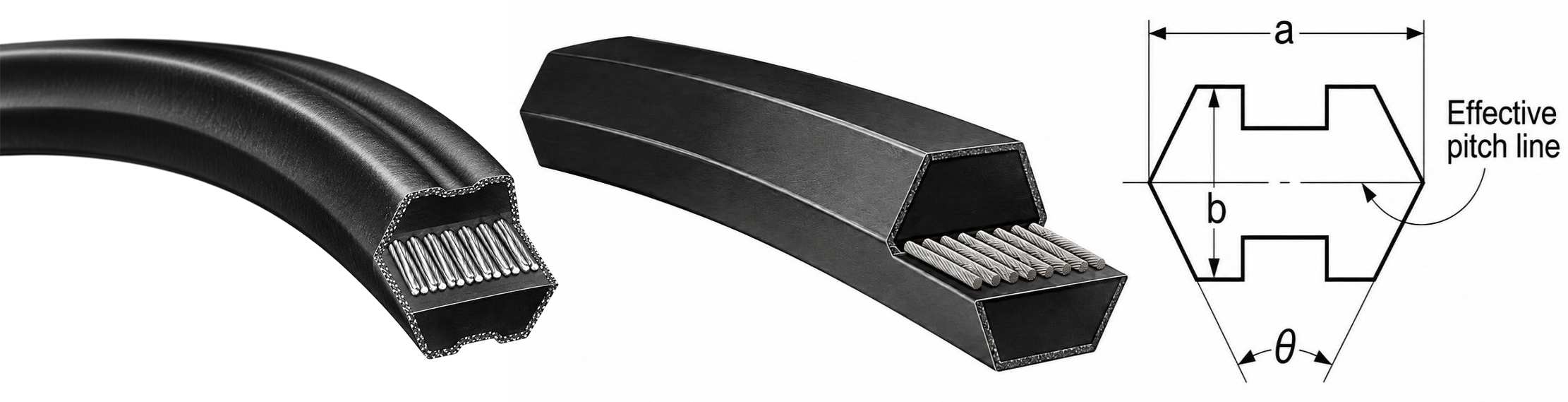
Double V-belts are commonly classified into AA, BB and CC cross-sectional profiles, with HAA, HBB and HCC designations also used in agricultural and industrial applications. Belt dimensions and length specifications should be selected according to the required pulley groove geometry and equipment specifications.
| Section | Top Width | Thickness | Angle |
| (mm) | (mm) | (Deg) | |
| AA/HAA | 13 | 10 | 40 |
| BB/HBB | 17 | 13 | 40 |
| CC/HCC | 22 | 18 | 40 |
How Does a Double V-Belt Work?
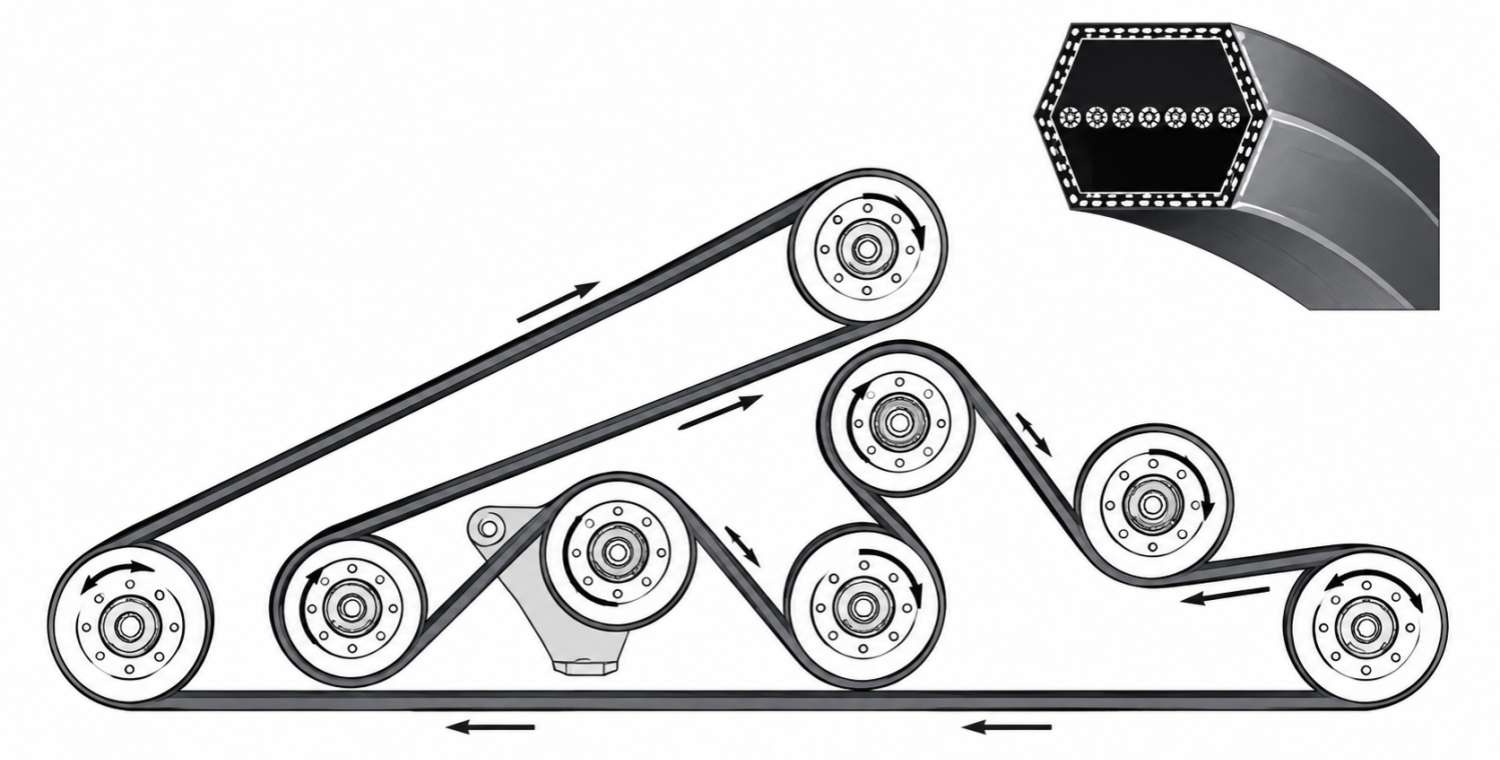
Double V-belts, also known as hexagonal V-belts, transmit power through friction between their angled sidewalls and compatible V-grooved pulleys. Unlike conventional single-sided V-belts, their symmetrical hexagonal profile provides two opposing V-shaped working sections, allowing either side of the belt to engage a pulley and transmit power.
1.Dual-Sided Power Transmission:
As the belt follows a multi-pulley drive path, one V-shaped section engages certain pulleys while the opposite section engages others. This allows a single belt to transmit power to multiple driven shafts, including shafts rotating in different directions, depending on the pulley arrangement and belt routing.
2.Reverse-Bend and Serpentine Drives:
Double V-belts are designed for serpentine drive systems where the belt repeatedly bends in alternating directions. Centrally positioned tensile cords help limit bending strain in the reinforcement during repeated reverse bending, allowing the belt to accommodate reverse bending around multiple pulleys.
3.Pulley Engagement and Drive Performance:
Effective power transmission requires compatible pulley grooves, proper belt tension, sufficient wrap angles and accurate pulley alignment. Transmission capacity depends on the belt section, pulley diameters, belt speed and operating loads. Correct drive design and installation help minimize slipping, excessive wear and premature belt failure.
Double V-Belt Quick Selection Checklist
| Selection Item | What to Check | Why It Matters |
|---|---|---|
| Original Belt Number | Identify the complete belt marking, OEM part number or machine model. | Helps identify the correct replacement specification and avoid ordering incompatible belts. |
| Belt Cross-Section | Confirm AA/HAA, BB/HBB or CC/HCC and measure the belt width and height. | Ensures the hexagonal belt profile matches the required pulley groove dimensions. |
| Belt Length | Verify the required length and its designation, such as effective, pitch, inside or outside length. | Prevents incorrect belt sizing caused by differences between length measurement systems. |
| Belt Construction | Identify the required grooved or smooth-surface design and confirm the applicable wrapped or raw-edge construction. | Ensures the selected belt matches the original construction and drive requirements. |
| Pulley Groove & Diameter | Check pulley groove geometry, pulley diameters and the minimum recommended diameter for the selected belt. | Supports correct sidewall contact and helps prevent excessive bending stress and premature wear. |
| Drive Layout & Belt Routing | Confirm pulley positions, belt contact sides, shaft rotation directions and wrap angles. | Ensures compatibility with dual-sided engagement, reverse bending and serpentine drive arrangements. |
| Power & Operating Speed | Provide motor power, pulley speeds, transmitted load and duty cycle. Verify the required belt speed. | Helps determine whether the selected belt section and construction meet the transmission requirements. |
| Operating Environment | Specify operating temperature, exposure to oil, moisture or dust, and any antistatic requirements. | Helps determine the appropriate rubber compound, reinforcement and special performance specifications. |
| Installation & Tensioning | Check pulley alignment, available tension adjustment and installation clearance. | Supports proper belt tension, stable operation and reduced risk of slipping or abnormal wear. |
| OEM & Custom Requirements | Provide technical drawings, belt samples, required quantity, branding and packaging specifications. | Enables accurate product identification, manufacturing confirmation and quotation. |
Double V-Belt Applications
|
|
|
|
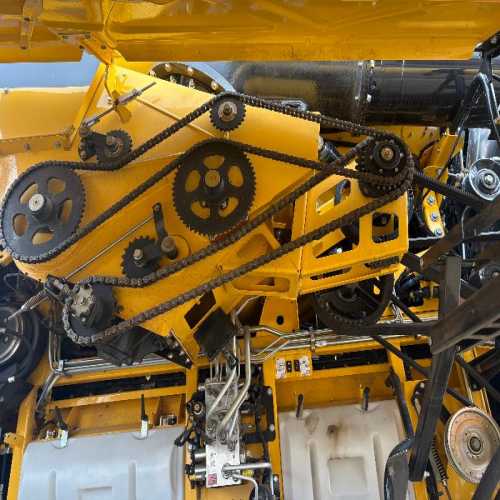
Combine Harvester Drive Systems |
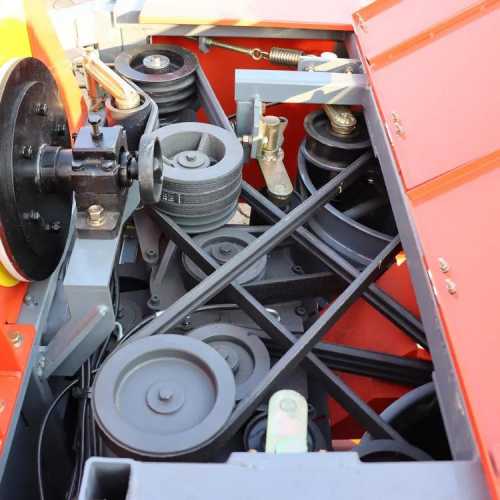
Forage Harvesting & Crop Processing |
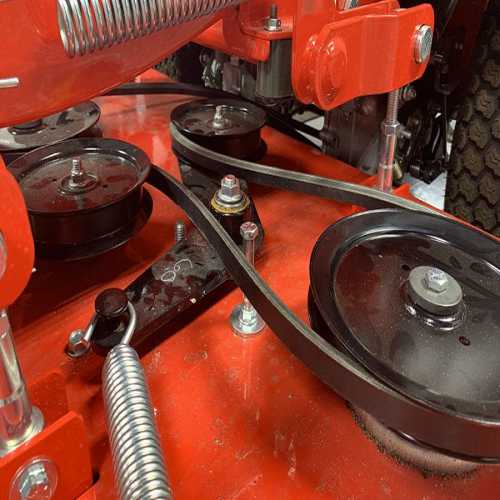
Riding Mower & Multi-Blade Deck Drives |
|
Double V-belts are used in selected combine harvester drives, including straw-walker and multi-pulley systems. They support power transmission under variable harvesting loads, with replacement belts selected by OEM number, section and length. |
Hexagonal V-belts are used in designated forage harvester drive systems involving multiple pulleys. Correct belt dimensions and construction help maintain reliable transmission during crop harvesting and processing. |
Double V-belts drive multiple blade pulleys in selected riding mower and multi-blade deck systems. Replacement belts must match the OEM part number, deck configuration and required belt length. |
|
|
|
|
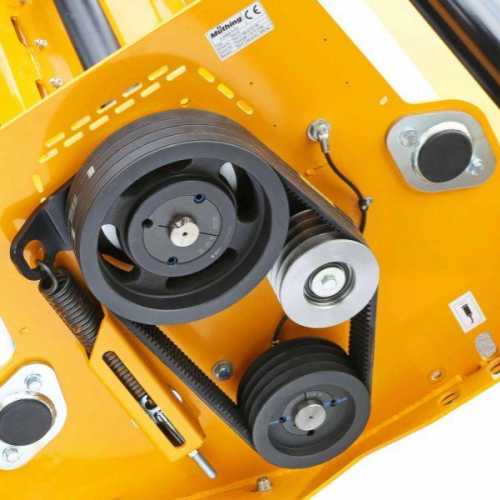
Flail Mower Cutting Drive Systems |
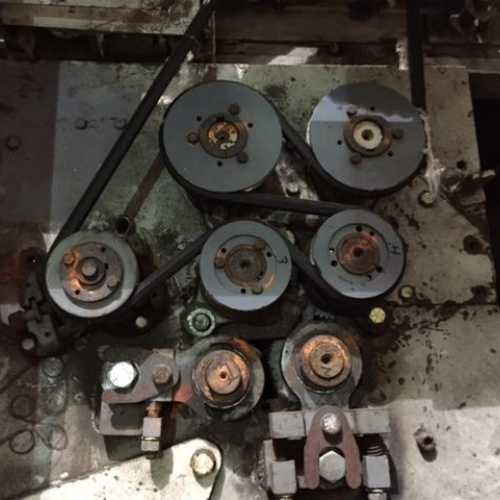
Cotton Ginning & Multi-Shaft Drives |
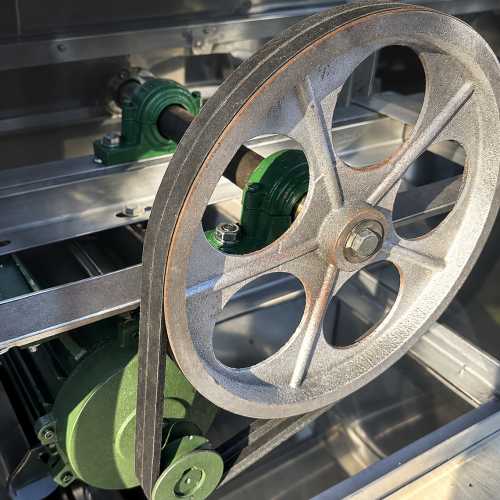
Poultry De-Feathering & Feather Picker Drives |
|
Selected flail mowers use double V-belts in multi-pulley cutting drives. These systems experience fluctuating loads and vibration, requiring compatible belt profiles, reinforcement and pulley arrangements. |
Hexagonal V-belts transmit power between multiple shafts in selected cotton ginning machines. Correct belt dimensions and pulley compatibility are essential for reliable operation in dusty cotton-processing environments. |
Specialized double V-belts are used in poultry de-feathering machine drives. Replacement belts are selected according to the required section, OEM specification and operating conditions, including exposure to moisture and debris. |
Packing, Shipping and OEM Supply
|
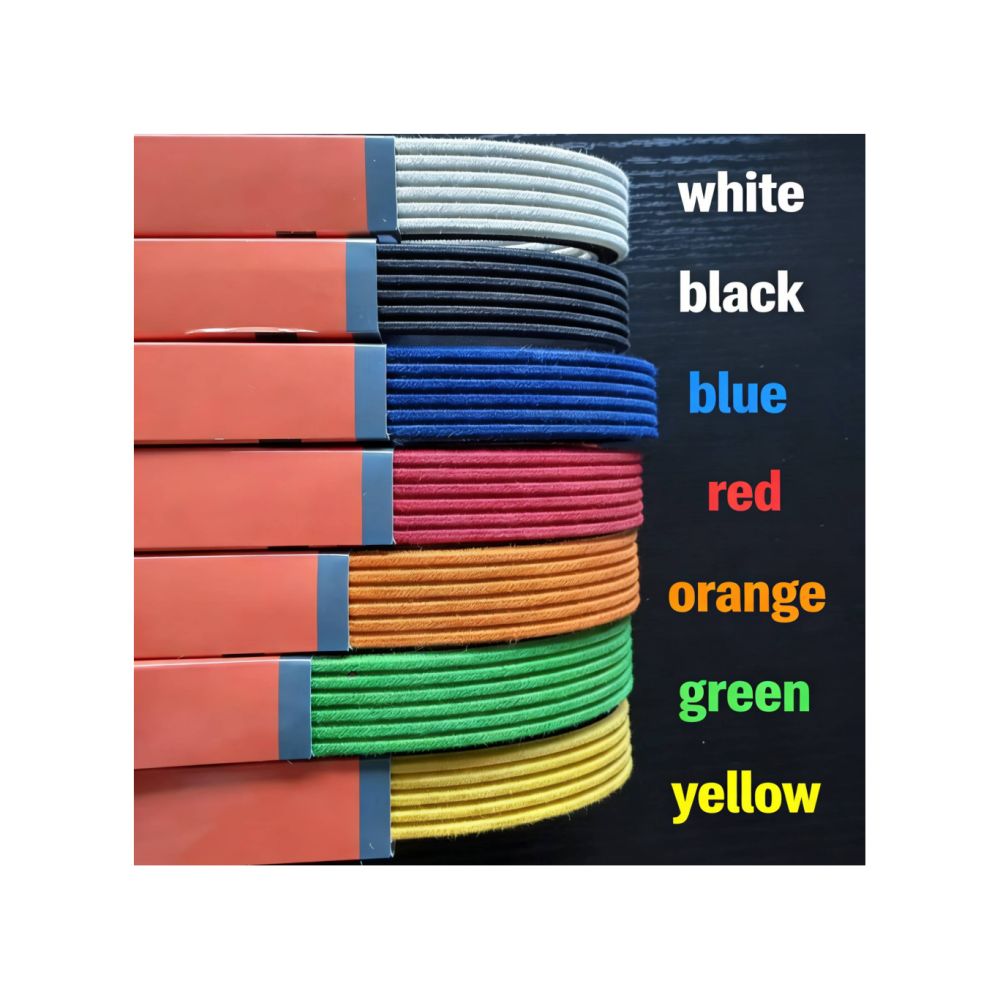
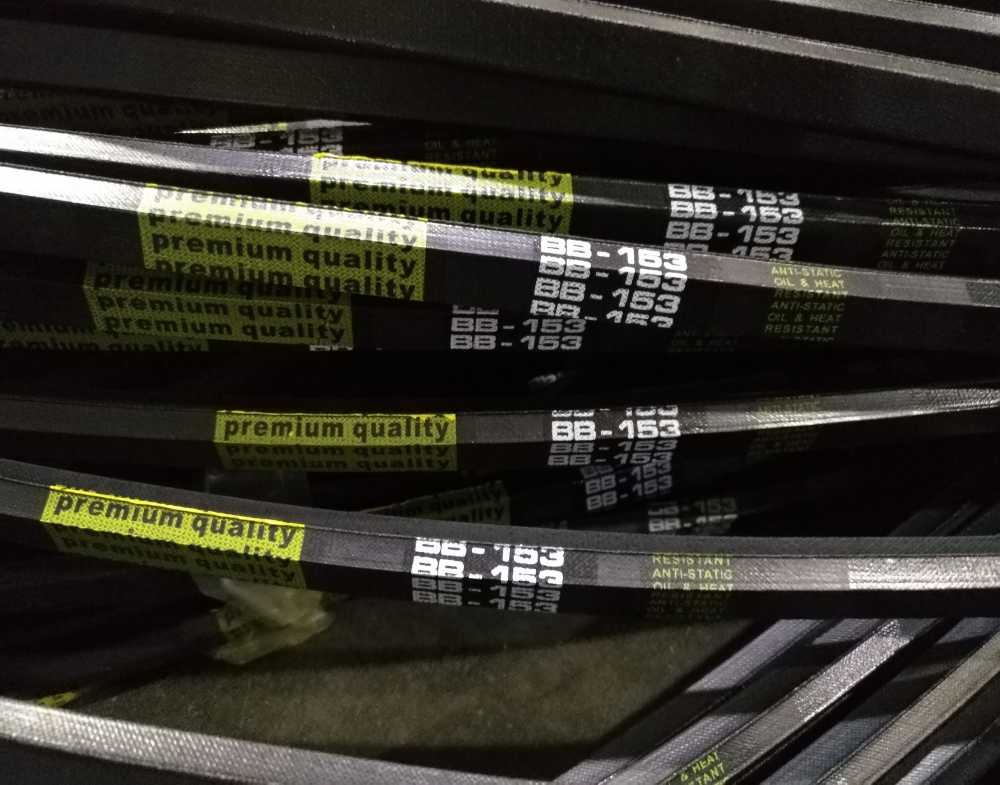
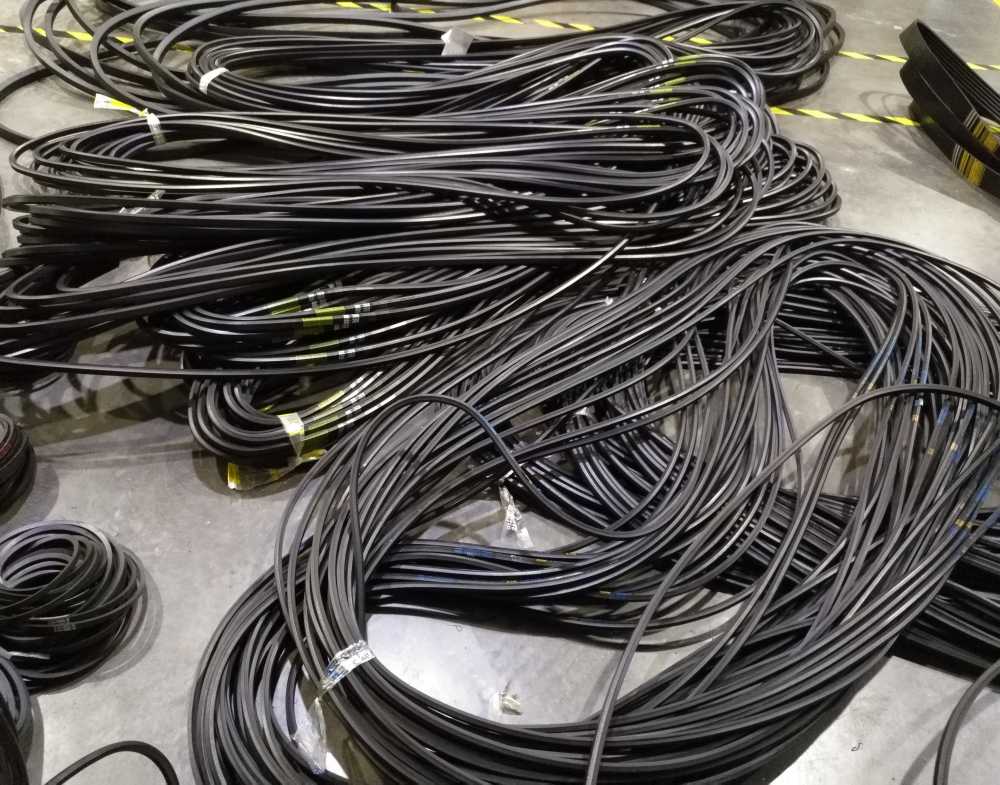
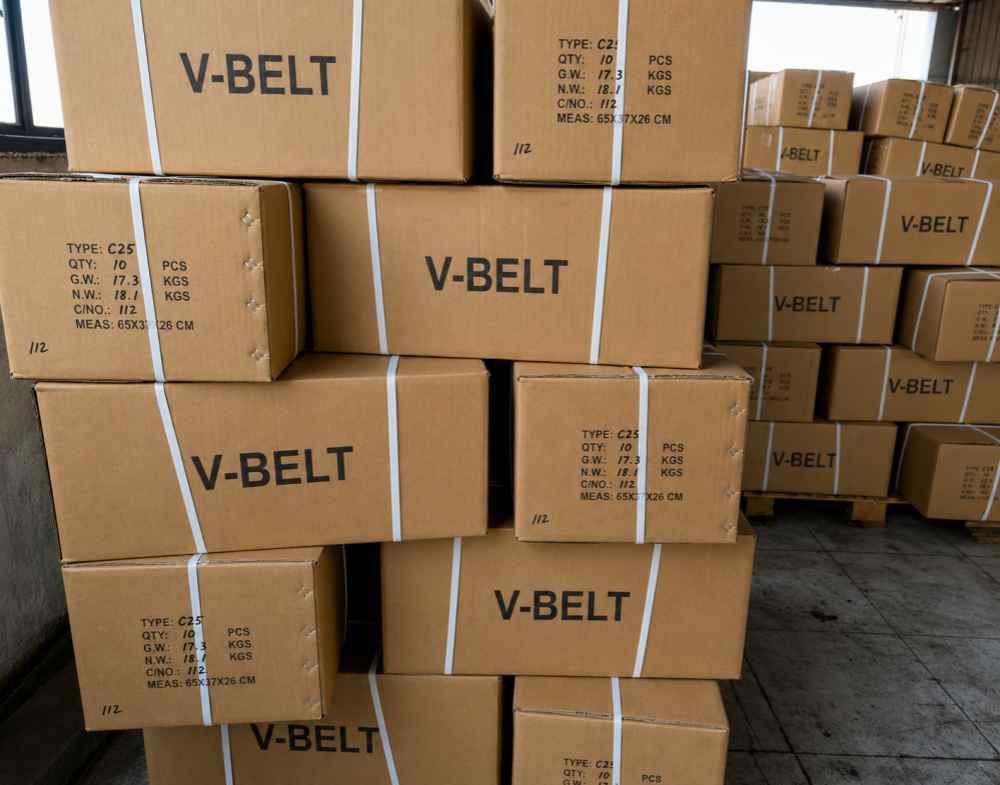
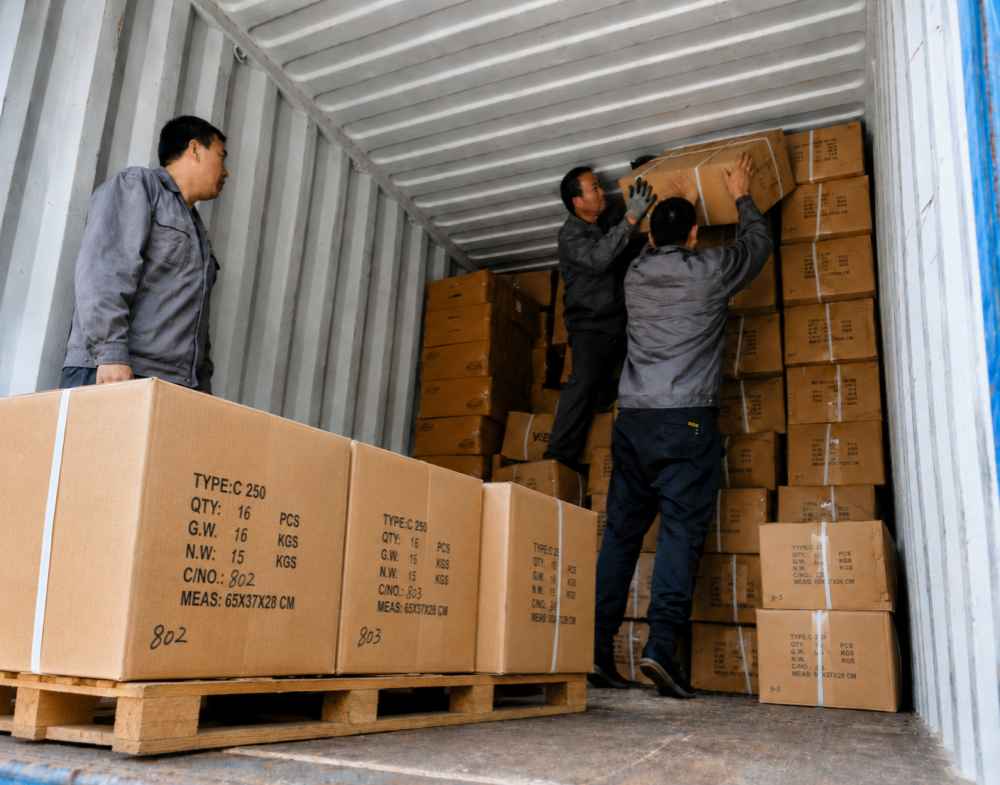
TRANSCO Double V-Belts can be supplied with packaging and marking options for industrial distributors, equipment manufacturers and replacement belt buyers.
Packaging method, belt marking and carton information are confirmed according to the purchase order before mass production. |
|
|
|
|
|