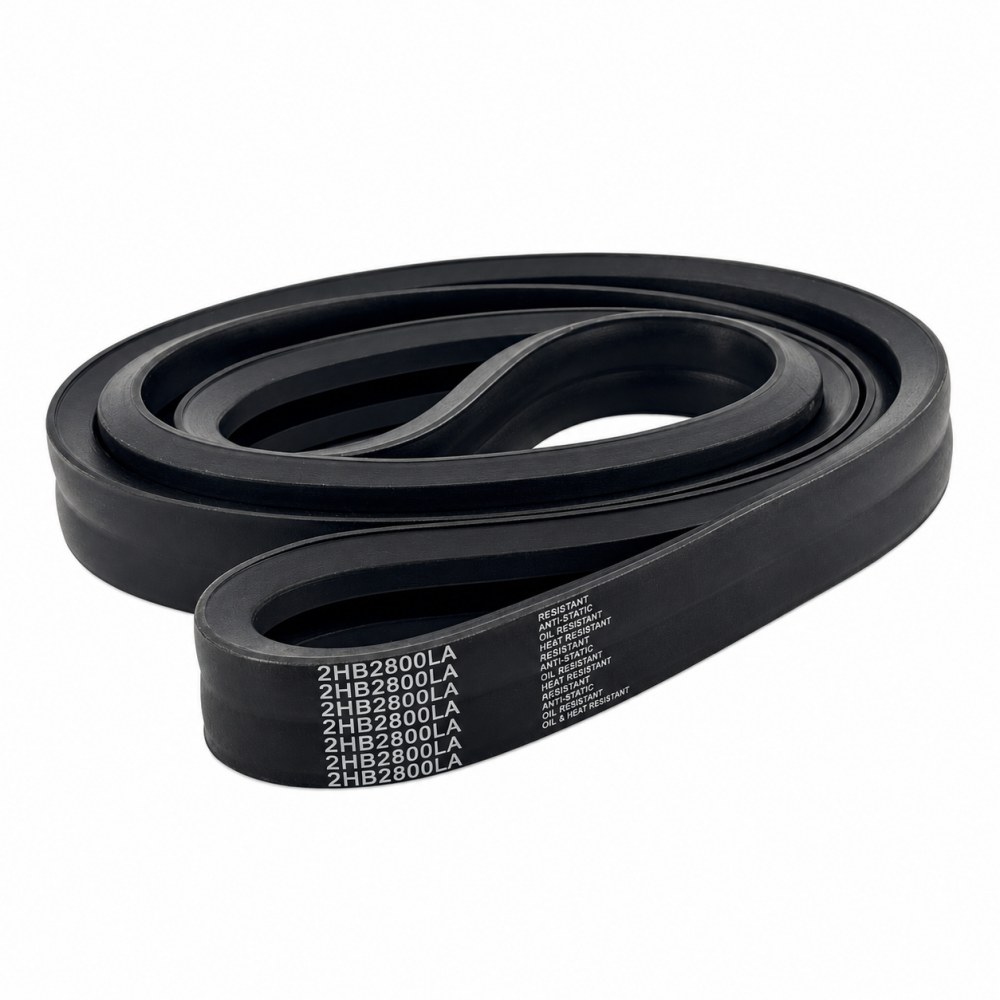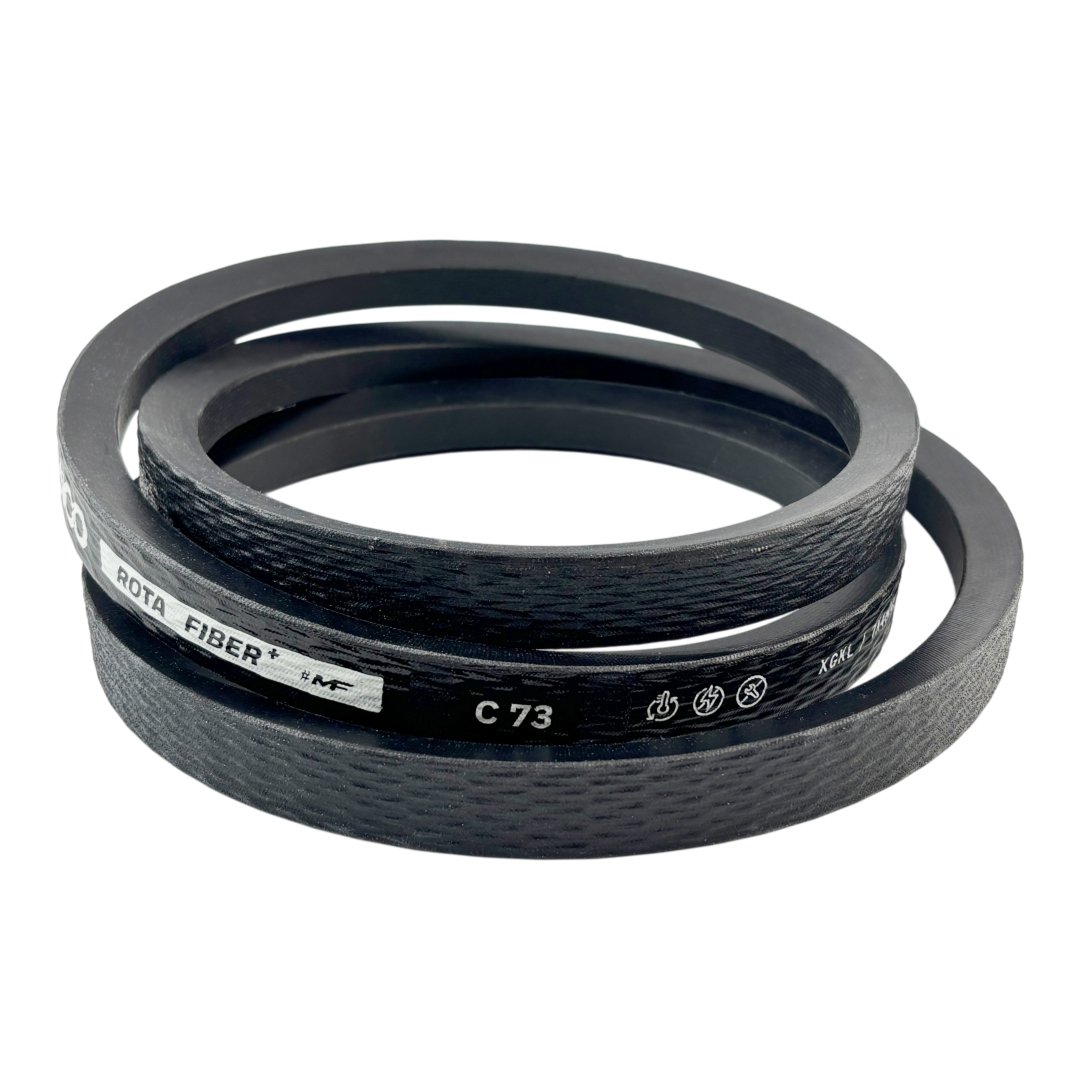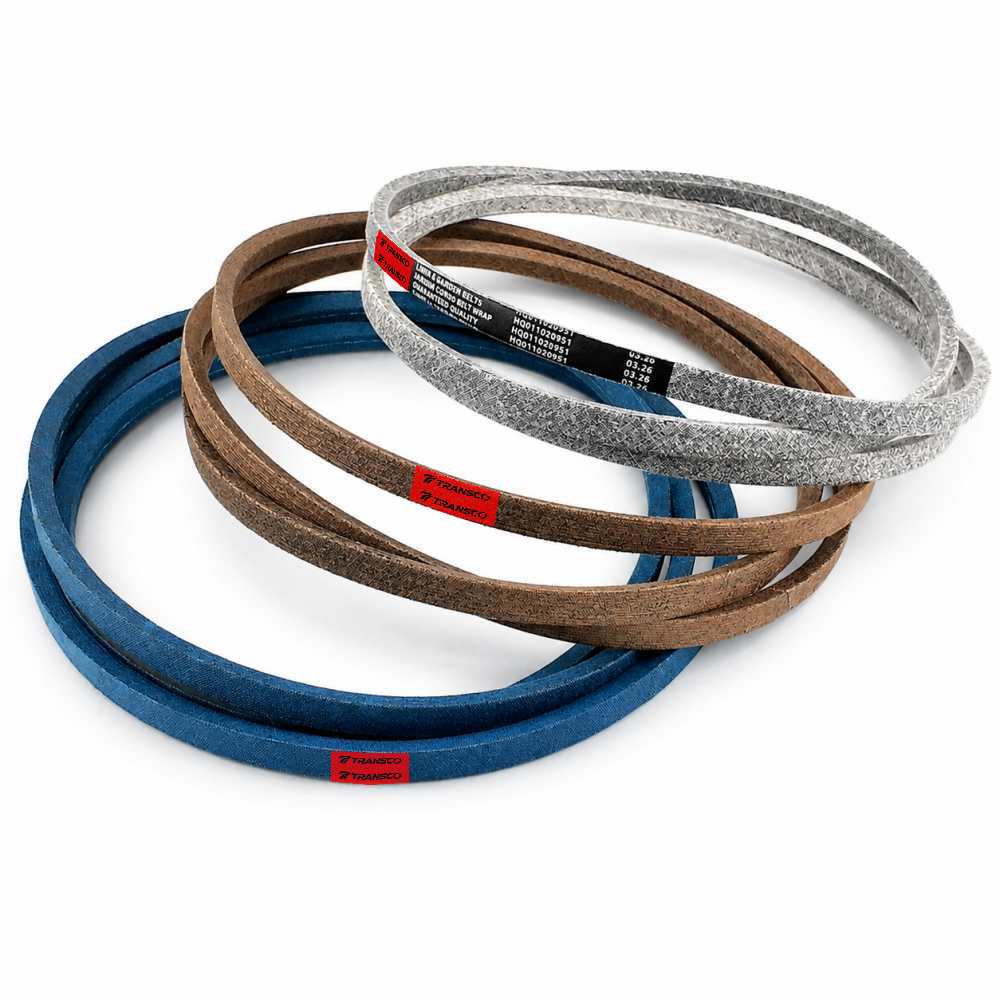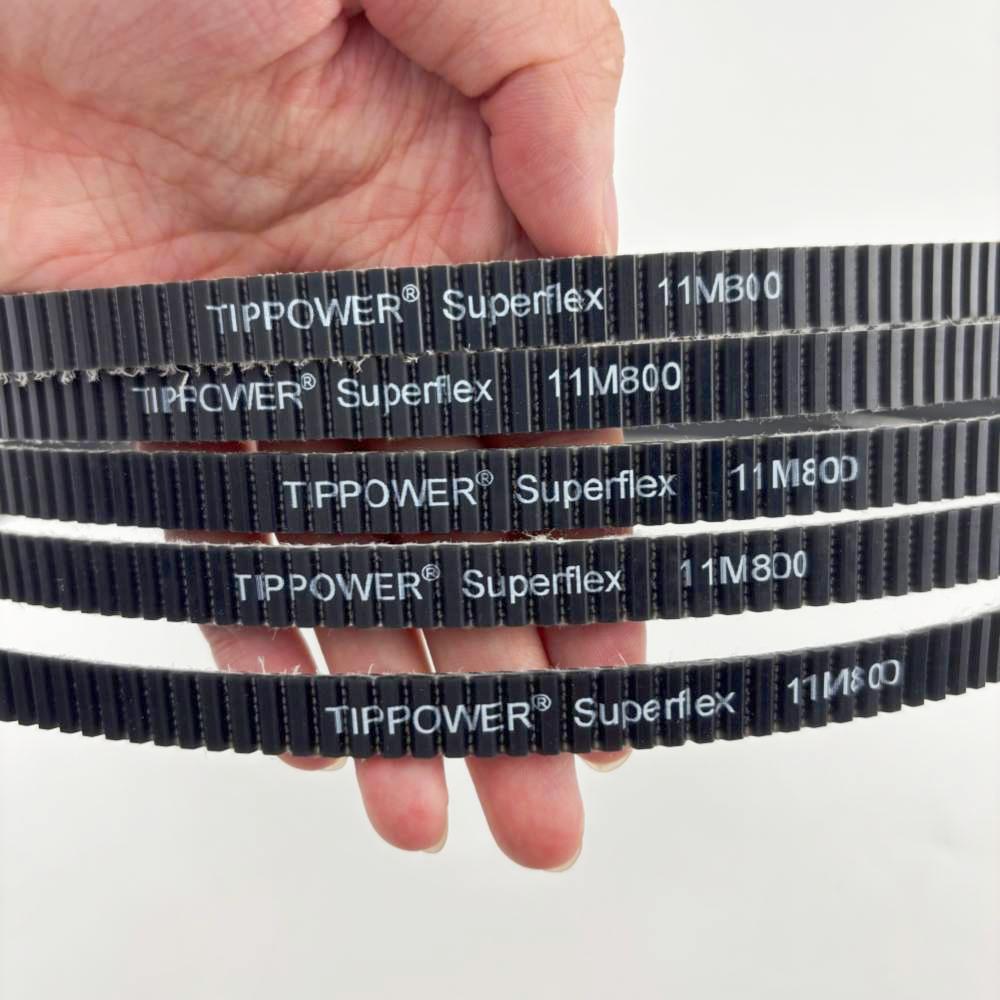
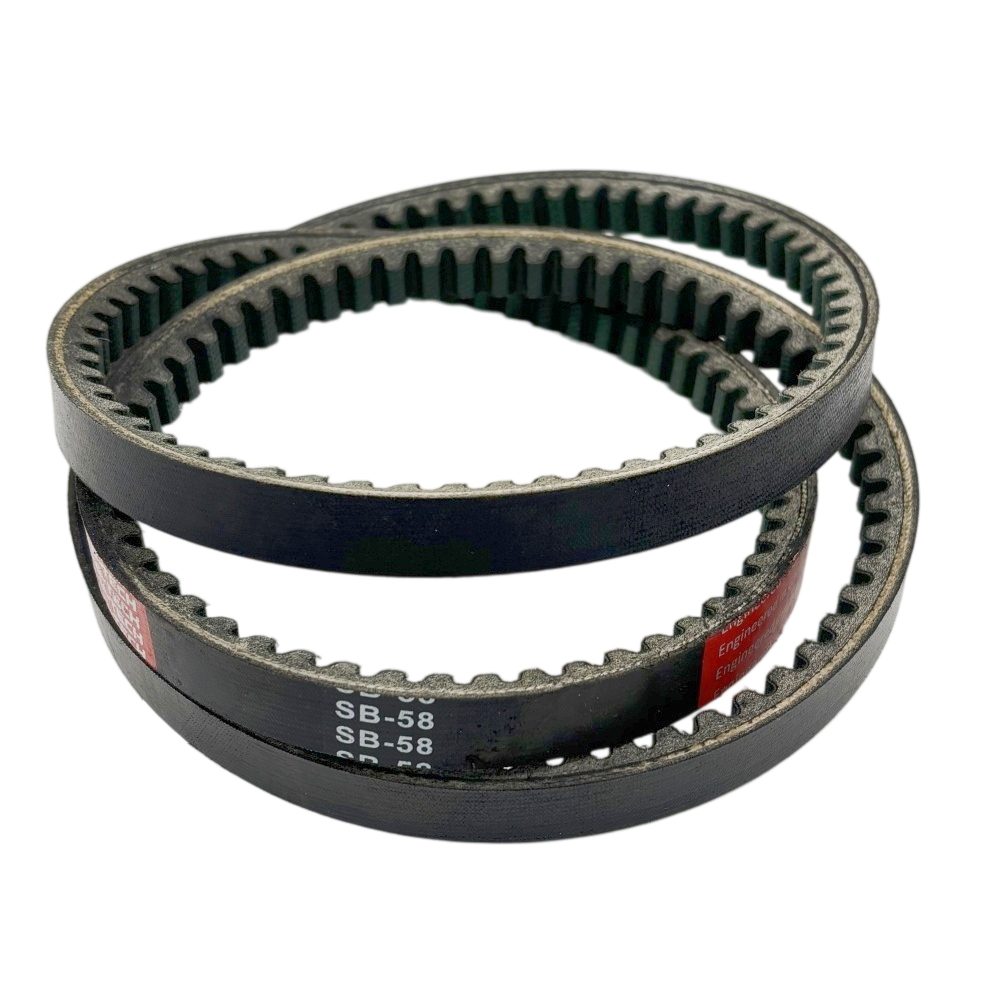
Agricultural Cogged V-Belt
Our agricultural cogged V-belts are available in classical, wedge, narrow and variable-speed profiles. Manufactured with EPDM- or CR-rubberized protective fabric, high-modulus CR cushion compounds, polyester or aramid tensile cords and fiber-reinforced rubber, they offer excellent tensile strength, lateral rigidity and fatigue resistance. We support standard sizes, OEM replacements and customized agricultural drive belt specifications.
Key Product Features:
High-Grip Raw-Edge Sidewalls
Flexible Molded Cog Design
High Tensile Strength & Low Stretch
High Lateral Rigidity & Shock Resistance
Heat, Wear & Crack Resistance
Custom Profiles & OEM Replacement Sizes
What Is an Agricultural Raw Edge Cogged V-Belt?
An agricultural raw edge cogged V-belt , also called an agricultural cogged belt, harvester cogged V-belt, agricultural notched V-belt or agricultural raw edge V-belt, is a rubber friction-drive belt designed for compatible mechanical transmissions in agricultural machinery.
Unlike an agricultural wrapped V-belt, which transmits power through fabric-covered driving surfaces, an agricultural raw edge cogged V-belt has exposed rubber sidewalls that directly contact the matching pulley grooves . This raw-edge construction provides high frictional grip and supports efficient power transmission under suitable belt tension and pulley conditions.
The belt's inner surface features a series of specially designed molded cogs. These notches increase longitudinal flexibility, reduce resistance to bending and help minimize internal heat generation as the belt repeatedly travels around pulleys.
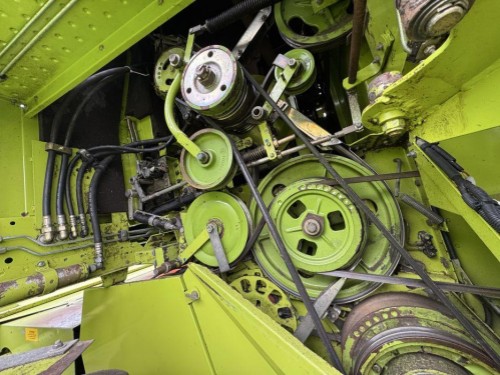
Agricultural cogged V-belts are particularly relevant to combine harvesters, rice harvesting equipment and agricultural variable-speed drives, where belts may experience a combination of high loads, irregular crop feeding, repeated start-stop cycles, dust exposure and complex pulley arrangements.
Construction & Materials
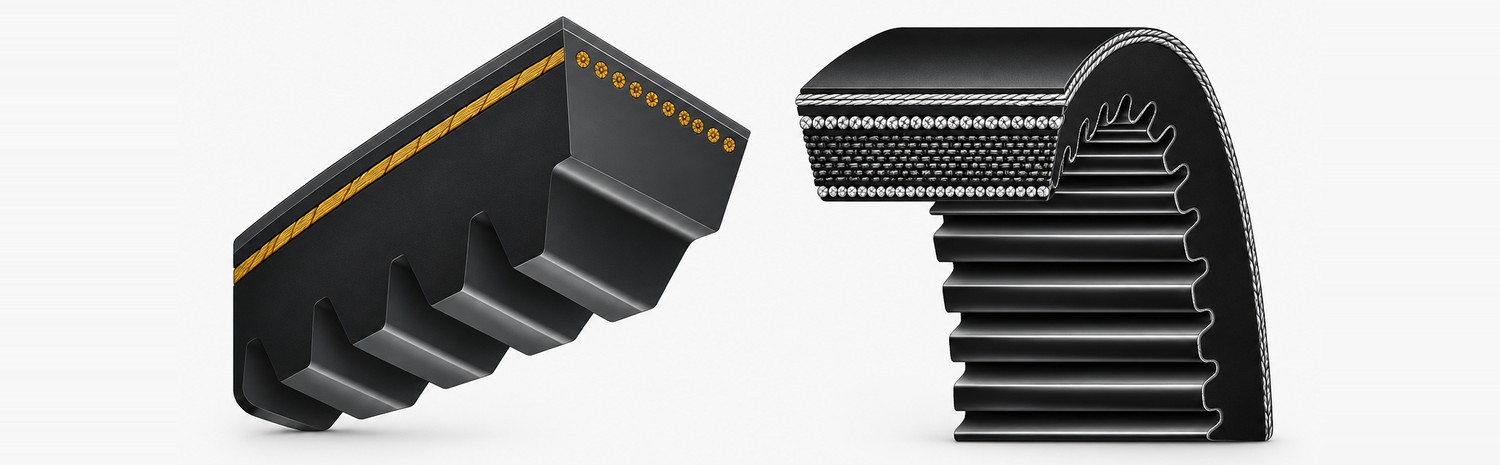
TRANSCO agricultural cogged V-belts use reinforced rubber constructions designed to combine tensile strength, low elongation, controlled lateral rigidity and high longitudinal flexibility. Our agricultural raw edge cogged belts and agricultural variable-speed raw edge cogged belts use different rubberized fabric materials while sharing a similar four-component structural arrangement.
Raw Edge Cogged V-Belt Construction |
Variable Speed Cogged V-Belt Construction |
||
| Construction Layer | Main Material | Construction Layer | Main Material |
| Abrasion-Resistant Rubberized Fabric | EPDM-Rubberized Canvas | Abrasion-Resistant Rubberized Fabric | CR-Rubberized Canvas |
| High-Modulus Cushion Compound | CR Rubber | High-Modulus Cushion Compound | CR Rubber |
| High-Strength Tensile Cords | Polyester; Optional Aramid | High-Strength Tensile Cords | Polyester or Aramid |
| Fiber-Filled Base Compound | Reinforced Rubber Compound | Fiber-Filled Base Compound | Reinforced Rubber Compound |
|
1. Abrasion-Resistant EPDM-Rubberized Fabric The upper protective layer uses abrasion-resistant EPDM-rubberized canvas to protect the belt backing against mechanical wear while maintaining flexibility during repeated bending. Unlike agricultural wrapped V-belts, this fabric does not cover the driving sidewalls, allowing direct rubber-to-pulley contact. Its protective construction also differs from the rice-grain textured fabric wrapping used on TRANSCO agricultural wrapped V-belts. 2. High-Modulus CR Cushion Compound The high-modulus cushion layer uses a specially formulated chloroprene rubber (CR) compound to support the tensile cords and transfer mechanical loads between the reinforcement and surrounding rubber body. Its balanced stiffness and flexibility help maintain structural integrity during repeated bending and tension cycling. The compound also supports stable belt performance under the fluctuating loads commonly encountered in harvesting and agricultural transmission systems. 3. Polyester or Aramid Tensile Cords The tensile layer uses high-strength polyester cords, with optional aramid reinforcement, to carry longitudinal loads and control belt elongation during power transmission. Polyester cords provide tensile strength, dimensional stability and suitable flexibility for conventional agricultural drives. Aramid cords offer higher tensile strength and lower elongation for demanding applications involving heavy loads and repeated shock loading. Cord selection depends on the belt profile and operating requirements. 4. Fiber-Filled Base Compound & Molded Cogs The lower belt body incorporates a fiber-filled rubber compound with precision-molded cogs, combining transverse reinforcement with longitudinal bending flexibility. Reinforcing fibers improve lateral rigidity and help resist deformation under pulley sidewall pressure. The molded cogs reduce compression resistance and internal heat generation during repeated bending, while application-specific cog geometry helps improve fatigue resistance and reduce the risk of bottom cracking and chipping. |
1. Abrasion-Resistant CR-Rubberized Fabric The upper protective layer uses abrasion-resistant CR-rubberized canvas to protect the belt backing against mechanical wear while maintaining flexibility under changing pulley contact conditions. Unlike the EPDM-rubberized fabric specified for conventional agricultural cogged belts, this construction incorporates CR-rubberized protective fabric. The working sidewalls remain exposed rubber, providing direct frictional contact with the variable-pitch pulley surfaces throughout the operating range. 2. High-Modulus CR Cushion Compound The high-modulus cushion layer uses a specially formulated chloroprene rubber (CR) compound to support the tensile reinforcement and transfer loads through the belt structure. Its controlled stiffness and flexibility help maintain structural stability under changing belt tension and pulley contact pressure. The compound also supports reliable load distribution during repeated bending and the continuous transmission ratio adjustments encountered in agricultural variable-speed drives. 3. Polyester or Aramid Tensile Cords The tensile layer incorporates high-strength polyester or aramid cords to carry longitudinal loads and control belt elongation during variable-speed power transmission. Polyester cords provide tensile strength, dimensional stability and flexibility for suitable agricultural variable-speed applications. Aramid cords offer higher tensile strength and lower elongation for demanding loads. The selected reinforcement must accommodate changing operating tension and the requirements of the variable-pitch pulley system. 4. Fiber-Filled Base Compound & Molded Cogs The lower belt body incorporates a fiber-filled rubber compound with specially designed molded cogs, combining high lateral rigidity with longitudinal bending flexibility. Reinforcing fibers help resist cross-sectional deformation and reduce the dishing effect under variable-pitch pulley pressure. The molded cogs accommodate changing effective pulley diameters and repeated bending, while the reinforced compression section supports stable pulley engagement and efficient variable-speed power transmission. |
||
Agricultural Cogged V-Belt Types, Specifications & Available Sizes
TRANSCO's agricultural raw edge cogged belt product information covers classical, wedge, narrow and agricultural variable-speed V-belt sections , together with several non-standard dimensional profiles. Each profile family has its own cross-sectional dimensions, sidewall angle, recommended minimum pulley diameter and belt length designation system.
The tables below reproduce the dimensional and manufacturing range information provided in TRANSCO's agricultural cogged belt technical document.
Classical Agricultural Raw Edge Cogged V-Belts
Classical agricultural raw edge cogged V-belts use conventional trapezoidal cross-sections with exposed rubber driving sidewalls and molded inner cogs. These belts are designed for compatible agricultural V-groove pulley transmissions requiring flexible bending and reliable frictional power transfer. Suitable applications may include selected harvesting, threshing, crop-handling and agricultural auxiliary drives.

| Section | Top Width (mm) | Height (mm) | Angle | Recommended Min. Pulley Diameter (mm) | Min. Length (inch/mm) | Max. Length (inch/mm) | Length Designation |
| AX | 13.0 | 8.0 | 36° | 63 | 23.5 / 597 | 200 / 5080 | Li |
| BX | 17.0 | 11.0 | 36° | 90 | 23.5 / 597 | 200 / 5080 | Li |
| CX | 22.0 | 14.0 | 36° | 140 | 23.5 / 597 | 200 / 5080 | Li |
The listed manufacturing ranges are reference values for the specified profile family and length system. Actual production availability depends on the requested dimensions and belt construction.
Agricultural Wedge Raw Edge Cogged V-Belts
Agricultural wedge cogged V-belts use relatively compact wedge-shaped cross-sections for compatible narrow V-groove transmissions. The wedge profile can provide high power transmission capability within a suitable drive arrangement, while the molded cogs reduce bending resistance. These belts are appropriate for agricultural machinery applications where the original transmission uses a matching wedge-section pulley design.

| Section | Top Width (mm) | Height (mm) | Angle | Recommended Min. Pulley Diameter (mm) | Min. Length (mm) | Max. Length (mm) | Length Designation |
| XPA | 13.0 | 10.0 | 36° | 71 | 590 | 5125 | Lp |
| XPB | 17.0 | 14.0 | 36° | 112 | 600 | 5140 | Lp |
| XPC | 22.0 | 18.0 | 36° | 180 | 600 | 5163 | Lp |
Additional wedge-section requirements can be reviewed separately when the requested profile is not listed.
Agricultural Narrow Raw Edge Cogged V-Belts
Agricultural narrow raw edge cogged V-belts are used in compatible narrow-section pulley drives requiring suitable power transmission capacity and flexible belt operation. The belt construction combines exposed rubber sidewalls with molded cogs and high-strength tensile reinforcement. These profiles follow a different dimensional and length designation system from the XPA, XPB and XPC wedge series.

| Section | Top Width (mm) | Height (mm) | Angle | Recommended Min. Pulley Diameter (mm) | Min. Length (inch/mm) | Max. Length (inch/mm) | Length Designation |
| 3VX | 9.7 | 8.0 | 38° | 56 | 23.5 / 597 | 200 / 5080 | La |
| 5VX | 15.8 | 14.0 | 38° | 112 | 23.5 / 597 | 200 / 5080 | La |
Although these narrow sections may appear similar to other wedge-type V-belts, the length reference, cross-sectional geometry and pulley compatibility must be checked independently.
Light Agricultural Raw Edge Cogged V-Belts
Light agricultural raw edge cogged V-belts feature relatively low-profile cross-sections, exposed rubber driving sidewalls and specially designed molded cogs. Their reduced section height and flexible cogged construction help minimize bending resistance and internal heat generation during repeated operation around compatible pulleys.
TRANSCO manufactures SA, SB and SC agricultural cogged V-belts for rice harvesters, combine harvesters, rice transplanters, threshing machines and other agricultural machinery. High-strength polyester or aramid tensile cords and fiber-reinforced rubber compounds help maintain dimensional stability, resist fluctuating loads and reduce premature bending fatigue. Standard and customized belt lengths are available according to the original agricultural drive specifications.
Light Agricultural Cogged V-Belt Type — Cross-Sectional Dimensions
| Section | Top Width (mm) | Height (mm) | Angle |
|---|---|---|---|
| SA | 12.7 | 7.0 | 40° |
| SB | 16.7 | 9.0 | 40° |
| SC | 22.2 | 11.0 | 40° |
Additional belt lengths and non-standard sizes can be customized according to customer requirements. Please provide the original belt marking, required length, OEM part number or technical drawing for manufacturing confirmation.
Agricultural Raw Edge Cogged Variable Speed V-Belts
Agricultural variable-speed cogged V-belts are developed for compatible variable-pitch pulley systems in harvesting and agricultural machinery. Unlike conventional fixed-ratio drives, variable-speed transmissions adjust the effective running diameter of the belt on the pulleys to change the transmission ratio. These belts must combine longitudinal flexibility with sufficient lateral rigidity to maintain effective pulley contact throughout the operating range.
Their specialized rubber compounds and fiber-filled compression sections help limit excessive cross-sectional deformation, including the dishing effect, while maintaining flexibility under repeated bending. TRANSCO's technical product information includes two variable-speed cross-sectional systems.
RMA IP 25/1991 Variable Speed Type — Dimensions & Pitch Length Range
| Cross Section | Top Width (mm) | Thickness (mm) | Angle | Min. Pitch Length (mm) | Max. Pitch Length (mm) |
| 22V-A22 / 1422V | 22 | 8 | 22° | 815 | 1920 |
| 30V-A22 / 1922V | 30 | 10 | 22° | 920 | 3015 |
| 37V-A22 / 2322V | 37 | 11 | 22° | 1036 | 3018 |
| 30V-A26 / 1926V | 30 | 11 | 26° | 922 | 3018 |
| 46V-A26 / 2926V | 46 | 13 | 26° | 1370 | 3198 |
| 51V-A26 / 3226V | 51 | 13 | 26° | 1445 | 3375 |
| 40V-A30 / 2530V | 40 | 15 | 30° | 1293 | 3198 |
| 51V-A30 / 3230V | 51 | 16 | 30° | 1450 | 3380 |
| 70V-A30 / 4430V | 70 | 18 | 30° | 1455 | 3385 |
| 64V-A36 / 4036V | 64 | 18 | 36° | 1455 | 3385 |
| 70V-A36 / 4436V | 70 | 18 | 36° | 1455 | 3385 |
| 76V-A36 / 4836V | 76 | 19 | 36° | 1458 | 3388 |
ISO 3410 (E) / IS 8777-1978 Variable Speed Type — Dimensions & Pitch Length Range
| Section | Top Width (mm) | Thickness (mm) | Angle | Min. Pitch Length (mm) | Max. Pitch Length (mm) |
| XHG | 16.5 | 8.0 | 26° | 715 | 5100 |
| XHH | 20.4 | 10.0 | 26° | 720 | 5100 |
| XHI | 25.4 | 12.7 | 26° | 727 | 5100 |
| XHJ | 31.8 | 15.1 | 26° | 730 | 5100 |
| XHK | 38.1 | 17.5 | 26° | 737 | 5100 |
| XHL | 44.5 | 19.8 | 26° | 740 | 5100 |
| XHM | 50.8 | 22.2 | 26° | 745 | 5100 |
| XHN | 57.2 | 23.9 | 26° | 750 | 5100 |
| XHO | 63.5 | 25.4 | 26° | 753 | 5100 |
The XHG–XHO series has different dimensional and construction requirements from conventional classical and narrow V-belt profiles. For replacement applications, the belt section, sidewall angle, working pitch diameter, original length marking and variable-pitch pulley arrangement must be checked.
If your required agricultural cogged V-belt model or size is not listed, TRANSCO can review custom manufacturing requests.
Please provide the original belt marking, top width, height, length, machinery model or technical drawing. Our technical team will evaluate the requested specification and confirm whether production is feasible.
Available manufacturing ranges, minimum order quantities, tooling requirements and dimensional tolerances are confirmed according to the selected belt construction.
Key Performance Features
TRANSCO agricultural raw edge cogged V-belts combine high-grip rubber sidewalls, specially designed molded cogs, high-strength tensile cords and fiber-reinforced rubber compounds to meet the demanding power transmission requirements of modern agricultural machinery.
Engineered for combine harvesters, rice harvesters, forage harvesters and agricultural variable-speed drives, our agricultural cogged V-belts emphasize high power transmission capacity, longitudinal flexibility, transverse rigidity, shock-load resistance and durability under intensive seasonal operating conditions.
1. High Power Transmission & Superior Pulley Grip
Unlike conventional agricultural wrapped V-belts, TRANSCO agricultural raw edge cogged V-belts feature exposed rubber driving sidewalls without fabric wrapping. Direct rubber-to-pulley contact provides strong frictional grip and supports efficient torque transmission under suitable pulley geometry and operating tension.
This high-grip construction is particularly beneficial for combine harvester drives, threshing systems and crop-processing machinery experiencing fluctuating torque and repeated changes in operating resistance.
The raw-edge cogged construction offers increased power transmission potential, with the following indicative comparative performance figures:
| Belt Type | Reference Power Transmission Increase |
|---|---|
| Classical, Wedge & Narrow Cogged V-Belts | 25–30% |
| Agricultural Variable Speed Cogged V-Belts | 40–50% |
These figures are indicative reference values. Actual power transmission capacity depends on the comparison baseline, belt construction, pulley geometry, operating speed, belt tension and drive conditions.
2. High Longitudinal Flexibility & Low Heat Generation
The specially designed molded cog profile allows the compression rubber to deform more freely as the belt bends around pulleys, providing high longitudinal flexibility and reducing internal bending resistance.
Compared with an equivalent non-cogged compression section, this construction helps reduce energy losses associated with repeated flexing and limits internal heat generation during prolonged operation. Suitable heat-resistant rubber compounds further support thermal durability and reduce thermal stress within the belt body.
These characteristics make agricultural raw edge cogged V-belts particularly suitable for compatible compact pulley arrangements, repeated bending cycles and demanding harvester transmission systems operating continuously during intensive harvesting seasons.
3. High Lateral Rigidity & Stable Variable-Speed Performance
TRANSCO agricultural cogged V-belts incorporate a specially formulated fiber-filled base compound that provides high lateral rigidity while maintaining flexibility in the longitudinal direction. This combination helps resist excessive cross-sectional deformation under pulley sidewall pressure.
For agricultural variable-speed V-belts, transverse rigidity is particularly important in controlling the dishing effect, which can affect belt geometry, pulley contact and power transmission as the effective running diameter changes.
Our variable-speed cogged belt construction combines reinforced rubber compounds, flexible molded cogs and high-strength tensile reinforcement to maintain effective pulley engagement and cross-sectional stability throughout the intended speed ratio range. This design supports reliable operation in compatible combine harvester variable-speed transmissions and adjustable-pitch pulley systems.
4. High Shock-Load Resistance & Low Elongation
Agricultural harvesting, threshing, cutting and crop-feeding operations frequently generate sudden torque peaks and fluctuating mechanical loads due to variations in crop density, moisture content and feeding resistance.
TRANSCO heavy-duty agricultural cogged V-belts combine high-strength polyester or aramid tensile cords, high-modulus CR cushion compounds and fiber-reinforced base rubber to support demanding dynamic transmission loads.
The tensile reinforcement helps control belt elongation and maintain dimensional stability under heavy loads. Optional aramid tensile cords provide additional tensile strength and low-stretch characteristics for agricultural applications requiring greater load-carrying capacity and resistance to repeated shock loading.
This reinforced construction helps maintain working belt tension, reduce excessive elongation and support stable power transmission during intensive agricultural operation. Actual elongation performance depends on the selected cord construction and operating conditions.
5. Excellent Flexing Fatigue, Crack & Chipping Resistance
The compression section of an agricultural cogged V-belt undergoes repeated compression, release and bending cycles during continuous pulley engagement. These dynamic stresses can contribute to cog-root cracking, bottom cracking and rubber chipping if the belt construction is unsuitable for the drive.
TRANSCO uses application-specific molded cog geometry and reinforced rubber compounds to improve resistance to localized deformation and repeated flexing fatigue. The flexible cog profile helps distribute bending deformation, while the fiber-filled base compound provides structural support and mechanical durability.
This combination enhances resistance to cog-root cracking and bottom chipping, helping extend belt service life in compatible agricultural machinery drives involving repeated bending, variable loads and prolonged seasonal operation.
Correct pulley diameter, belt tension, pulley alignment and operating load remain essential for preventing premature mechanical damage.
6. Environmental Resistance & Wide Operating Temperature Range
TRANSCO agricultural raw edge cogged V-belts use selected rubber compounds and protective textile materials designed to withstand demanding agricultural working environments, including outdoor exposure, crop dust, temperature variations and incidental contact with oils or lubricants.
The principal environmental resistance characteristics include:
-
Antistatic Performance: Supports applications requiring electrical charge dissipation.
-
Ozone Resistance: Helps protect rubber compounds against ozone-induced surface degradation and cracking.
-
Oil Resistance: Helps resist deterioration caused by incidental oil and lubricant exposure.
-
Heat Resistance: Supports rubber durability under elevated operating temperatures and repeated thermal stress.
-
Reference Operating Temperature Range: −30°C to +110°C.
These properties support reliable agricultural power transmission during intensive harvesting seasons and demanding outdoor machinery operation.
The applicable temperature limits, electrical conductivity, oil resistance and environmental performance depend on the selected rubber formulation, reinforcement construction and operating conditions. Specific continuous-temperature ratings and testing requirements should be confirmed according to the requested belt specification.
Agricultural Cogged V-Belt Standards & Compliance
TRANSCO agricultural raw edge cogged V-belts and agricultural variable-speed cogged V-belts are manufactured in compliance with applicable international and industry standards. Our products meet the relevant requirements for cross-sectional dimensions, belt length tolerances, pulley groove compatibility and product performance.
Through controlled material selection, precision molding, dimensional inspection and quality testing, TRANSCO ensures consistent product quality for agricultural machinery manufacturers, OEM replacement markets and global power transmission distributors.
Applicable Standards & Compliance
TRANSCO agricultural cogged V-belts comply with the following standards according to their respective belt profiles, construction types and transmission requirements.
| Standard | Application & Technical Requirements |
| ASAE S211.4 | Manufacturing tolerances, measurement methods and application requirements for agricultural belt drives. |
| BS 3790 | Dimensional and physical requirements for classical, wedge and banded V-belts and corresponding pulleys. |
| RMA IP-22 | Dimensional specifications for narrow V-belts and corresponding pulley systems. |
| ISO 4184 | Length specifications for classical and narrow V-belts using the datum length system. |
| ISO 5291 | Pulley groove specifications for joined classical V-belt drives. |
| ISO 5290 | Pulley groove specifications for narrow V-belt drive systems. |
| ISO 3410 | Agricultural variable-speed V-belt dimensions and corresponding pulley groove geometry. |
| IS 2494 | Product specifications and performance requirements for applicable endless V-belts. |
| RMA IP-25 | Dimensional and drive specifications for variable-speed V-belts. |
| IS 8777:1978 | Dimensional specifications for agricultural variable-speed V-belts and corresponding pulley grooves. |
Agricultural Variable-Speed V-Belt Compliance
TRANSCO manufactures agricultural raw edge cogged variable-speed V-belts in accordance with two established dimensional systems:
-
RMA IP-25/1991: Covers variable-speed cogged V-belt profiles with nominal groove angles of 22°, 26°, 30° and 36°, including the 1422V–4836V series.
-
ISO 3410 / IS 8777:1978: Covers agricultural variable-speed cogged V-belt profiles, including the XHG–XHO series with a nominal angle of 26°.
Compliance with these dimensional specifications supports accurate belt identification, compatible pulley engagement and reliable replacement selection for agricultural variable-speed transmissions.
Technical Documentation & OEM Quality Requirements
TRANSCO supports agricultural machinery manufacturers, OEM customers and replacement belt distributors with product specifications, dimensional information, quality inspection documentation and applicable performance test reports.
Customers requiring specific standard editions, inspection criteria or additional technical documentation can provide their requirements together with the belt profile, dimensions, OEM reference and operating conditions.
Our standardized manufacturing processes and quality control procedures support consistent agricultural cogged V-belt performance, dimensional compatibility and reliable international supply.
Agricultural Cogged V-Belt Applications
TRANSCO agricultural raw edge cogged V-belts are designed for demanding power transmission systems in combine harvesters, rice harvesters, rice transplanters, forage harvesters, balers, tractors and other agricultural machinery. Their high-grip rubber sidewalls, precision-molded cogs, reinforced rubber compounds and high-strength tensile cords help address fluctuating torque, shock loads, repeated bending, belt elongation and internal heat generation during intensive agricultural operations.
Our agricultural cogged belt range includes classical, wedge, narrow and variable-speed V-belt profiles, supporting different pulley arrangements, transmission loads and agricultural machinery replacement requirements. TRANSCO also supplies customized belt dimensions and polyester or aramid tensile cord constructions for compatible agricultural and industrial drive systems.
Agricultural Machinery Applications
Modern agricultural machinery requires reliable power transmission under changing crop loads, dusty environments, complex pulley arrangements and prolonged seasonal operation. TRANSCO provides agricultural raw edge cogged V-belt solutions for selected main transmissions, auxiliary drives and variable-speed systems, helping maintain stable machinery performance, reduce premature belt failure and minimize belt-related maintenance interruptions during critical farming seasons.
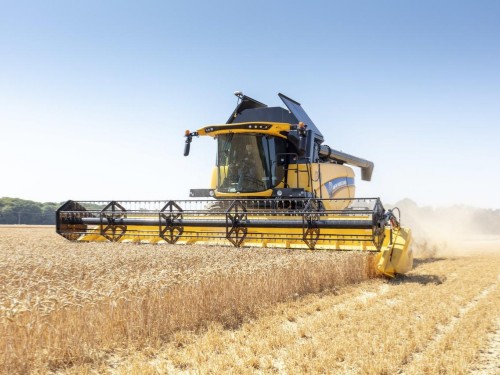
|
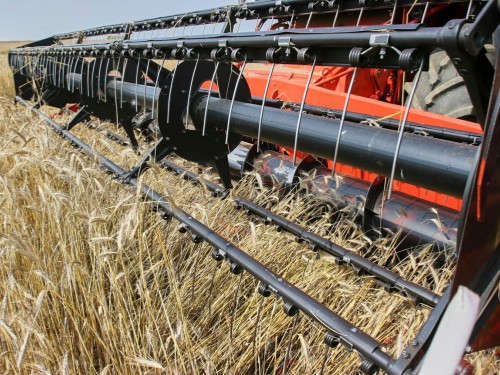
|
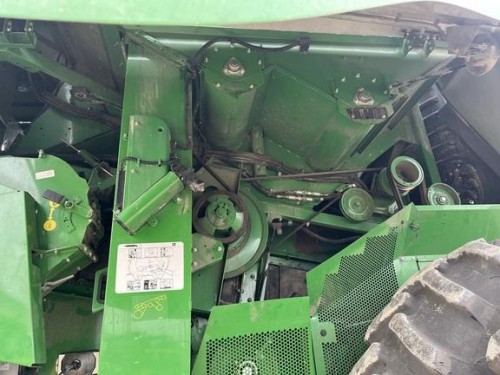
|
| Combine Harvesters & Threshing Systems | Harvester Header, Reel & Feeding Systems | Grain Cleaning, Handling & Elevator Drives |
|
Combine harvesters, including wheat, corn and soybean harvesting machines, use V-belt transmissions to power selected threshing drums, separating mechanisms and auxiliary shafts. Changes in crop density, moisture content and feeding rate can generate fluctuating torque, sudden shock loads and increased belt tension.
TRANSCO combine harvester cogged V-belts help address belt slippage, excessive elongation and threshing drum speed loss under heavy harvesting loads. High-grip raw-edge rubber sidewalls improve torque transfer, while reinforced compression compounds resist deformation under increased pulley pressure. Optional aramid tensile cords help maintain working belt tension during repeated shock loading, and flexible molded cogs reduce bending-related heat build-up. These characteristics help maintain consistent threshing drum operation, reduce the need for frequent belt tension adjustments and minimize belt-related downtime during intensive harvesting seasons. |
Combine harvester headers, cutter bars, pickup reels and crop-feeding mechanisms require stable mechanical power transmission to cut, collect and deliver harvested material into the threshing system. Uneven crop feeding, dense vegetation and changing harvesting speeds can produce intermittent resistance, vibration and sudden torque increases.
TRANSCO harvester header drive belts, reel drive belts and feeder drive V-belts help reduce load-induced belt slippage, driven-speed fluctuations and premature fatigue caused by repeated engagement. The exposed rubber sidewalls maintain effective frictional grip, while reinforced tensile cords help control belt stretch when cutting or feeding resistance suddenly increases. The flexible molded cog profile also helps reduce bending stress in compact pulley arrangements. Together, these characteristics support more consistent cutting, reel rotation and crop feeding, helping reduce belt-related interruptions in the harvesting process. |
Grain cleaning fans, vibrating sieves, grain elevators, unloading augers and tailings return mechanisms are important components of modern harvesting and grain-handling systems. Selected belt-driven mechanisms operate under continuous rotational loads, changing grain flow, airborne dust and repeated mechanical engagement.
TRANSCO combine cleaning fan belts, grain elevator drive belts and tailings return drive V-belts help address unstable drive speeds, excessive belt stretch and heat-related deterioration during prolonged grain processing. High-grip rubber sidewalls and controlled tensile elongation help maintain consistent fan rotation and mechanical conveying speeds. Abrasion-resistant rubberized protective fabric helps reduce surface wear caused by crop dust and debris, while the cogged compression section reduces internal bending losses. Antistatic properties support electrical charge dissipation where required. These characteristics help maintain reliable grain cleaning and handling operations while reducing premature belt wear and maintenance interruptions. |
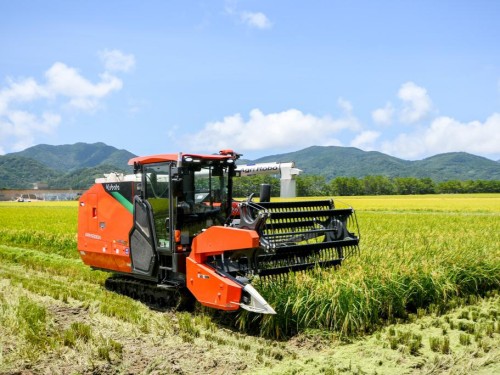
|
|
|
| Rice Harvesters & Rice Transplanters | Forage Harvesters & Chaff Cutting Equipment | Hay Balers, Windrowers & Forage Handling Equipment |
|
Rice combine harvesters, semi-feeding harvesters, crawler-type rice harvesters and rice transplanters frequently operate in humid environments containing straw fragments, chaff, mud and other agricultural residues. Their compact mechanical transmission arrangements may involve relatively small pulleys, frequent engagement, repeated bending and fluctuating crop resistance.
TRANSCO rice harvester cogged V-belts and rice transplanter drive belts help address premature cog-root cracking, backing fabric wear and bending fatigue in compact agricultural transmissions. Precision-molded cogs reduce compression stress when operating around compatible small-diameter pulleys, while abrasion-resistant rubberized fabric helps protect the belt backing from mechanical wear. Reinforced tensile cords and high-modulus CR cushion compounds help maintain belt integrity during frequent engagement and changing loads. These construction advantages help reduce premature belt failure and replacement frequency, supporting continuous rice harvesting, threshing and transplanting operations. |
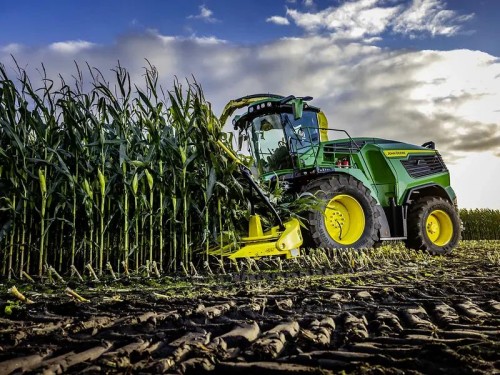
Forage harvesters, silage harvesters, maize choppers and agricultural chaff cutters use mechanical transmissions to operate selected crop intake systems, feed rollers, cutting assemblies and auxiliary shafts. Variations in forage density, crop moisture and feeding resistance can generate substantial torque fluctuations and repeated shock loading.
TRANSCO heavy-duty forage harvester cogged V-belts and chaff cutter drive belts help address sudden torque peaks, excessive belt elongation and premature transmission failure when processing dense or moisture-rich forage. Optional aramid tensile cords provide low-stretch reinforcement under demanding loads, while high-modulus CR cushion compounds and fiber-filled base rubber help maintain structural stability under increased pulley pressure. Raw-edge sidewalls improve torque transmission, and molded cogs help control internal heat generation during continuous operation. These characteristics support consistent crop feeding and cutting speeds, helping reduce belt-related interruptions and maintenance during silage production. |
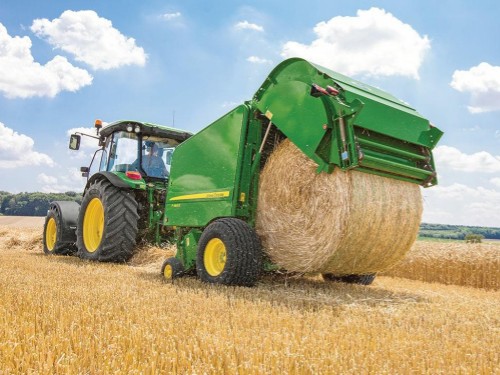
Hay balers, round balers, square balers, windrowers, hay tedders and other forage handling equipment incorporate mechanical drives for selected pickup components, crop-feeding mechanisms and auxiliary functions. Frequent engagement, changing crop resistance and interrupted operation can create repeated belt tension changes, shock loads and bending fatigue.
TRANSCO hay baler drive belts, windrower V-belts and forage equipment cogged belts help reduce progressive belt elongation, tension loss and fatigue damage caused by repeated starts, stops and intermittent crop loading. High-strength polyester or aramid tensile cords help maintain working belt length, while reinforced compression compounds resist deformation under changing pulley pressure. Flexible molded cogs reduce repeated bending stress, helping extend belt service life and reduce tensioning maintenance. These benefits support more consistent pickup and crop-feeding operation in compatible forage equipment. These power transmission V-belts are distinct from the wide flat belts used directly in round-bale formation. |
|
|
|
| Tractors, Tillers & Farm Auxiliary Drives | Flail Mowers, Lawn Mowers & Garden Machinery | Agricultural Variable-Speed & Ground Traction Drives |
|
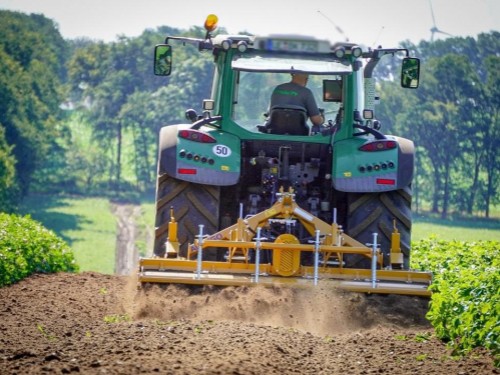
Tractors, rotary tillers, power tillers, cultivators, seeders, planters and agricultural sprayers may incorporate V-belt drives for selected engine accessories, cooling fans, alternators, pumps and auxiliary mechanical systems. Repeated engine speed changes, vibration, dust exposure and seasonal operation place varying demands on agricultural transmission belts.
TRANSCO tractor cogged V-belts, agricultural tiller drive belts and farm auxiliary V-belts help address belt slippage, premature cracking, excessive heat generation and unstable accessory drive speeds. High-grip rubber sidewalls improve frictional power transmission, while flexible molded cogs help reduce bending losses around compatible smaller pulleys. High-strength tensile cords control belt elongation, and oil-, ozone- and heat-resistant rubber compounds help resist deterioration under demanding operating conditions. These characteristics support more reliable cooling fan, alternator and pump operation, helping reduce frequent belt replacement and tensioning maintenance. Classical, wedge and narrow profiles are available for compatible agricultural transmissions. |
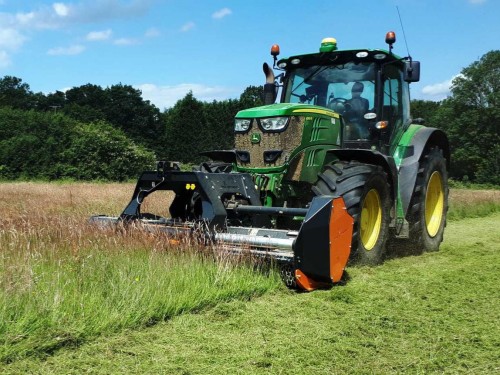
Flail mowers, rotary mowers, mower conditioners, riding lawn mowers, zero-turn mowers and other grass-cutting equipment use selected V-belt transmissions to power cutting rotors, mower decks and auxiliary mechanisms. Cutting dense grass, weeds and crop residue can produce sudden load increases, repeated engagement and significant bending stresses.
TRANSCO agricultural mower cogged V-belts, flail mower drive belts and lawn mower cogged belts help address belt slippage, cutting rotor speed loss and premature fatigue caused by sudden increases in cutting resistance. High-strength tensile cords help limit excessive stretch during repeated engagement, while reinforced compression rubber maintains cross-sectional stability under fluctuating loads. Precision-molded cogs reduce bending stress and internal heat generation in compatible pulley and idler arrangements. These characteristics support more consistent cutting performance, helping reduce cog-root cracking, premature belt replacement and belt-related interruptions during prolonged mowing operations. Clutching and backside-idler compatibility are confirmed according to the original drive design. |
Selected combine harvesters and agricultural harvesting machines use variable-pitch pulley transmissions to adjust the operating speed of threshing drums, pickup reels, cleaning fans, cutting mechanisms and mechanical ground traction systems. As the effective pulley diameter changes, the belt must maintain adequate flexibility, lateral rigidity and stable sidewall contact throughout the transmission ratio range.
TRANSCO agricultural variable-speed cogged V-belts and harvester variator belts are designed to address belt dishing, excessive cross-sectional deformation, unstable pulley contact and abnormal sidewall wear during speed adjustments. The specially formulated fiber-filled compression compound provides high lateral rigidity, while flexible molded cogs accommodate changing effective pulley diameters. High-modulus CR cushion compounds and polyester or aramid tensile cords help control deformation and elongation under variable loading. These characteristics support consistent speed ratio adjustment, stable power transmission and reduced premature wear. Our RMA IP-25 variable-speed profiles and XHG–XHO sections support compatible harvester variator and mechanical ground-drive replacement requirements. |
Other Compatible Industrial Applications
Although developed for demanding agricultural machinery, selected TRANSCO agricultural raw edge cogged V-belt constructions are also suitable for compatible industrial power transmission systems requiring high frictional grip, repeated bending flexibility, tensile strength and resistance to fluctuating loads.
Our classical, wedge, narrow and variable-speed cogged V-belt profiles can support selected industrial applications where the original pulley geometry, transmission load and operating conditions are compatible with the agricultural-grade belt construction.
1. Industrial Fans, Blowers & Ventilation Systems
Industrial fans, blowers and ventilation equipment require stable power transmission during prolonged operation. TRANSCO reinforced cogged V-belts help address belt slippage, fan speed fluctuations, excessive elongation and internal heat build-up. Flexible molded cogs and low-stretch tensile reinforcement support consistent fan operation, helping reduce tensioning maintenance and premature belt replacement in compatible ventilation systems.
2. Industrial Pumps & Air Compressors
Belt-driven pumps and air compressors may experience frequent starts, pressure fluctuations and changing transmission loads. TRANSCO raw edge cogged V-belts help reduce startup slippage, excessive belt stretch and fatigue caused by repeated load changes. Reinforced tensile cords and high-grip rubber sidewalls support stable torque transmission, helping minimize belt-related operating interruptions and repeated tension adjustments.
3. Grain Milling, Feed Processing & Food Production Equipment
Grain mills, feed processing plants, flour milling equipment and agricultural processing machinery frequently operate under continuous mechanical loads and dusty conditions. TRANSCO reinforced cogged V-belts help address abrasive surface wear, heat build-up and unstable transmission speeds. Their reinforced construction and antistatic properties support compatible processing drives, helping reduce premature belt deterioration and maintenance interruptions. Applications involving combustible dust require appropriate system-level safety measures and verified electrical conductivity.
4. Woodworking & General Manufacturing Machinery
Woodworking machines, cutting equipment, industrial saws and general manufacturing machinery may experience intermittent resistance, repeated start-stop cycles and fluctuating mechanical loads. TRANSCO cogged V-belts help reduce load-induced slippage, driven-shaft speed fluctuations and repeated bending fatigue. High-strength tensile cords and flexible cog geometry support more consistent transmission performance, helping reduce belt wear and interruptions during compatible cutting and manufacturing operations.
5. Construction Machinery & Industrial Auxiliary Equipment
Selected construction machinery, heavy equipment and engine-powered industrial systems use V-belts for cooling fans, alternators, pumps and mechanical auxiliary drives. TRANSCO reinforced cogged V-belts help address vibration-related fatigue, excessive belt elongation, thermal deterioration and premature cracking. Suitable rubber compounds and reinforced tensile members support reliable auxiliary drive operation, helping reduce maintenance frequency and unexpected belt-related equipment downtime.
Agricultural Cogged V-Belt Application & Replacement Support
TRANSCO supports agricultural machinery manufacturers, OEM customers, replacement parts distributors and industrial buyers with standard and customized agricultural cogged V-belt solutions.
For accurate belt selection, please provide the agricultural machinery brand, machine model, original belt marking, OEM part number, belt dimensions, length designation and specific drive position. Our technical team can review the appropriate belt profile, tensile cord material, rubber construction and manufacturing requirements for your application. Additional agricultural equipment applications, non-standard belt sections and customized harvester drive belt specifications can also be reviewed upon request.
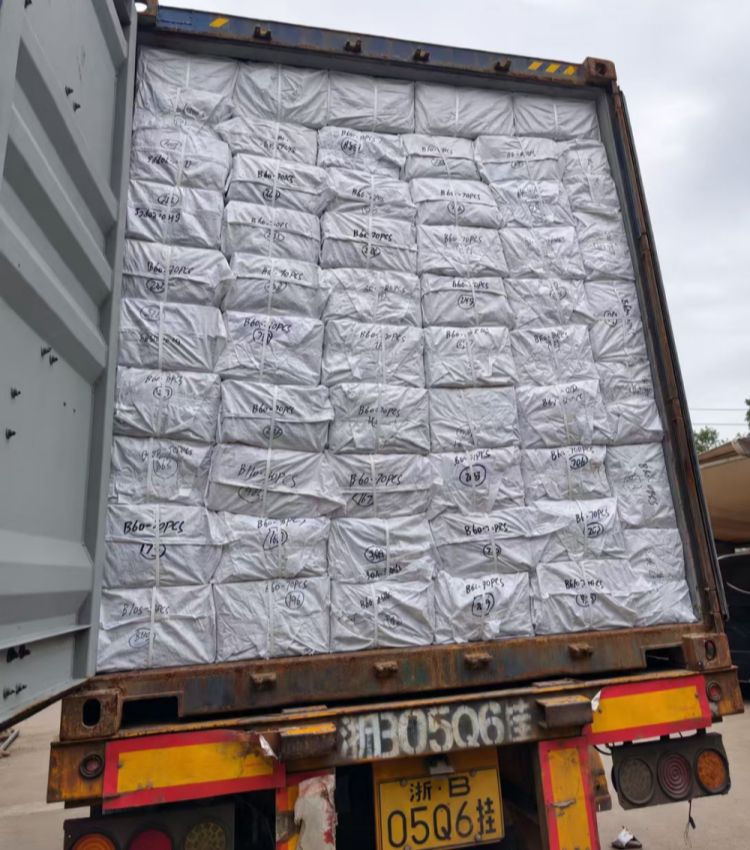
Packing, Shipping & OEM Supply
TRANSCO provides packaging, international shipping and customized manufacturing support for agricultural machinery manufacturers, replacement parts distributors and industrial power transmission suppliers. We support standard agricultural cogged belt requirements, customized dimensional specifications and OEM replacement inquiries.
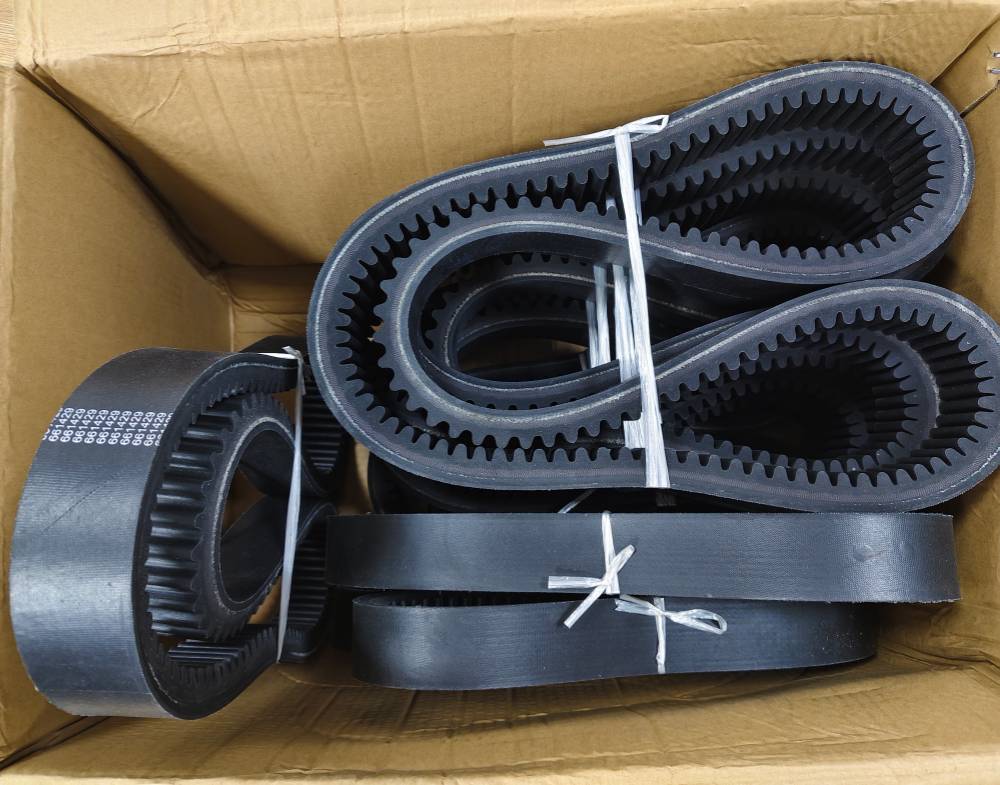
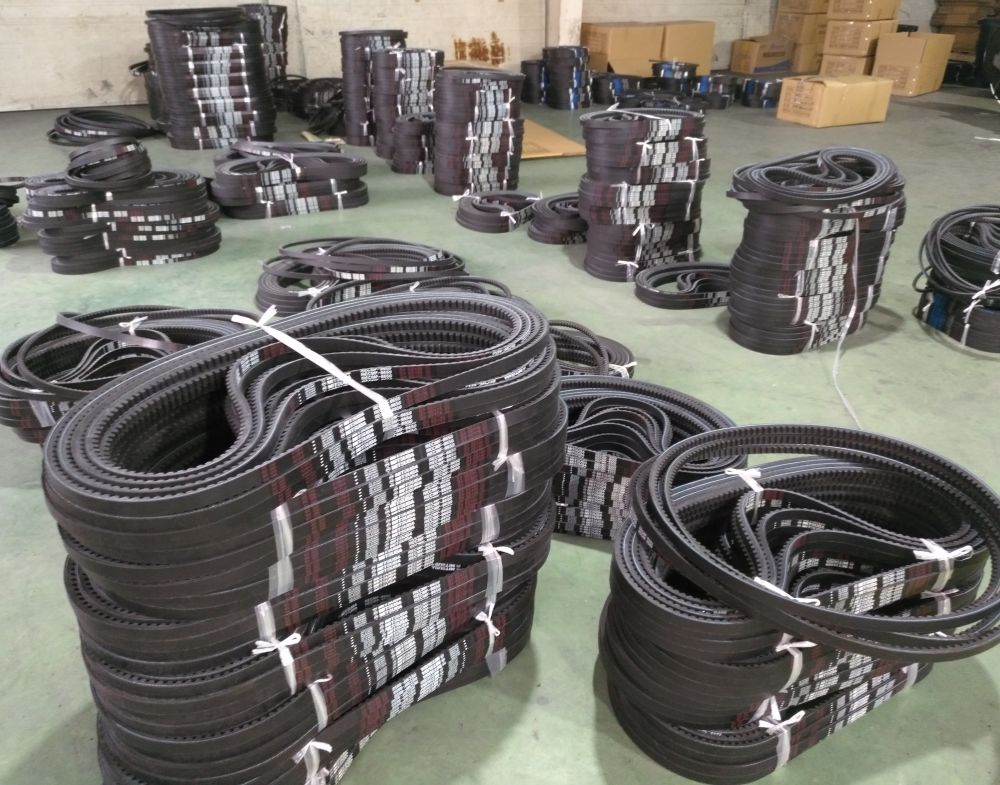
Agricultural Cogged V-Belt Packaging & ProtectionAgricultural raw edge cogged V-belts are packaged to help prevent excessive bending, deformation, contamination and damage during storage or transportation. Packaging options may include:
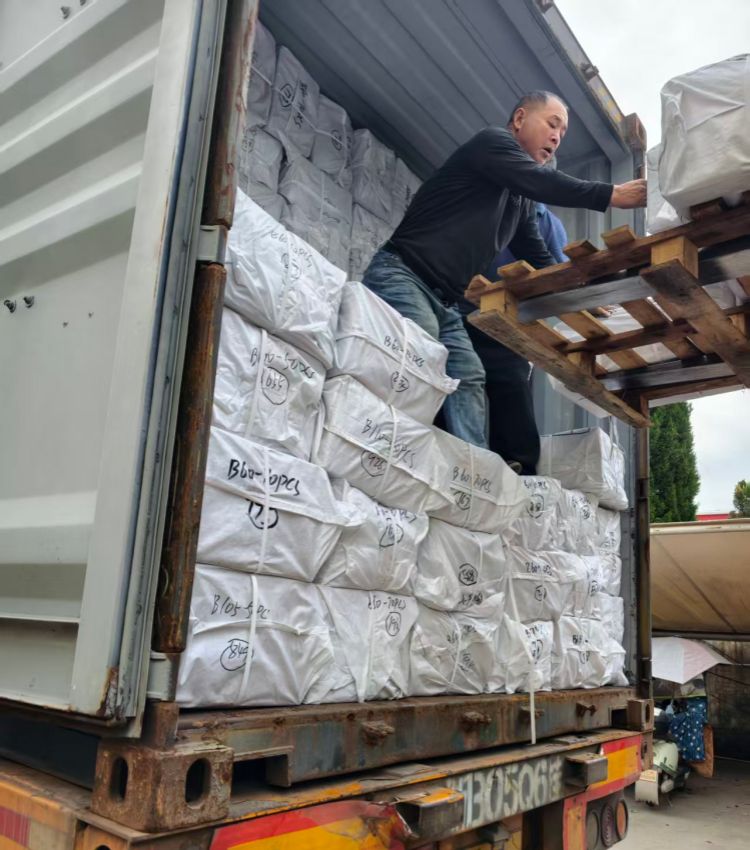
Large-section and variable-speed agricultural belts require suitable handling and packaging to help preserve their shape and prevent unnecessary deformation. International Shipping & Export SupplyTRANSCO supplies agricultural transmission belts to international customers, including agricultural equipment manufacturers, importers and wholesale distributors. Shipment arrangements can include sea freight, air freight and express delivery where appropriate. Export cartons, pallets and shipping identification can be prepared according to order volume, destination and customer requirements. OEM Manufacturing & Private Label SolutionsTRANSCO supports OEM and aftermarket agricultural cogged V-belt requirements involving:
Manufacturing feasibility depends on the requested section, dimensions, materials, tooling and order requirements. Need a Non-Standard Agricultural Cogged V-Belt?If your required belt model is not shown in the specification tables, contact TRANSCO with the original belt marking, dimensions, technical drawing or agricultural machine model. Our team will review the required construction and confirm production feasibility, available customization options and quotation details. |
|
|
|
|
|
Frequently Asked Questions
Typical applications include threshing drum drives, header and reel drives, crop-feeding mechanisms, grain cleaning fans, agricultural auxiliary drives and variable-speed transmissions.
The exposed rubber sidewalls provide strong frictional grip, while specially designed molded cogs improve longitudinal flexibility, reduce bending resistance and limit internal heat generation. The molded cogs improve flexibility rather than engage pulley teeth as a synchronous timing belt does.
The molded cog construction improves bending flexibility and helps reduce internal heat generation compared with a similar non-cogged construction. Direct rubber-to-pulley contact also provides strong frictional grip for demanding agricultural transmissions.
However, wrapped and cogged V-belts are not automatically interchangeable. The belt cross-section, sidewall angle, length designation, pulley geometry, clutching characteristics and original equipment requirements must be checked before replacement.
Abrasion-resistant EPDM-rubberized protective fabric.
High-modulus CR cushion compound.
High-strength polyester or optional aramid tensile cords.
Fiber-filled rubber base compound with molded cogs.
Our agricultural variable-speed cogged V-belts use CR-rubberized protective fabric instead of the EPDM-rubberized fabric specified for conventional agricultural cogged constructions.
These protective fabrics differ from the rice-grain textured external fabric wrapping used on TRANSCO agricultural wrapped V-belts. The working sidewalls of our raw edge cogged V-belts remain exposed rubber.
Aramid tensile cords offer high tensile strength and low elongation, making them particularly suitable for demanding combine harvester, threshing drum, forage harvester and agricultural variable-speed drives requiring greater resistance to heavy loads and repeated shock loading.
Aramid tensile cords and reinforcing fibers within the rubber compound perform different functions. Tensile cords carry longitudinal loads, while short-fiber reinforcement improves rubber-body strength and transverse rigidity.
The appropriate reinforcement should be selected according to the original equipment specification, transmission load, pulley arrangement and operating conditions. Aramid reinforcement is not automatically required for every agricultural drive.
Classical Sections: AX, BX and CX.
Wedge Sections: XPA, XPB and XPC.
Narrow Sections: 3VX and 5VX.
RMA Variable-Speed Sections: Selected 22°, 26°, 30° and 36° profiles, including 1422V, 1926V and 4436V.
Agricultural Variable-Speed Sections: XHG, XHH, XHI, XHJ, XHK, XHL, XHM, XHN and XHO.
Non-Standard Sections: Customized agricultural belt dimensions and lengths.
Each profile has specific cross-sectional dimensions, pulley compatibility and length measurement requirements. Please refer to our product specification tables for nominal dimensions, manufacturing length ranges and recommended minimum pulley diameters.
Additional profiles and sizes not listed in the tables can be reviewed for customized production.
An agricultural variable-speed V-belt is designed for compatible adjustable-pitch pulley systems, where the effective running diameter changes to regulate transmission speed and torque.
Variable-speed belts generally require greater transverse rigidity, accurate sidewall geometry and sufficient longitudinal flexibility to maintain stable pulley contact throughout the intended speed range.
TRANSCO agricultural variable-speed cogged V-belts use specially designed fiber-filled rubber compounds, high-modulus CR cushion layers and polyester or aramid tensile reinforcement to help control cross-sectional deformation and support stable variable-speed operation.
Typical applications include combine harvester threshing drum speed adjustment, reel speed control and compatible mechanical ground traction drives.
A double-cogged variable-speed V-belt features molded cogs on both its inner and outer surfaces. This construction can provide additional bending flexibility in suitably designed transmissions.
Both belt types transmit power through friction between their rubber sidewalls and matching pulley grooves, rather than through positive tooth engagement.
Single-cogged and double-cogged agricultural variable-speed belts are not automatically interchangeable. The original belt construction, top width, thickness, sidewall angle, belt length and pulley arrangement must be matched.
For replacement inquiries, please provide photographs of both belt surfaces or the original OEM part number so that TRANSCO can confirm the required construction and manufacturing availability.
To identify the correct replacement belt, we recommend providing:
Original OEM part number or belt marking.
Agricultural machinery brand and model.
Production year or machine serial number, where applicable.
Specific drive position.
Original belt dimensions or technical drawing.
Photographs of the belt and its cross-sectional structure.
Our technical team reviews the required belt profile, length, cog configuration and reinforcement construction before confirming replacement compatibility and manufacturing availability.
Belts manufactured by TRANSCO for these applications are aftermarket replacement products unless specifically identified otherwise.
If an OEM reference is unavailable, provide the following information:
Belt top width and overall thickness.
Approximate belt circumference.
Cross-sectional or pulley groove angle, if available.
Single-cogged or double-cogged construction.
Pulley dimensions and drive arrangement.
Photographs or a sample of the original belt.
Measurements taken from a worn belt should be treated as preliminary reference values because sidewall wear and dimensional changes can affect identification accuracy.
TRANSCO can review original samples, dimensional drawings and machinery information to determine a suitable agricultural replacement belt specification.
Our agricultural cogged belt series has a specified temperature range of −30°C to +110°C.
These properties help resist rubber deterioration caused by temperature variations, outdoor exposure and incidental contact with oils or lubricants during agricultural operation.
Oil resistance does not mean that the belt can operate continuously in oil or on contaminated pulley surfaces. Excessive oil, grease and other contaminants can reduce frictional grip and contribute to premature belt failure.
Actual operating limits depend on the belt construction, load, speed, heat exposure and environmental conditions. Applications requiring specific electrical conductivity or continuous high-temperature performance should be identified when placing an order.
Before replacing an agricultural drive belt:
Shut down the machinery, isolate the power source and follow the manufacturer's safety procedures.
Inspect the original belt for abnormal wear, cracking or tensile damage.
Check pulley grooves, pulley alignment, bearings, shafts and tensioning components.
Remove crop residue, dust, oil and other contaminants from the transmission surfaces.
Release belt tension before removal or installation. Never force or pry the belt over a pulley.
Adjust belt tension according to the original equipment manufacturer's specifications.
Reinstall all protective guards before restarting the machinery.
Recheck belt tension and running condition after the recommended initial operating period, where applicable.
Agricultural variable-speed drives may require specialized installation and adjustment procedures. Always follow the machinery manufacturer's instructions for variator pulleys, tensioning systems and clutching arrangements.
For agricultural drives using multiple individual V-belts, replace belts as a compatible matched set rather than mixing new and worn belts.
Regular pre-season inspections help identify potential transmission problems before intensive harvesting begins.
Our manufacturing and quality control cover cross-sectional dimensions, belt length accuracy, tensile reinforcement, rubber compound properties, flexing fatigue and environmental resistance.
As an agricultural cogged V-belt manufacturer, TRANSCO also supports:
OEM replacement belt manufacturing.
Customized belt cross-sections and lengths.
Non-standard agricultural variable-speed profiles.
Polyester or aramid tensile cord constructions.
Customized belt markings and private-label packaging.
Manufacturing based on confirmed technical drawings or original belt samples.
If your required agricultural V-belt model or size is not listed in our specification tables, please contact TRANSCO with the OEM reference, original dimensions, machinery application and required quantity.
Our technical team will review the specifications and confirm manufacturing feasibility, available customization options and quotation details.